

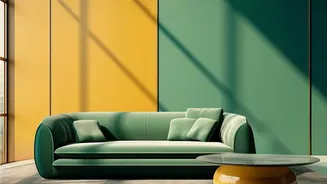
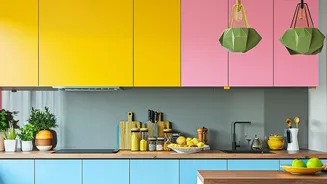
What is Colour-Blocking?
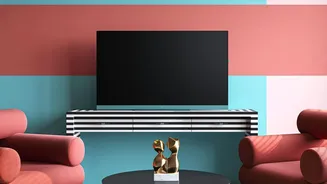
At its core, colour-blocking is the art of pairing two or more solid blocks of contrasting or complementary colours. Think of it as creating a composition with colour itself. The trend, which has roots in fashion and modern art, uses geometric shapes,
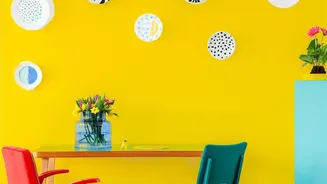
lines, and zones of colour to add architectural interest and personality to a space without needing busy patterns. Instead of a repeating floral print, you might have a wall split into a calming sage green on the bottom and a warm off-white on top. The beauty of this technique lies in its versatility—it can be as bold as a bright yellow against charcoal grey or as subtle as two soft, tonal shades.
Start with a Feature Wall
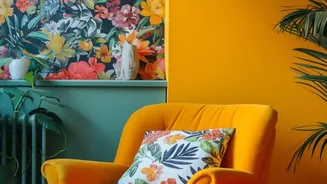
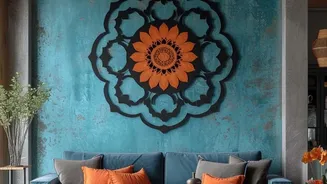
The easiest way to introduce colour-blocking is with a single feature wall. This approach allows you to make a strong statement without overwhelming the room. A wallpaper featuring large, geometric blocks of colour behind a sofa or bed can act as a focal point, anchoring the entire space. Bold, oversized patterns with clean lines are particularly effective, as they read as art and give the room a designed, intentional feel. To make the feature wall feel integrated, pick one or two shades from the wallpaper and repeat them in smaller doses throughout the room, such as in cushions, a rug, or other decor items.
Define Zones in an Open-Plan Home
Open-plan living is popular in modern Indian homes, but it can be challenging to make distinct areas feel separate. Colour-blocking wallpaper is a brilliant solution for creating visual boundaries without building walls. For example, you can use a wallpaper with horizontal blocks of colour in your dining area to make it feel like a separate, intimate zone. In a large living room, a vertical stripe pattern can draw the eye upward and create the illusion of height. The key is to choose designs that define a space while still sharing a complementary colour palette to maintain a sense of flow. This technique helps each area gain its own identity, making your open layout feel more structured and organised.
Get Creative with Geometric Shapes
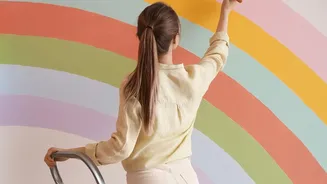
Colour-blocking isn’t limited to straight lines. Wallpapers featuring arches, circles, and abstract overlapping shapes are a growing trend that adds a soft, artistic touch. A large, painted-style arch behind a headboard can create the look of a grand, built-in feature. You can use wallpapers with curved blocks of colour to soften the sharp angles of a room or create a playful, dynamic feel in a home office or a child's room. These geometric designs work especially well when they combine a few complementary colours, such as earthy terracotta, blush pink, and cream, for a modern and harmonious look.
Tips for Choosing Your Palette
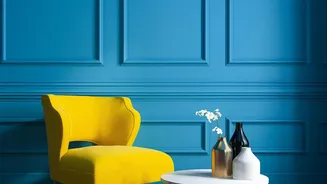
Selecting the right colours is crucial. A good rule of thumb is the 60-30-10 principle: 60% of your space should be a dominant colour, 30% a secondary colour, and 10% an accent. In Indian homes, warm, earthy tones like terracotta, mustard, and olive green often work beautifully, creating a welcoming atmosphere. Pair these with calming neutrals like beige, cream, or a soft grey for balance. Don't be afraid of contrast; a deep teal paired with beige or a navy blue with gold accents can add a touch of drama and sophistication. Always consider your room's natural light—cooler tones can balance a sun-drenched room, while warmer shades can brighten a space that gets less light.