





A Tradition Rooted in Milk
In Bengali culture, no happy occasion is complete without 'mishti mukh', the act of sweetening the mouth. During Durga Puja, this tradition takes on a divine dimension. Milk and its derivatives are considered pure and auspicious in Hindu rituals, making
them ideal offerings for the goddess. Sweets are a dominant note of the festivities, piled high in front of idols as offerings from devotees and shared generously during community feasts, or 'bhog'. While many sweets are prepared, those made from fresh cottage cheese, known as chhena, hold a special place, connecting culinary craft with deep-rooted faith.
The Soul of the Sweet: Chhena
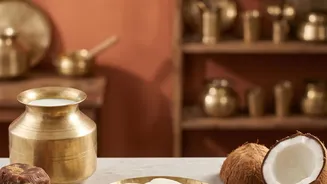
Artisanal cottage cheese, or chhena, is the heart of iconic Bengali sweets. It's not the same as the firm paneer used in savoury dishes. Chhena is made by curdling full-fat cow's milk with a mild acidic agent like lemon juice, then straining it through a muslin cloth. The key is the texture; the chhena must be soft, moist, and crumbly, never dry or rubbery. This delicate base is then kneaded, sometimes for an extended period, until it is smooth and ready to be transformed. The technique itself has a fascinating history. Traditionally, curdling milk was considered taboo in parts of India, but the influence of Portuguese traders in Bengal during the 17th century introduced cheese-making techniques that local confectioners, or 'moiras', adapted to create a new, lighter style of sweet.
The Stars of the Sweet Platter
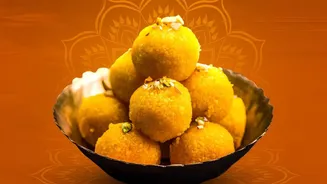
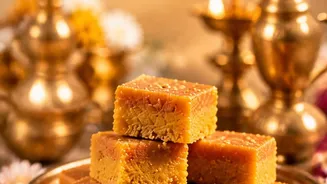
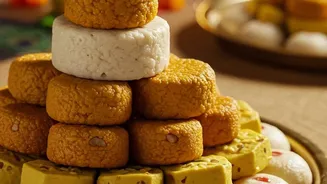
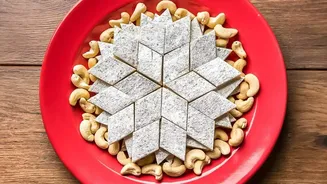
The most revered of these chhena sweets is the Sandesh. In its purest form, it’s simply fresh chhena kneaded with sugar or jaggery. Variations abound, from the soft 'Kancha Golla' (raw balls) to the firmer 'Kora Pak' (hard-cooked) Sandesh. During winter Pujas, the addition of 'Nolen Gur' (date palm jaggery) lends an earthy, smoky sweetness that is highly sought after. Another star is the Rasgulla, a soft chhena ball boiled in a light sugar syrup until it becomes a spongy orb of sweetness. Other beloved varieties include the creamy Cham Cham, often coated in coconut, and the elaborate Jolbhora Sandesh, a marvel with a liquid jaggery centre. Each of these sweets represents a pinnacle of confectionery art.
More Than Just a Dessert
To call these sweets mere desserts would be to miss their true significance. They are a language of love, community, and nostalgia. Boxes of Sandesh are the quintessential gift when visiting friends and family during the festival. Sharing Mishti Doi, a sweet, fermented yoghurt set in earthen pots, is an act of fostering togetherness. Even the farewell ritual for the goddess, 'Baran', involves touching a morsel of Sandesh to the idol's lips, a bittersweet goodbye. For Bengalis living away from home, the taste of a hot Rasgulla or a perfectly made Sandesh from a pandal stall can evoke powerful feelings of nostalgia and connection to their roots. These sweets are edible emblems of the festive spirit, binding families and communities together.
Craftsmanship in Every Bite
The word 'artisanal' is key. While mass-produced sweets are available, the ones that truly capture the essence of Puja are often made in small, local sweet shops that have perfected their recipes over generations. The confectioners, the moiras, are artisans preserving a vital piece of cultural heritage. The kneading of the chhena, the careful balancing of sweetness, the subtle flavouring with cardamom or saffron—these are skills passed down through families. Supporting these local artisans ensures that the unique, handcrafted quality of these essential sweets continues to be a part of Durga Puja for generations to come, making every bite a taste of history, faith, and celebration.