



The Green, Starchy Start
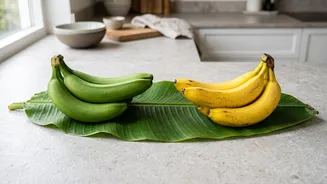
An unripe, green banana is firm, slightly waxy, and has a less sweet, almost astringent taste. This is because its carbohydrates are primarily in the form of resistant starch. Up to 80% of the carbs in a green banana are resistant starch, which, as its name
suggests, resists digestion in the small intestine. Instead, it functions more like dietary fiber, travelling to the large intestine where it becomes food for beneficial gut bacteria. This process is great for gut health. Green bananas are also high in pectin, a type of fiber that helps the fruit maintain its firm structure. The high resistant starch content gives green bananas a low glycemic index (GI), meaning they cause a slower, more gradual rise in blood sugar, making them a good option for those monitoring their glucose levels. However, for some, the high starch content can cause gas or bloating.
The Science of Sweetening
So what happens as a banana turns from green to yellow? The process is driven by a natural plant hormone called ethylene gas, which triggers a series of enzymatic reactions. Enzymes like amylase get to work breaking down the complex resistant starches into simple sugars like sucrose, glucose, and fructose. This is why a ripe yellow banana tastes significantly sweeter than a green one. Simultaneously, another enzyme, pectinase, begins to break down the pectin that keeps the fruit's cell walls rigid. This breakdown is what causes the banana's texture to change from firm and starchy to soft and tender. While the total calorie count remains the same throughout ripening, the form of the carbohydrates completely shifts from starch to sugar.
The Perfectly Yellow Peak
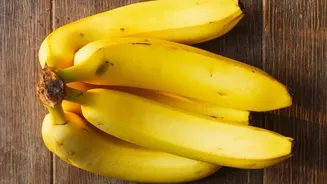
For most people, the classic yellow banana is the ideal stage for eating. It’s sweet, soft, and easy to digest. By the time a banana is fully yellow, most of its resistant starch has been converted into sugar. A ripe banana may contain only 1% starch. This makes the sugars readily available, providing a quick source of energy, which can be useful before a workout. Because the sugars are easier to digest, yellow bananas are less likely to cause the bloating that some experience with green bananas. However, this conversion also means the glycemic index is higher compared to a green banana. While a green banana might have a GI around 30-42, a ripe yellow one is typically in the medium range, around 51. This means it will raise blood sugar levels more quickly.
Spotted, Sweet, and Full of Antioxidants
As a yellow banana continues to ripen, it develops brown or black spots. These spots are a sign that even more starch has converted to sugar, making the banana sweeter and softer than ever. This is why very ripe, spotty bananas are prized for baking, as their high sugar content adds natural sweetness and their mushy texture incorporates easily into batters. As the banana ripens, the green chlorophyll in the peel breaks down, and this process is linked to an increase in antioxidant levels. So, a spotted banana is an antioxidant powerhouse. However, this final stage of ripening also comes with a trade-off. Some micronutrients, like vitamin C and certain B vitamins, may begin to decrease as the banana becomes overripe. The glycemic index also continues to climb, potentially reaching 62 or higher, which individuals with diabetes should be mindful of.
Which Banana is Best for You?
There is no single 'best' banana; the ideal ripeness depends entirely on your personal health goals and taste preferences. If you're managing blood sugar or want to promote gut health with prebiotic fiber, a greener banana is a better choice. Its high resistant starch content provides a slow release of energy and nourishes your microbiome. If you need a quick, easily digestible source of energy before exercise or simply prefer a sweeter taste and softer texture, a perfectly yellow banana is your go-to. For those who want to maximize their antioxidant intake or need a super-sweet fruit for baking banana bread, the spotty, overripe banana is the winner. Each stage offers a unique combination of flavor, texture, and nutritional benefits.