

Why Venus? Earth's cautionary tale
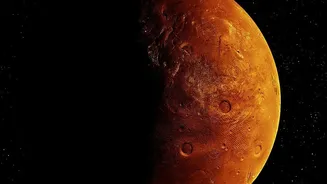
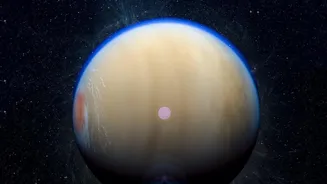
Venus is a planet of extremes. With a surface temperature hot enough to melt lead and an atmosphere so thick the pressure is over 90 times that of Earth's, it's one of the most inhospitable places in the solar system. Yet, it is also strikingly similar
to our own planet in size, mass, and composition, leading scientists to label it Earth's twin. This is precisely why it's so compelling. Scientists believe Venus may have once been a much more temperate world, possibly with oceans, but suffered a runaway greenhouse effect. Studying Venus is not just about understanding another planet; it's about understanding planetary evolution and gathering crucial data that can help model Earth's own climate, serving as a dramatic cautionary tale.
Enter Shukrayaan: India's next giant leap
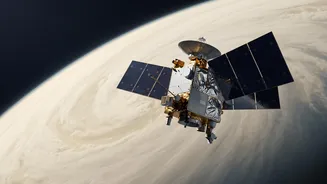
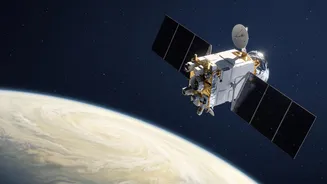
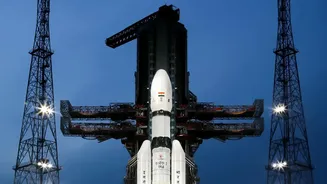
Following the historic successes of the Chandrayaan missions to the Moon and the Mangalyaan mission to Mars, the Indian Space Research Organisation (ISRO) is setting its sights on the second planet from the sun. Named Shukrayaan, from the Sanskrit words for Venus (Shukra) and craft (Yaana), this mission represents India's first dedicated venture to our nearest planetary neighbour. The mission involves sending a 2,500 kg orbiter, packed with scientific instruments, to circle Venus and conduct a comprehensive study of the planet. While the launch timeline has been adjusted, current plans target a 2028 launch aboard India's powerful LVM-3 rocket. This places India in an elite group of space agencies that have taken on the immense challenge of exploring Venus.
The science of seeing the unseen
The single biggest challenge in studying Venus is its thick, opaque blanket of sulfuric acid clouds, which completely shrouds the surface from view. This is where Shukrayaan's advanced sensors come into play. The headline instrument is a high-resolution Synthetic Aperture Radar (SAR), which uses radar waves to pierce through the dense cloud cover and map the surface geology in unprecedented detail. This will allow scientists to look for evidence of volcanic activity, lava flows, and other geological features. Even more unique is the plan to include a ground-penetrating radar, which would be a world-first for a Venus mission, designed to study the planet's shallow subsurface structure. The primary goal is what the headline describes as "sub-cloud chemical profiling"—using a suite of instruments to analyze the composition and dynamics of the atmosphere beneath the main cloud deck.
Unlocking atmospheric mysteries
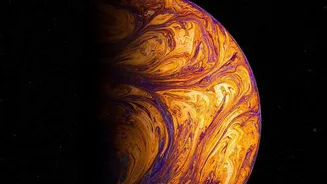
The Venusian atmosphere is a scientific puzzle. It spins sixty times faster than the planet itself and contains unexplained chemical anomalies. Shukrayaan's payload will carry about 19 instruments to tackle these questions. These include thermal cameras and spectrometers designed to study the composition of atmospheric gases and understand the forces driving the planet's extreme weather. International collaboration is key, with instruments provided by Russia, Sweden, and Germany to study everything from atmospheric gases to the interaction between the Venusian ionosphere and the solar wind. One of the key goals is to understand how Venus lost its water and evolved so differently from Earth, despite its early similarities. The mission will provide crucial data points to answer long-standing questions about the planet's past and present.
A new frontier for Indian space exploration
The Shukrayaan mission is more than just a scientific endeavour; it is a statement of India's growing capabilities and ambition in space. After becoming the first nation to reach Mars on its maiden attempt, ISRO is solidifying its position as a major player in interplanetary exploration. By taking on the immense technical challenges of a Venus mission, ISRO is pushing the boundaries of its technological expertise, from launch vehicles to deep-space communication and autonomous spacecraft operations. The mission will not only provide a wealth of data for the global scientific community but also inspire a new generation of scientists and engineers in India, cementing the nation's reputation for high-impact, cost-effective space exploration.