




In the high-stakes race to build ever-smarter AI, one of the most important companies isn't run by a household name. Instead, it's led by a brother-sister duo who put safety at the centre of their mission: Dario and Daniela Amodei.
Who Are Dario and Daniela Amodei?
Dario and Daniela Amodei
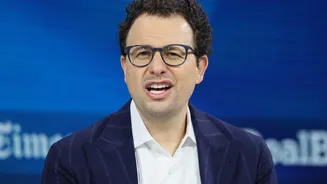
are the co-founders leading Anthropic, the AI company behind the powerful Claude series of models. They represent a unique leadership structure in big tech, combining sibling trust with complementary skills. Dario, the CEO, is the scientific visionary. With a background in physics and a history as the Vice President of Research at OpenAI, he directs Anthropic's long-term technical strategy. He is the company’s primary public voice on AI safety and regulation. Daniela, the President, is the operational force. Before co-founding Anthropic, she managed safety and policy at OpenAI and held leadership roles at Stripe. At Anthropic, she runs the business, managing everything from the executive team and commercial strategy to government relations, turning Dario's research vision into a functioning, fast-growing company.
The Principled Break from OpenAI
The story of Anthropic begins with a departure. In 2021, the Amodeis and a group of five other top researchers left OpenAI together. This wasn't just a corporate shuffle; it was an ideological split. The group, which formed the core of Anthropic's founding team, had growing concerns that OpenAI was prioritizing commercial speed over the careful, deliberate work needed to ensure advanced AI systems were safe and aligned with human values. Dario Amodei, who had been instrumental in developing OpenAI's GPT-2 and GPT-3 models, believed that as AI became more powerful, the work on safety needed to accelerate just as quickly. The group decided the only way to pursue this safety-first approach was to start a new kind of AI company from the ground up.
Building a 'Constitutional AI'
From its inception, Anthropic was designed to be different. It was founded as a public benefit corporation, a structure that legally requires it to balance shareholder profits with a public mission—in this case, the safe development of AI. The company's signature innovation is not just a product but a method: 'Constitutional AI'. Instead of relying solely on human feedback to teach an AI what not to do, Anthropic gives its models a written constitution—a set of principles to guide its behaviour. This constitution is based on sources like the UN's Declaration of Human Rights and is designed to make the AI helpful, harmless, and honest. The AI is then trained to critique and revise its own responses to better align with these principles, essentially teaching itself to be more ethical and predictable.
Claude: An AI Built for Caution
The public face of Anthropic's work is Claude, its family of large language models. While competitors rushed their models to market, Anthropic famously delayed Claude's initial public release in 2022 to conduct more internal safety testing, a decision that highlighted its commitment to caution over commercial advantage. When Claude was introduced in 2023, it quickly became known for its strong performance in complex reasoning, writing, and coding, along with its ability to handle very large amounts of information in a single conversation. Users often describe Claude's responses as more nuanced and thoughtful, a direct reflection of the 'Constitutional AI' training that prioritizes safety and avoids harmful or misleading outputs.
The Future of a Safety-First Giant
The Amodeis' bet on safety has not come at the expense of growth. Anthropic has attracted billions of dollars in funding from some of the world's biggest tech and finance companies, including Google, Amazon, and Sequoia Capital. This massive financial backing allows it to secure the immense computing power needed to compete at the frontier of AI research. With Dario setting the technical vision and Daniela building a robust global enterprise, Anthropic is in a unique position. It is both a leading contender in the AI race and its most prominent internal critic, constantly pushing the industry to consider the 'how' and 'why' of AI development, not just the 'what's next'.