




From Fireflies to Flowerbeds
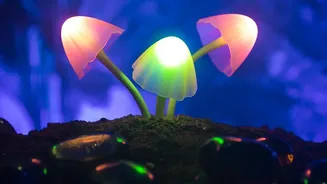
The magic of bioluminescence—light produced by living organisms—has fascinated humanity for centuries. We see it in fireflies on a summer evening and in the mysterious depths of the ocean. Now, scientists are harnessing this natural phenomenon by inserting
the genes from bioluminescent fungi and fireflies into common plants. The process involves complex genetic engineering to create a self-sustaining glow. By integrating these new genetic pathways with a plant's own metabolism, the plant can produce its own light autonomously, without needing any external power or special chemicals.
The Commercial Glow-Up
This technology has already moved from the lab to the living room. The 'Firefly Petunia', developed by the biotech company Light Bio, was one of the first commercially available GM glowing plants in the United States, approved by the USDA for sale. It glows with a soft light comparable to moonlight, with the newest buds shining the brightest. Following this, researchers in China have announced the successful modification of over 20 species, including roses, orchids, and sunflowers, with ambitions to create glowing landscapes for tourism and public spaces. These developments signal a serious commercial push to bring biological lighting into our everyday lives.
The Vision: A City That Shines
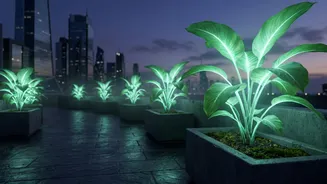
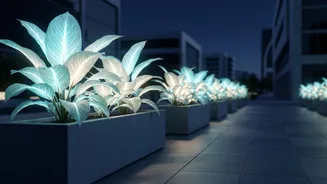
The grand vision for this technology extends far beyond ornamental house plants. Proponents imagine entire urban parks and pathways illuminated by glowing flora, drastically reducing the need for electric streetlights. This could lead to significant energy savings and a reduction in carbon emissions, as the plants would require only water and nutrients to function. Beyond the practical benefits, self-illuminating plants could transform urban nightscapes, reducing the harsh glare of light pollution and creating more serene, natural environments after dark. The goal is to integrate these living light sources directly into city design, creating a more sustainable and aesthetically pleasing urban jungle.
Reality Check: How Bright Is Bright Enough?
Despite the ambitious goals, a key challenge remains: brightness. The light emitted by current bioluminescent plants is relatively low. While perfect for creating ambiance in a dark room or a moonless garden, it is not yet powerful enough to replace modern LED streetlights for safety and visibility. Researchers at companies like Light Bio are working to engineer future generations of plants that are at least ten times brighter. However, for now, their most practical application in cities is as supplemental or decorative lighting in parks, along pedestrian paths, and in public gardens where intense light isn't a necessity. They are more likely to complement our existing infrastructure than to replace it entirely in the short term.
Hurdles on the Horizon
The path to a bioluminescent city is lit with more than just glowing plants; it's also fraught with regulatory and ethical questions. Introducing genetically modified organisms into public ecosystems requires careful consideration to avoid unintended consequences, like cross-pollination with native species or unknown effects on local wildlife. Public acceptance of GMOs in open, urban environments is another significant hurdle. Different countries have vastly different regulations; while the US has approved some plants for contained use, widespread planting in public spaces would require extensive environmental assessments and public debate, particularly in regions like the European Union with stricter GMO controls.