








Shift Your Mindset from Disruption to Opportunity
The first step in overcoming an unexpected break from school is to reframe it. Instead of seeing it as a setback, view it as a unique opportunity. An unscheduled day at home is a chance to catch up on difficult subjects, explore topics beyond your syllabus,
or develop new study habits without the pressure of a rigid school timetable. This mental shift is crucial; it turns a passive waiting period into an active, self-directed learning session. Motivation often comes from a sense of control and purpose. By deciding to use the time productively, you take charge of your own educational journey, transforming a potential negative into a clear positive.
Create a 'Rainy Day' Study Routine
The biggest challenge of studying at home is the lack of structure. Without bells and set class periods, it's easy for the day to slip away. To combat this, establish a clear routine. You don't need to replicate your school day exactly, but creating consistent blocks for study, breaks, and other activities is essential. For example, dedicate the morning hours, when you're likely most alert, to core subjects. Use a technique like the Pomodoro Method—working for a focused 50-minute interval followed by a 10-minute break—to maintain concentration and prevent burnout. Having a schedule provides the structure your brain needs to switch into “study mode” even when you're at home.
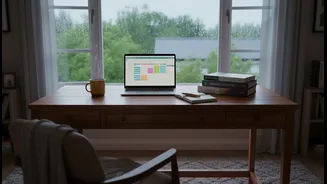
Designate and Organise Your Workspace
Your environment has a powerful effect on your ability to focus. Studying on the bed or couch, spaces associated with relaxation, can make it harder to concentrate. If possible, dedicate a specific corner, desk, or even just the kitchen table as your study zone. Before you begin, make sure this space is organised and free of clutter. Keep all your necessary materials—textbooks, notebooks, pens, and your laptop charger—within reach. This simple act of preparation minimises distractions and signals to your brain that it’s time to work, making your study sessions more efficient and effective.
Leverage India's Digital Learning Ecosystem
A cancelled school day no longer means a day without learning, thanks to a wealth of online resources. India has a robust e-learning landscape, with many platforms offering courses that align with school curricula. Platforms like BYJU’S, Vedantu, and Toppr provide engaging video lessons and interactive modules for school students. For free, high-quality resources, Khan Academy offers tutorials on a vast range of subjects, while the government's own SWAYAM and National Digital Library of India (NDLI) portals provide access to a massive repository of educational content. Many of these resources are available in regional languages, making them accessible to a wider audience.
Focus on 'Deep Work' and Skill Building
A day free from the usual school schedule is the perfect time for 'deep work'—the focused, uninterrupted concentration on a single, demanding task. Use this time to tackle a chapter you've been struggling with or practice solving complex problems. Break large tasks into smaller, manageable goals to make them less overwhelming. This is also an excellent opportunity to build adjacent skills. You could work on your writing, learn basic coding through free online courses, or improve your typing speed. These are skills that will serve you well in any career path and add a productive, forward-looking dimension to your day off.
Manage Distractions and Stay Mentally Fresh
Home is full of distractions, from the television to household chores to social media notifications. To stay focused, you must actively manage them. Put your phone on silent or in another room while you study. Use website-blocking apps if you find yourself aimlessly browsing the internet. It’s also important to remember that productivity doesn’t mean working non-stop. Taking genuine breaks where you step away from your desk, stretch, or chat with family is crucial for staying mentally fresh. It prevents burnout and ensures that when you do sit down to study, your mind is clear and ready to learn.