




The New Reality: A Vicious Cycle
India's climate is becoming one of extremes, and its rivers are on the front line. The predictable rhythm of the monsoon is becoming erratic, leading to a bewildering paradox: severe floods and crippling droughts are occurring with greater frequency,
sometimes within the same year or region. Climate change is supercharging the water cycle; a warmer atmosphere holds more moisture, resulting in shorter, more intense bursts of rain that cause flash floods. Conversely, shifts in monsoon patterns are also leading to prolonged dry spells, leaving river basins depleted. This isn't a future problem; it's a present-day reality for major systems like the Ganga, Brahmaputra, and Godavari, which are all experiencing dramatic fluctuations in water availability.
From Catastrophic Floods to Severe Scarcity
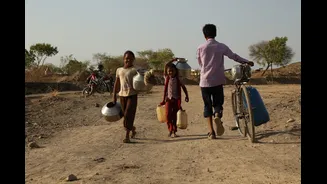
The basin of the Brahmaputra River regularly experiences devastating floods, a problem exacerbated by increased glacial melt and deforestation, which leads to higher sediment loads and severe bank erosion. These floods displace hundreds of thousands of people and wipe out agricultural land. At the other end of the spectrum, rivers like the Ganga are facing an unprecedented drying trend. Recent droughts in the Ganges basin have been attributed directly to climate change, leaving stretches of the river unnavigable in summer and depleting groundwater reserves that millions rely on. This double whammy puts immense strain on water management, as infrastructure built for one type of extreme is often useless against the other. The result is a cycle of crisis, where communities lurch from managing deluge to rationing dwindling supplies.
The Invisible Threat of Rising Heat
Beyond the visible drama of floods and droughts, a quieter but equally dangerous threat is heat. Rising air temperatures are warming India's rivers, with some studies predicting a potential increase of up to 7 degrees Celsius by the end of the century in a high-emissions scenario. Warmer water holds less dissolved oxygen, which is essential for aquatic life. Scientists have noted that for every 1°C increase in river water temperature, dissolved oxygen levels can decrease by over 2%. River basins like the Narmada and Ganga are projected to see significant drops in dissolved oxygen, threatening to turn them into hostile environments for fish and other organisms. This deoxygenation, or hypoxia, endangers biodiversity and the livelihoods of fishing communities that depend on healthy river ecosystems.
A Cascade of Consequences for a Nation
The impact of these stressed river systems radiates through every part of Indian society. Agriculture, which relies heavily on both river flow and groundwater, is acutely vulnerable. Unpredictable water availability threatens food security for millions. Depleting groundwater, which accounts for over 60% of irrigation, forces farmers to drill deeper wells, increasing costs and energy consumption. Urban centres face their own challenges, with major reservoirs drying up during heatwaves and intermittent supply becoming the norm. Furthermore, industrial activities and hydropower generation are also disrupted by inconsistent river flows. The cumulative effect is a significant economic and social burden, undermining development and placing millions at risk.
The Urgent Need for Adaptation
The traditional approaches to water management are no longer sufficient to handle these new, complex challenges. Experts argue that India must move beyond simply building more dams and embankments and toward more holistic, climate-resilient strategies. This includes investing in better weather forecasting and early warning systems, restoring natural floodplains and wetlands to act as buffers, and promoting widespread water conservation and recycling. Enhancing groundwater recharge through rainwater harvesting and protecting forested catchments are also critical steps. The goal must be to build a system that is flexible and can adapt to the increasing volatility of the water cycle, ensuring these vital lifelines can sustain India for generations to come.