


An Offering Fit for a God
The story of Mathura's peda is inseparable from its status as the birthplace of Lord Krishna. This region, known as Braj, has always been rich in cattle and dairy, forming the heart of countless stories about Krishna's childhood love for milk, butter,
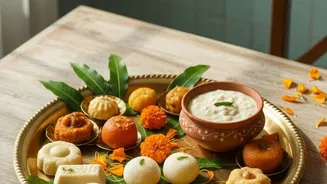
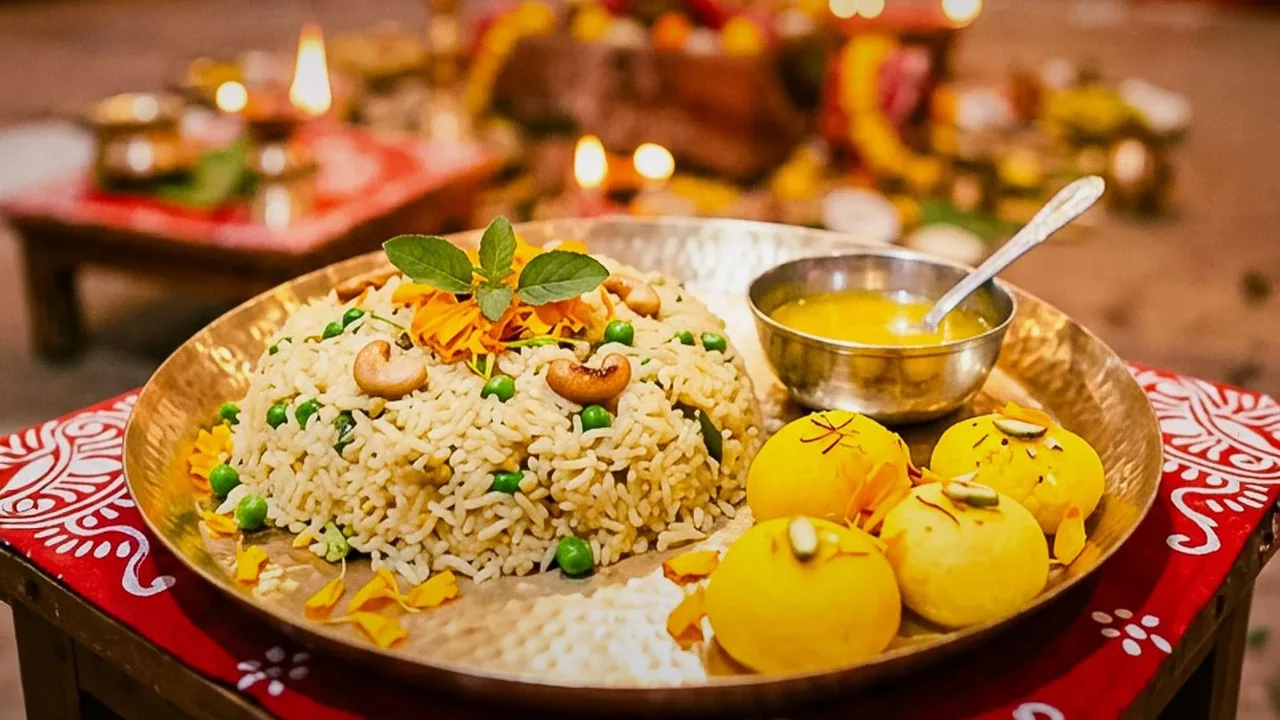
and curd. It is here that the peda evolved from a simple sweet to a sacred offering, or 'prasad'. Tradition holds that the peda is one of Lord Krishna's favourite sweets, making it an essential part of religious ceremonies, especially during the festival of Janmashtami, which celebrates his birth. Devotees visiting the myriad temples in Mathura and nearby Vrindavan often purchase these sweets, blessed as prasad, to take home, transforming the peda from a local delicacy into a cherished symbol of faith and pilgrimage. This spiritual connection elevates the peda beyond mere confectionery; for many, to eat a Mathura peda is to partake in a divine tradition.
The Art of the Perfect Peda
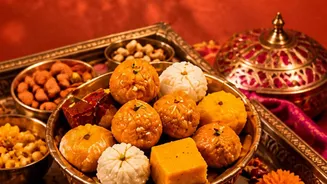
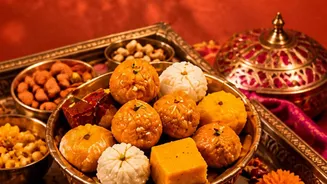
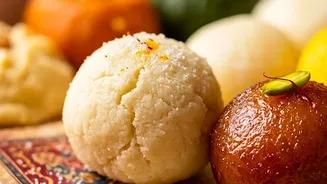
What distinguishes Mathura's peda from its numerous counterparts across India is its unique texture and flavour, born from a patient, traditional process. The magic begins with khoya, or mawa, which is milk that has been slowly simmered for hours until it reduces to a solid, crumbly mass. For the authentic Mathura peda, this khoya is then roasted further in a large kadai, often with a bit of ghee. This slow roasting is the crucial step; it continues until the milk solids caramelize, developing a signature light brown colour and a deep, nutty aroma. This process gives the peda its characteristically rich, slightly grainy texture that melts in the mouth. Finally, sugar—traditionally a type of unrefined powdered sugar called 'tagar' or 'bura'—and a hint of cardamom are mixed in. The mixture is then hand-shaped into small, dense discs, which are sometimes rolled in more sugar for a dusty finish.
A City Built on a Sweet Legacy
While its origins are rooted in temples, the peda has become the backbone of a thriving local industry in Mathura. The term 'Mathura ka peda' is now a brand in itself, a phrase that appears in folk songs and proverbs, signifying unmatched quality. The streets near major temples like the Shri Krishna Janmabhoomi and Dwarkadhish Temple are lined with sweet shops, many of which have been run by the same families for generations. Names like Brijwasi Mithai Wala, which has been operating since the 1950s, have become institutions, their shops pilgrimage destinations in their own right for food lovers. Other heritage counters, such as Gusai Peda Wale, trace their lineage back to the 19th century, preserving age-old techniques. These establishments are not just businesses; they are custodians of a culinary heritage, ensuring that every peda carries the authentic taste of Braj.
More Than Just a Mithai
In Mathura, buying peda is an experience. The shops differentiate between fresh pedas meant for immediate consumption and 'pakka peda', a harder, drier version made to last longer for travellers to carry home as a sweet souvenir. Some shops even produce 'laal peda', which is roasted for an even longer time to achieve a deep reddish-brown hue and a more intense caramel flavour. The peda's influence extends beyond Mathura, inspiring other regional variations like the famous Dharwad peda from Karnataka, which was itself introduced by a confectioner from Uttar Pradesh. Yet, the Mathura original remains the benchmark against which all others are measured. It serves as a reminder that food can be a powerful vessel for history, culture, and faith, connecting millions of people to the sacred stories of Krishna's land with every bite.