




Time Capsules of Frozen Air
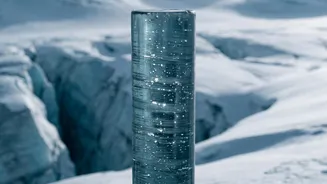
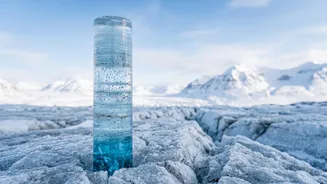
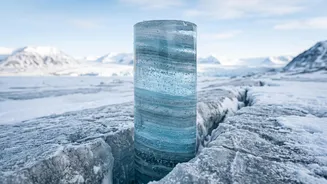
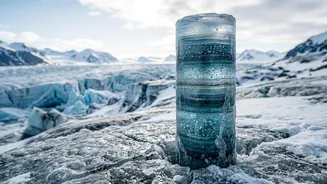
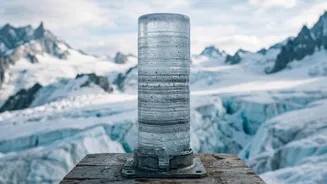
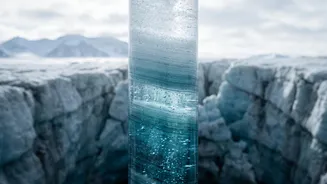
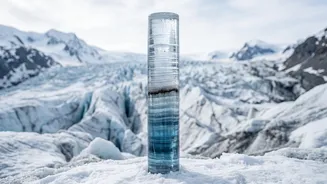
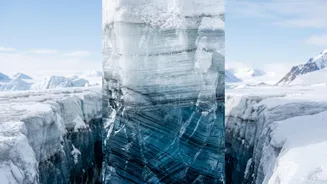
Imagine a place that perfectly preserves samples of air from thousands of years ago. That’s exactly what ice sheets do. As snow falls year after year, it compacts into dense layers of ice. In this process, tiny bubbles of the surrounding atmosphere get
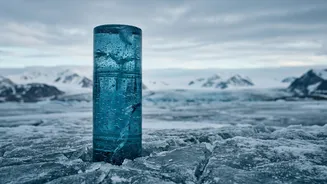
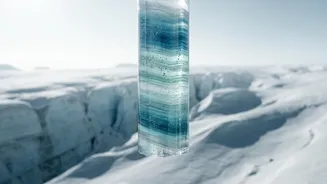
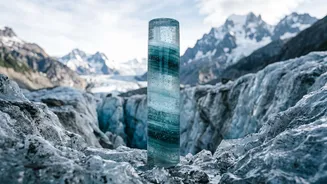
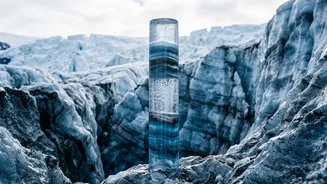
trapped. By drilling deep into the ice and extracting long, cylindrical samples—known as ice cores—scientists can access these ancient air pockets. Some of these cores provide a continuous record stretching back an astonishing 800,000 years. Each layer is a snapshot in time, allowing us to analyse the composition of Earth's atmosphere long before modern measurements began.
Reading the Bubbles
To unlock the secrets within an ice core, researchers work in ultra-clean labs. They carefully melt or crush small sections of the ice in a vacuum to release the trapped gases. These ancient air samples are then analysed using instruments like mass spectrometers. This technology allows scientists to directly measure the concentration of various greenhouse gases, including carbon dioxide and, crucially, methane. Before the Industrial Revolution, methane levels in the atmosphere typically fluctuated between 350 and 800 parts per billion (ppb) during glacial and interglacial cycles, respectively. The ice core record provides a clear baseline against which we can compare modern levels.
The Agricultural Revolution's Footprint
For much of Earth's history, changes in methane levels were driven by natural cycles. But about 5,000 years ago, ice cores show that something changed. Instead of declining as expected based on natural orbital cycles, atmospheric methane began a slow but steady rise. This anomaly puzzled scientists until they connected it with a major shift in human history: the expansion of large-scale agriculture. Practices like flooding fields for rice cultivation create anaerobic (oxygen-free) environments where methane-producing microbes thrive. Similarly, the raising of livestock, such as cattle, introduces significant amounts of methane into the atmosphere as a by-product of their digestion.
The 'Fingerprint' of Farming
A key question for scientists was how to be sure this extra methane came from agriculture and not from other sources, like natural wetlands or geological seeps. The answer lies in chemistry. Methane from different sources has a unique isotopic 'fingerprint'. Isotopes are versions of an element with different weights. By measuring the ratio of the heavier carbon-13 isotope to the lighter carbon-12 in the methane bubbles, scientists can distinguish between 'microbial' sources (like agriculture and wetlands) and 'fossil' sources (from fossil fuels). The methane spike that began 5,000 years ago has the distinct lighter isotopic signature of microbial sources, providing strong evidence linking it to the growth of farming.
An Unintended Climate Impact
This early human-caused rise in methane, though small compared to the dramatic increases of the last two centuries, had a real impact. Some scientists argue that the combined warming effect of methane from early agriculture and carbon dioxide from deforestation may have prevented or delayed the onset of a new cooling period. In essence, our ancestors may have inadvertently begun altering the global climate millennia ago. This historical context is vital. It shows that human activities have been shaping the atmosphere for much longer than we once thought. The ice core records demonstrate that what started as a slow creep 5,000 years ago has, since the Industrial Revolution, accelerated to a pace unprecedented in at least 800,000 years.