




The Science of a Bad Hair Day
To understand why these decoctions work, we first need to understand frizz. Your hair has an outer layer called the cuticle, which looks like overlapping shingles on a roof. When it's humid, porous or dry hair absorbs moisture from the air. This causes
the hair shaft to swell unevenly, forcing those 'shingles' to lift. The result is a rough, unruly texture we call frizz. This repeated swelling and shrinking, known as hygral fatigue, can also weaken hair over time, making it prone to breakage.
What Exactly is a Decoction?
Unlike heavy oils or masks, a traditional hair decoction is a light, water-based herbal infusion. It is typically made by boiling or steeping potent herbs in water and then using the strained liquid as a final rinse after washing your hair. These rinses are designed to cleanse gently, balance the scalp's pH, and, most importantly, smooth the hair's cuticle without the buildup often associated with silicone-based anti-frizz products. They provide replenishment without weighing hair down.
The Power Trio: Amla, Reetha, and Shikakai
Three herbs form the cornerstone of many anti-humidity decoctions: Amla, Reetha, and Shikakai. Amla, or Indian gooseberry, is rich in Vitamin C and tannins, which help to strengthen hair and seal the cuticle, making it less susceptible to swelling from humidity. Reetha, also known as soapnut, contains natural surfactants called saponins. These cleanse the scalp and hair of excess oil and dirt without stripping its natural moisture, which is a key defence against frizz. Shikakai, which translates to 'fruit for hair', acts as a natural conditioner, helping to detangle strands and control frizz, leaving hair manageable and smooth.
Herbal Allies for Strength and Shine
Beyond the main trio, other herbs play crucial supporting roles. Bhringraj, often called the 'king of herbs' for hair, is known to stimulate hair follicles and strengthen the hair root, making strands more resilient. Studies have shown its active compounds can promote the hair's growth phase. Brahmi is another powerful herb that nourishes the hair roots and can help form a protective layer over the strands. When hair is stronger and its structure is intact, it is naturally less prone to the effects of environmental stressors like humidity.
Creating a Simple Hair Rinse at Home
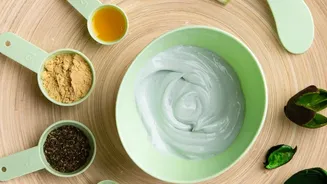
Making a basic decoction is straightforward. A common method involves using the powders of Amla, Reetha, and Shikakai. You can combine equal parts of each powder (for instance, one tablespoon each) and add them to boiling water. Let the mixture simmer for about 15-20 minutes before turning off the heat and allowing it to cool completely. Once cool, strain the liquid through a fine cloth to remove all herbal residue. After shampooing and conditioning, use this decoction as a final rinse, pouring it slowly over your scalp and hair. Let it sit for a few minutes before a final, quick rinse with plain water, or you can leave it in.