








Start Smart: Use AI as Your Assistant
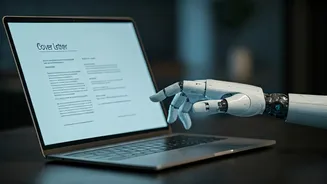
Think of AI not as a ghostwriter, but as a strategic assistant. Its greatest strength lies in overcoming the 'blank page' problem and providing a solid foundation. Use tools like ChatGPT or specialized resume builders to create an initial outline based
on your target job description. Ask the AI to identify the key skills and qualifications the employer is looking for. This gives you a roadmap for structuring your resume and ensuring it aligns with the role from the very beginning. You can also use it to brainstorm stronger action verbs or rephrase your existing bullet points for greater impact. The goal is to let AI handle the heavy lifting of structure and initial drafting, freeing you up to focus on the most important part: adding your unique experience and personality.
The Art of the Prompt: Garbage In, Garbage Out
The quality of your AI-generated content depends entirely on the quality of your instructions. A vague prompt like "write me a resume" will yield a generic, unusable document. Instead, be highly specific. Provide the AI with your detailed work history, the job description you're targeting, and clear instructions. For example, a better prompt would be: "Act as an expert career coach. Here is my work history and the job description for a Senior Project Manager. Rewrite my experience bullet points using the 'Project, Action, Result' framework to highlight my achievements in team leadership and budget management." This level of detail guides the AI to produce relevant, targeted content that you can then refine.
From Robotic to Authentic: The Human Edit Is Crucial
An unedited AI resume is easy for recruiters to spot. They are often filled with overused buzzwords like "results-driven" and "strategic thinker" that lack substance. Worse, they can contain factual errors, misrepresent your experience, or even invent details—a major red flag for hiring managers. After generating a draft, your most important job is to edit, personalize, and fact-check every single line. Read it aloud. Does it sound like you? Replace vague statements with concrete metrics and quantifiable achievements. For example, instead of "Managed a team," specify "Led a 12-person team to increase production efficiency by 15% in six months." It's this human touch and specificity that separates a weak resume from a compelling one.
Beat the Bots: AI for ATS Optimization
Many large companies use Applicant Tracking Systems (ATS) to screen resumes before they ever reach a human. These systems scan for keywords and specific formatting. AI can be incredibly helpful here. You can use AI tools to analyze a job description and identify the exact keywords and phrases it prioritizes. Then, you can instruct the AI to help you naturally weave these keywords into your professional summary, skills section, and work experience. This targeted optimization significantly increases your chances of passing the initial automated screening. However, avoid "keyword stuffing," which is overloading your resume to the point it becomes unreadable. The language should still flow naturally.
The Final Verdict: Authenticity Wins
While some hiring managers are wary of AI, most are pragmatic. They don't necessarily care if you used AI; they care if the resume is accurate, relevant, and reflects the real you. They are looking for a candidate whose skills and experience are a genuine match for the role. An AI-generated resume that you can't speak to confidently in an interview will hurt you. The resume gets you the interview, but your authentic story, personality, and credibility are what get you the job. Use AI as a collaborator to sharpen your message and highlight your achievements, but never let it replace your own voice and experience.