


A Legacy Forged at Ryugu
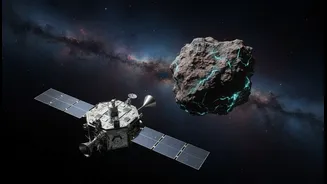
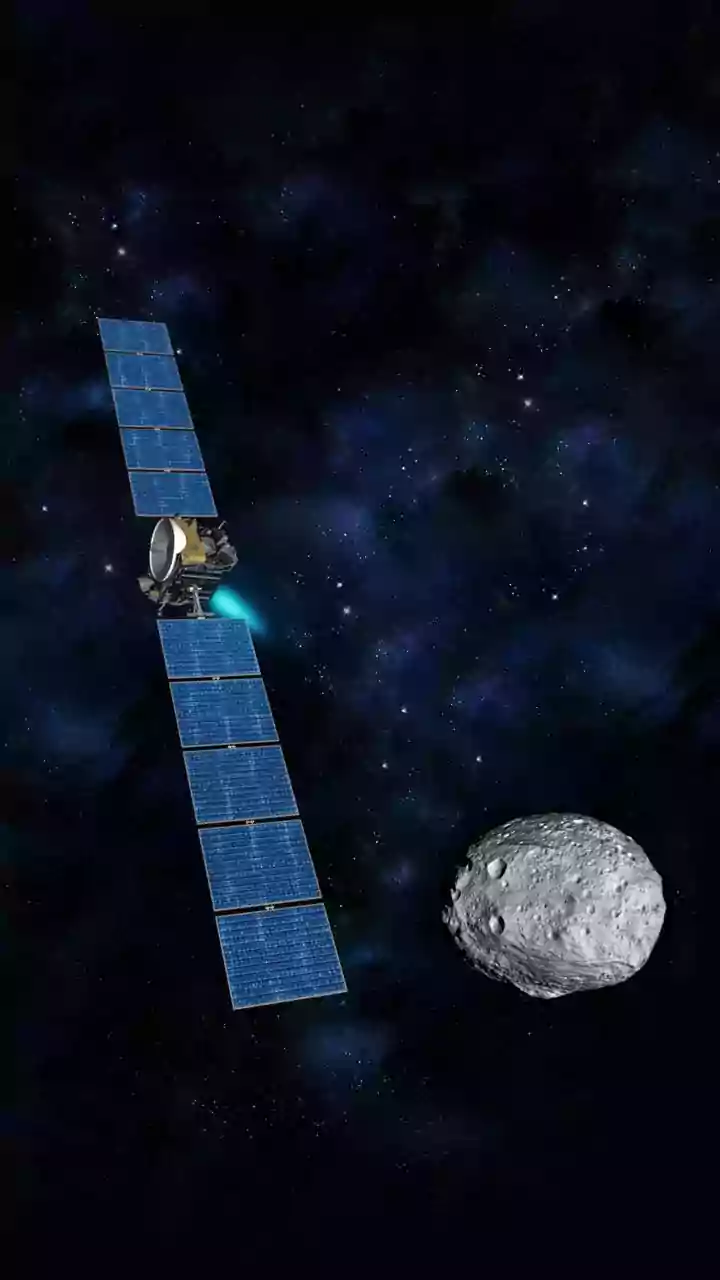
It’s hard to forget the triumph of Hayabusa2’s primary mission. Launched by the Japan Aerospace Exploration Agency (JAXA) in 2014, the spacecraft travelled across the void to rendezvous with the near-Earth asteroid Ryugu. For a year and a half, it mapped
the diamond-shaped rock, deployed tiny rovers, and, most impressively, performed two touchdowns to collect surface and subsurface samples. In a moment of global excitement in December 2020, it successfully dropped a capsule containing these precious materials back to Earth, giving scientists an unprecedented look into the building blocks of our solar system. The mission was a resounding success, cementing its place in the annals of space exploration. But for the spacecraft itself, the work was far from over.
An Ambitious Encore Performance
With its primary objective complete and about half of its xenon fuel still available, JAXA made a bold decision: Hayabusa2 would embark on an extended mission. Dubbed Hayabusa2♯ (pronounced 'sharp'), this new journey would push the spacecraft's capabilities to their limits, sending it on a decade-long trajectory toward an even more challenging target. The final destination, set for July 2031, is a tiny, rapidly spinning asteroid named 1998 KY26. Along this path, JAXA planned several key milestones, including a high-speed flyby of another asteroid, 98943 Torifune, in July 2026. This encounter was designed not just as a scientific pitstop, but as a critical test of skill and technology.
A Close Look at a Cosmic Snowman
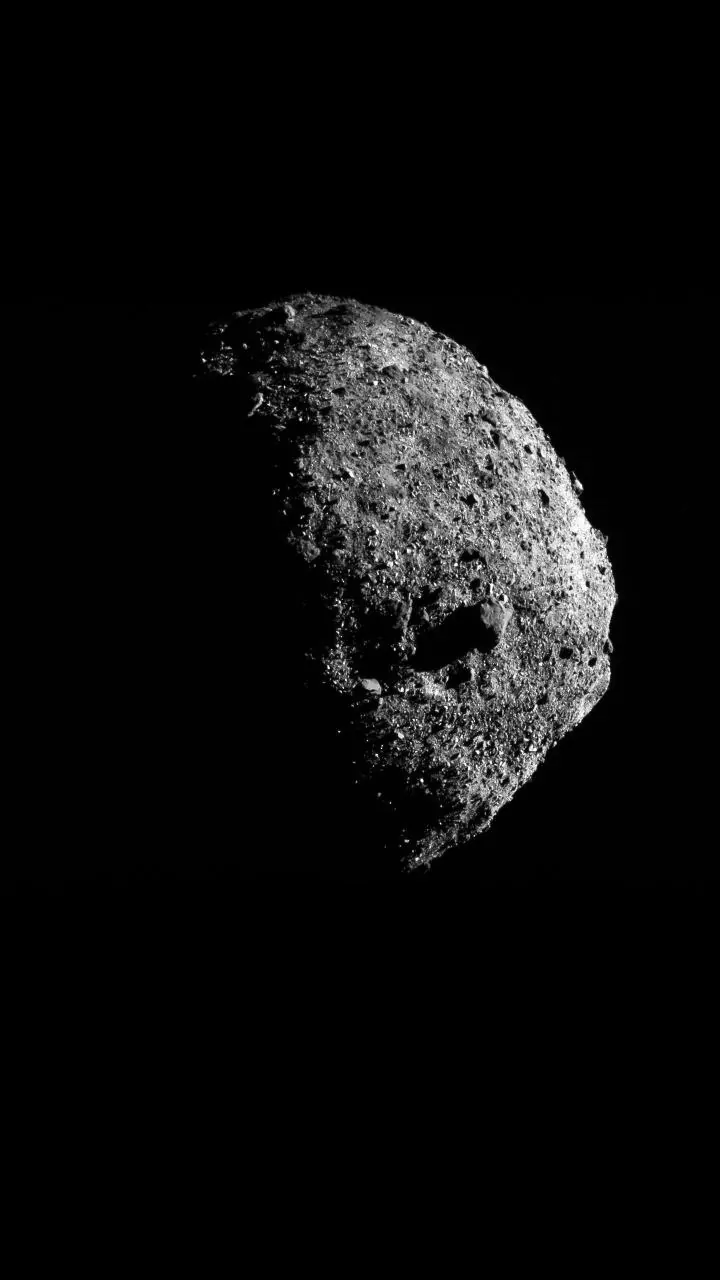
On July 5, 2026, Hayabusa2 executed its flyby of Torifune flawlessly. The spacecraft zipped past the 450-metre-wide asteroid at a relative speed of 5 kilometres per second, coming within a breathtaking 800 metres of its centre. Navigating such a close approach to a dark, small object at high speed is an immense challenge, requiring last-minute adjustments based on optical tracking. The images sent back to Earth were stunning, confirming what ground-based telescopes had long suspected: Torifune is a contact binary asteroid. It appears as two distinct lobes fused together at a narrow neck, giving it a shape reminiscent of a snowman. This flyby provided humanity its first-ever close-up view of this intriguing type of celestial body.
Adding Value for Science and Defence
The Torifune visit adds value on two major fronts. Scientifically, it provides invaluable data on the formation and structure of contact binary asteroids, adding a new specimen to our cosmic 'zoo'. But perhaps more importantly, the flyby was a crucial technology demonstration for planetary defence. The ability to accurately navigate a spacecraft to a precise, close rendezvous with a small asteroid is a foundational skill for any future mission designed to intercept a potentially hazardous object heading for Earth, similar to NASA's DART mission. By proving its high-precision guidance capabilities, JAXA has shown that Hayabusa2's technology can contribute significantly to protecting our planet.
The Ultimate Challenge Awaits
As impressive as the Torifune flyby was, it serves as a stepping stone to an even more audacious goal. The mission's final act is the rendezvous with 1998 KY26 in 2031. This asteroid is a completely different beast. At only about 11 metres in diameter, it is the smallest asteroid a spacecraft has ever been sent to visit. Furthermore, it spins incredibly fast, completing a full rotation in just over five minutes. This combination of small size and rapid spin creates a unique and challenging environment where centrifugal forces can overcome gravity on the surface. Studying this object will provide insights into the physics of tiny asteroids and may even test whether they are solid chunks of rock or loosely held-together 'rubble piles'.