







The Strategic Gateway Gets an Upgrade
Siliguri has always been more than just a city; it's the critical 'Chicken's Neck' that connects mainland India with the eight states of the Northeast. For decades, this slender corridor has been a lifeline for trade, tourism, and defence. Now, that lifeline is getting
supercharged. A series of ambitious railway projects are converging on the city and its main station, New Jalpaiguri (NJP), promising to redefine connectivity for the entire region. The buzz is a mix of awe-inspiring engineering, strategic foresight, and the promise of economic prosperity.
The Crown Jewel: Connecting Sikkim to the Nation
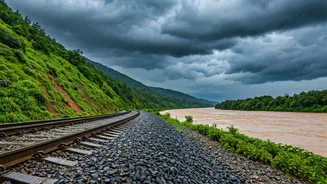
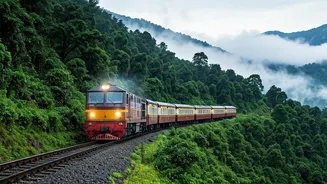
The centrepiece of this transformation is the Sivok-Rangpo rail line. This 45-kilometre stretch of track is an engineering marvel in the making, set to connect Sikkim to India's railway network for the first time. The project involves navigating the treacherous Himalayan terrain with 14 tunnels and 13 major bridges. With a targeted completion by December 2027, this line is more than just a convenience; it's a game-changer for Sikkim's economy and tourism. It also holds immense strategic importance, enabling faster movement of troops and supplies towards the border.
New Jalpaiguri: A World-Class Hub in the Making
New Jalpaiguri (NJP) station is undergoing a metamorphosis under the Amrit Bharat Station Scheme. With a revised budget of around ₹500 crore, the station is being redeveloped into a world-class facility with an airport-style terminal. The plan includes doubling the passenger handling capacity from 60,000 to 1.2 lakh people daily, constructing separate arrival and departure buildings to ease congestion, and adding dozens of lifts and escalators. This redevelopment will transform NJP into a major international terminus, serving not just North Bengal and the Northeast, but also acting as a gateway to Nepal, Bhutan, and Bangladesh.
More Tracks, More Speed, More Options
The upgrades aren't limited to a single project. The doubling of the New Jalpaiguri–Siliguri railway line, sanctioned with a budget of over ₹916 crore, will enhance capacity and speed up both passenger and freight movement. Furthermore, Indian Railways has proposed a new underground railway line near Siliguri to bolster the 'Chicken's Neck' corridor, ensuring an all-weather, secure alternative route. These capacity enhancements are paving the way for more modern train services. Vande Bharat Express services already connect NJP to cities like Kolkata, and there's talk of a future high-speed corridor linking Varanasi to Siliguri. This multi-pronged approach aims to eliminate bottlenecks and create a fluid, efficient network.
The Ripple Effect on a Region
Beyond the concrete and steel, this rail revolution has profound implications for the people of North Bengal. Improved connectivity is a powerful catalyst for economic growth. It opens up markets for local industries like tea and agriculture, makes the region more attractive for investment, and provides a massive boost to tourism by making destinations in the hills and Dooars more accessible. For residents, it means easier travel for work, education, and healthcare. For the nation, it fortifies a strategically vital corridor. This isn't just about faster trains; it's about building a more connected and prosperous future for an entire region that has long been hampered by its geographical isolation.