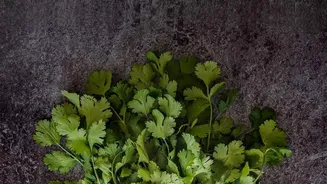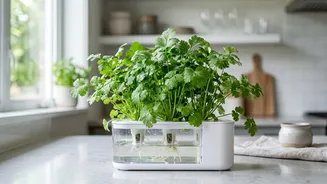






Fresh coriander, or dhaniya, is essential in any Indian kitchen, but growing it in urban homes with limited sunlight can be a challenge. Now, a modern solution makes it possible to have a year-round supply right on your countertop.
Why Go Soil-Free with Hydroponics?
Hydroponics is a method
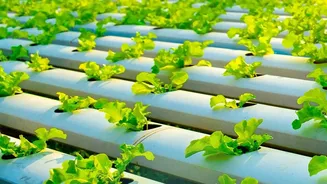
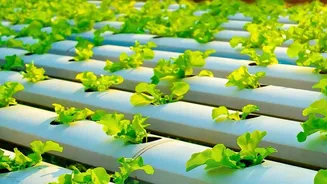
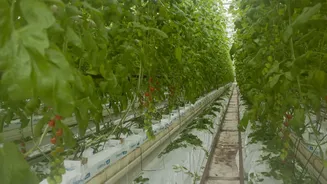
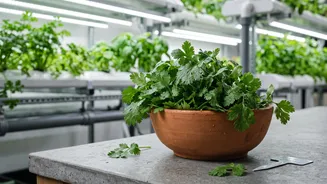
of growing plants without soil, using a nutrient-rich water solution instead. For coriander, this technique offers significant advantages. It allows for faster growth, with harvests possible in just four to six weeks. Since you control the environment, you can grow it all year, avoiding the common problem of 'bolting' (when the plant flowers prematurely) which often happens in hot weather. This method also eliminates soil-borne pests and diseases, giving you clean, pesticide-free leaves. Furthermore, hydroponic systems are perfect for apartments and small spaces, as they are compact and can be set up vertically. They also use significantly less water than traditional soil gardening, making it a more sustainable choice for the urban grower.
Your Basic Hydroponic Starter Kit
Getting started with hydroponic coriander doesn't require a massive investment. For a simple home setup, you'll need a few key items. A basic deep water culture (DWC) or Kratky method system is great for beginners. You will need a container or reservoir to hold the water, net pots to hold the plants, and a growing medium like rockwool cubes or clay pellets to support the roots. You will also need a balanced hydroponic nutrient solution formulated for leafy greens, which provides all the essential elements like nitrogen, phosphorus, and potassium that the plant would normally get from soil. Lastly, and most importantly for homes with low light, you will need a full-spectrum LED grow light.
Choosing the Right LED Grow Light
When natural sunlight is scarce, an LED grow light is your best friend. Unlike regular bulbs, these are designed to emit specific light spectrums that plants need for photosynthesis. For coriander, a full-spectrum LED light is the most practical choice as it supports all growth stages. You don't need an intensely powerful light; moderate intensity is sufficient to keep the growth leafy and prevent the plant from stretching. Look for models from reputable brands known for their performance in home setups. A simple plug-in timer is a crucial addition to ensure your plants get a consistent light schedule, which is key for healthy development.
From Seed to Sprout: The First Steps
Coriander seeds have a hard outer shell. To improve germination, many growers gently crack the seeds before soaking them for a few hours. The easiest way to start is by placing two or three seeds directly into a pre soaked rockwool cube. These cubes should be kept moist and warm, ideally between 18°C and 22°C. You can expect sprouts to appear within 7 to 14 days. Once the seedlings develop their first true leaves and roots start to poke out from the bottom of the cube, they are ready to be transferred into your main hydroponic system.
Caring for Your Growing Coriander
Once your seedlings are in the system, maintaining the right environment is vital. Coriander needs about 12 to 16 hours of light per day from your LED grow light. The nutrient solution should be monitored for its pH level, which should ideally be between 5.5 and 6.5. This range ensures the plant can absorb all the available nutrients efficiently. The electrical conductivity (EC), which measures nutrient strength, should be kept in a range of 1.2 to 1.8 mS/cm. It’s also important to maintain a cool temperature, ideally between 18°C and 24°C, as too much heat can cause the plants to bolt.
Harvesting for a Continuous Supply
After about four to six weeks, your coriander plants should be around $15 cm tall and ready for their first harvest. The best technique is 'cut-'and-'come-'again'. Snip the outer, larger leaves first, taking no more than one third of the plant at a time. This encourages the plant to become bushier and continue producing new leaves from the center. Frequent, light harvesting not only gives you a steady supply of fresh dhaniya but also helps delay bolting, extending the productive life of your plant for several weeks.