




The Unreliability of the Handful
Using your hand as a measuring cup seems simple, but it's a recipe for variability. Your hand is not a standardised unit of measurement. The amount of flour, sugar, or chopped vegetables you can hold depends on the size of your hand, which varies significantly
from person to person. Even for the same person, a "handful" is not consistent. The density and shape of the ingredient play a huge role; a handful of fluffy breadcrumbs is very different from a handful of dense raisins. For example, some nutrition experts use the palm of the hand to estimate a portion of protein, but this is for gauging serving size, not for the precision required in a recipe. Studies show that when trying to measure a cup, a fist is a highly variable tool. This lack of precision might not matter in a forgiving stew, but in baking, it can be the difference between success and failure.
The Myth of the Consistent Pinch
If a handful is unreliable, surely a small “pinch” is harmless? Not necessarily. The term “pinch” appears in countless recipes, but it has no standard definition. What you can pick up between your thumb and forefinger can be very different from what someone else can. One study found that the weight of a 'pinch' of salt can vary by over 150% between individuals due to factors like finger size, moisture on the skin, and grip pressure. The type of salt matters, too; a pinch of fine table salt weighs more than a pinch of flaky sea salt. While a pinch is often considered to be about 1/16th of a teaspoon, this is just an approximation. For forgiving dishes, this might be fine, but in baking, where salt controls yeast activity and gluten structure, that tiny variance can have a big impact.
The Gold Standard: Measuring by Weight
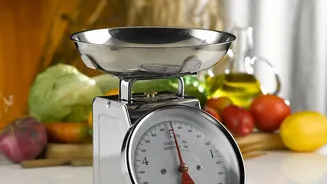
So, what's the alternative? Professional chefs and serious bakers agree: use a kitchen scale. Measuring by weight (in grams or ounces) is far more accurate and consistent than measuring by volume (in cups or spoons). A gram is always a gram, regardless of how fluffy or compacted an ingredient is. One cup of flour can weigh anywhere from 120 to 150 grams depending on how you scoop it, a variance that can lead to dense cakes or dry cookies. By weighing ingredients, you eliminate this guesswork, ensuring your results are repeatable every time. It's also often faster and creates fewer dirty dishes—you can place your mixing bowl on the scale and add ingredients one by one, hitting the 'tare' or 'zero' button in between.
When Are Cups and Spoons Okay?
This doesn't mean you should throw away your measuring cups. For many everyday cooking tasks, they are perfectly adequate. When making soups, sauces, or stir-fries, where the ratios are more of a guideline, measuring with cups is fine. Liquids are also generally safe to measure by volume, as one cup of water is fairly consistent. However, even with liquids, weight can be more precise. Many recipes still use teaspoons and tablespoons for very small amounts of potent ingredients like baking powder, yeast, and spices, as this is a common convention and convenient for home cooks. The key is to know when precision matters. For baking and any recipe where the chemical interactions are crucial, weight is king.
Making the Switch to Precision
Adopting the habit of weighing ingredients is the single most effective change you can make to improve your baking. Start by investing in an inexpensive digital kitchen scale. Look for recipes that provide measurements in grams, which is becoming increasingly common online and in modern cookbooks. When you find a recipe that only lists cup measurements, you can often find conversion charts online, but be aware that these are averages. Get familiar with your scale's 'tare' function, which resets the display to zero. This allows you to measure multiple ingredients in the same bowl without any maths or mess. You can also use it for perfect portioning, ensuring cake layers are even or burger patties are the same size for consistent cooking.