


The Heroic Vulture of the Ramayana
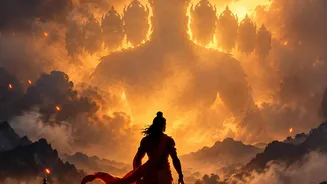
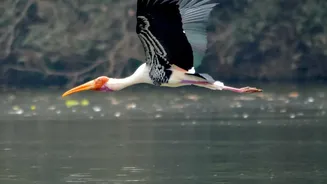
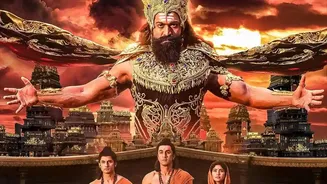
In the epic Ramayana, Jatayu was a divine demigod in the form of a vulture and an old friend of King Dasharatha, Rama's father. His most defining moment came when he witnessed the demon king Ravana abducting Sita. Despite his old age, Jatayu bravely fought
Ravana's chariot, attempting to thwart the kidnapping. Though he fought valiantly, Ravana ultimately clipped his wings with a powerful sword, and the wounded bird fell to the earth. Before succumbing to his injuries, Jatayu lived long enough to inform Rama and Lakshmana of Sita's abduction and the southern direction Ravana had taken, providing a crucial lead in their quest. Rama, moved by his loyalty, performed his last rites, granting him moksha, or liberation.
Jatayu Earth's Center, Kerala
Perhaps the most dramatic and famous tribute to the legend is the Jatayu Earth's Center in Chadayamangalam, Kerala. Local lore holds that this rocky hilltop is the very place where the wounded Jatayu fell. Dominating the 65-acre park is the world's largest bird sculpture, a colossal statue of Jatayu lying on his back, wings broken, capturing the agony and bravery of his final moments. Measuring 200 feet long, 150 feet wide, and 70 feet tall, the sculpture itself is an engineering marvel that took sculptor and filmmaker Rajiv Anchal years to complete. The site is more than just a statue; it's a tourism centre dedicated to women's safety and honour. Visitors can reach the summit via a cable car or by climbing over 800 steps, and the sculpture houses a museum and a theatre that tells Jatayu's story.
Lepakshi, Andhra Pradesh
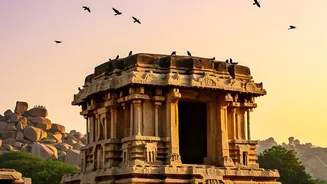
Another prominent location in the Jatayu saga is the historic town of Lepakshi in Andhra Pradesh. According to this region's tradition, this is where Jatayu fell after his battle. The name 'Lepakshi' is said to have originated from Rama's compassionate words to the dying bird, 'Le Pakshi', which means 'Rise, bird' in Telugu. This story connects the town directly to the epic moment of Jatayu's final interaction with Rama. While visiting, travellers can also explore the famous Veerabhadra Temple, a stunning example of Vijayanagara architecture, renowned for its intricate carvings and a mysterious 'hanging pillar' that doesn't touch the ground. The area also features a large footprint, believed by some to belong to Sita, and a massive Nandi statue, adding to its mythological aura.
Nashik and Taked, Maharashtra
While Kerala and Andhra Pradesh are associated with where Jatayu fell, the region around Nashik in Maharashtra is believed to be where the story began. The area of Panchavati, near Nashik, is where Rama, Sita, and Lakshmana spent a significant part of their exile and where Sita was abducted. Jatayu is said to have lived in this region, which allowed him to quickly intercept Ravana's flying chariot. A place called Taked, about 50 km from Nashik, is revered as the site where Jatayu confronted Ravana. The Sarvatirth Jatayu Mandir here commemorates this event. Legend says that a dying Jatayu was thirsty, and Rama shot an arrow into the ground to create a spring of water for him. This water body, known as a 'kund', can still be seen today, marking a spot of divine intervention and compassion.