





What Exactly Are 'Free Sugars'?
Before comparing honey and sugar, it's crucial to understand the term 'free sugars'. According to the World Health Organization (WHO), free sugars include all sugars added to foods and drinks by the manufacturer, cook, or consumer, as well as sugars naturally
present in honey, syrups, and fruit juices. They are different from the sugars found within the cellular structure of whole fruits and vegetables. The WHO recommends limiting free sugar intake because excessive consumption is linked to health issues like unhealthy weight gain and dental caries. Both honey and table sugar fall squarely into this 'free sugar' category.
The Sweet Composition
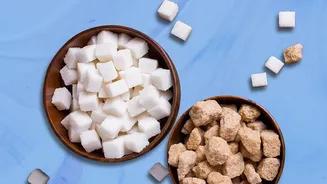
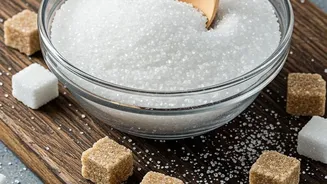
Table sugar, or sucrose, is a simple molecule made of 50% glucose and 50% fructose bonded together. Our bodies need to break this bond during digestion. Honey, on the other hand, is a more complex mixture. It's primarily composed of separate glucose (about 30%) and fructose (about 40%) molecules, along with water (about 17%) and trace amounts of other compounds. Because the sugars in honey are already separated, it's considered easier to digest.
The Calorie Conundrum
Here’s where it gets tricky. Gram for gram, honey has fewer calories than sugar (about 304 kcal per 100g for honey versus 387 kcal for sugar) because of its water content. However, we usually measure by volume, like teaspoons or tablespoons. Since honey is denser than sugar, a teaspoon of honey actually contains more calories (around 21-22) than a teaspoon of granulated sugar (around 16). So if you're swapping sugar for honey in your tea to cut calories, you might be surprised to learn you're adding a few more.
Impact on Blood Sugar
The glycemic index (GI) measures how quickly a food raises blood sugar levels. Table sugar has a GI of around 65. Honey's GI is typically lower, ranging from about 45 to 64 depending on the variety, with an average often cited around 58. This lower GI means honey raises blood sugar a bit more slowly than sugar does. The difference is due to honey's higher fructose content, which is processed by the liver rather than entering the bloodstream directly. While this makes honey a slightly better option for blood sugar management, the difference is moderate, and both should be used sparingly.
Honey’s Nutritional Edge
This is where honey pulls ahead. Table sugar provides 'empty calories' with no other nutritional benefits. Raw honey, in contrast, contains trace amounts of vitamins, minerals like potassium, and various enzymes. More importantly, it contains antioxidants like flavonoids and phenolic acids, which have been linked to anti-inflammatory properties. While these nutrients are present in very small amounts, they are completely absent in refined white sugar.
The Verdict: Is Honey Healthier?
While honey has a slight edge with its lower glycemic index and the presence of trace nutrients and antioxidants, it's crucial to remember that your body metabolizes it as sugar. To your liver, the high fructose content in both honey and sugar is handled similarly. The health benefits of honey are modest and only present when consumed in its raw, unprocessed form. Ultimately, the most significant factor for your health is not which sweetener you choose, but how much you consume overall. Both are free sugars, and moderation is key.