





The Annual Pothole Plague
Every year, as the rains sweep across India, city streets and national highways begin to crumble. The constant presence of water weakens the bond between asphalt and the stone aggregates beneath, leading to cracks that quickly evolve into bone-jarring
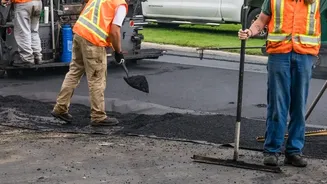
potholes. Traditional repair methods often involve hot-mix asphalt, a petroleum-based process that requires dry conditions to be effective—a significant challenge during the monsoon season. These patches are often a temporary fix, easily washed away by the next downpour, leading to a costly and frustrating cycle of repair and decay. This perennial problem not only damages vehicles and slows traffic but also poses serious safety risks to motorists and pedestrians alike, making a more durable, all-weather solution a national priority.
What Are Bio-Engineered Binders?
Enter the world of bio-engineering. Bio-binders, also known as bio-bitumen, are a sustainable alternative to the conventional petroleum-based bitumen that has long been the glue for our roads. Developed by leading Indian research institutions like the Council of Scientific and Industrial Research (CSIR), these innovative binders are created from renewable biological sources. The primary ingredient is often agricultural waste, such as rice straw, which is converted into a bio-oil through a process called pyrolysis. This bio-oil is then upgraded and blended with traditional bitumen. The result is a road-building material that is not only greener but is engineered to perform better, offering enhanced resistance to water damage and temperature fluctuations.
From Farm Waste to Resilient Roads
The science behind bio-binders is a prime example of India's 'waste-to-wealth' mission. By converting agricultural residue like paddy stubble into a valuable resource for road construction, the technology tackles two major national issues at once: infrastructure durability and crop burning. Indian researchers at CSIR-Central Road Research Institute (CRRI) and CSIR-Indian Institute of Petroleum (IIP) have pioneered this technology, proving its viability. Laboratory and field tests have shown that bio-bitumen improves the asphalt's properties. The organic compounds in the bio-binder can enhance adhesion and flexibility, making the road surface less prone to cracking under heavy traffic and extreme weather. This improved resilience is crucial for withstanding the relentless assault of monsoon rains.
Is This Happening in India?
Yes, this innovation is moving rapidly from the laboratory to our lanes. In early 2026, the indigenous bio-bitumen technology was officially transferred to around 14 companies for commercial production, making India the first country to scale it up for industrial use. Pilot projects have already demonstrated its success. A trial section was successfully constructed on NH-6, the Jorabat–Shillong Expressway, showing satisfactory performance. Other related technologies, like the cold-mix pothole repair solution 'ECOFIX' developed by CSIR-CRRI, are also being adopted in states like Karnataka, Delhi, Assam, and Maharashtra. This particular solution uses processed steel slag and a special polymeric binder, allowing for instant, all-weather pothole repairs, even in waterlogged conditions. These initiatives signal a major shift toward smarter, more sustainable road maintenance across the country.
The Road Ahead for Indian Cities
The long-term benefits of adopting bio-engineered binders are immense. Economically, widespread use could save thousands of crores annually by reducing India's dependence on imported petroleum bitumen. Environmentally, it cuts greenhouse gas emissions significantly compared to conventional methods and provides a productive outlet for agricultural waste. For citizens, it promises smoother, safer roads with fewer disruptions from constant repair work. As cities and highway authorities increasingly adopt these scientifically-backed materials, we may be on the verge of finally winning the war against the monsoon pothole. This shift represents not just an upgrade in material, but an evolution in how India builds and maintains its critical infrastructure for a more resilient future.