

A Sharper View of a Distant Giant
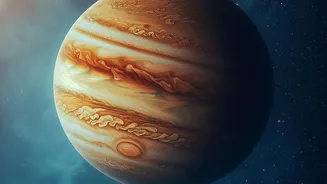
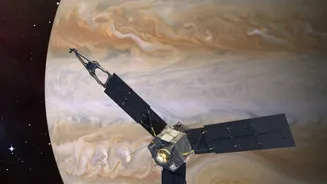
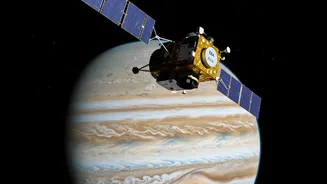
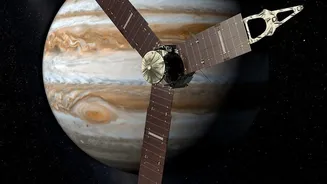
For centuries, astronomers have gazed at Jupiter, captivated by its striped cloud belts and the swirling chaos of its atmosphere. The planet is a natural laboratory for weather systems on a scale almost impossible to imagine. While spacecraft like NASA's
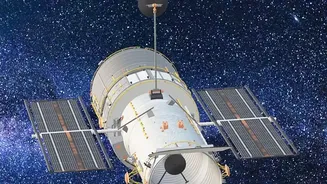
Juno have been orbiting the gas giant for years, gathering invaluable data, recent advancements in imaging technology, particularly with infrared cameras on telescopes like the James Webb Space Telescope, are providing an unprecedented look at its atmospheric dynamics. These powerful new eyes can see through the upper haze to track features with stunning clarity, capturing the motion, temperature, and composition of the clouds in much greater detail. This has allowed scientists to move beyond studying just the most prominent features and begin to understand the smaller, yet equally important, storms that dot the planet.
The Realm of Cosmic Tornados
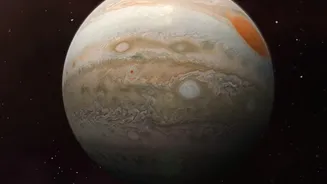
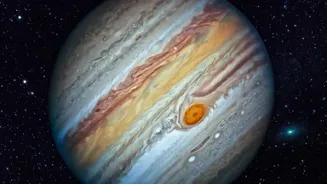
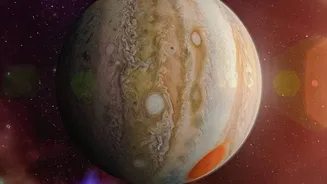
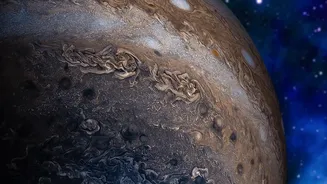
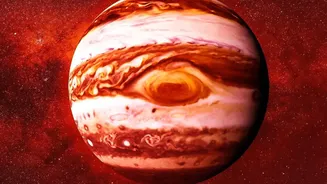
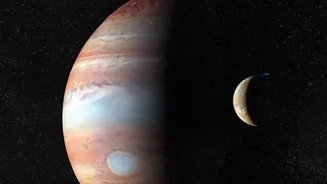
When we talk about storms on Jupiter, the scale is staggering. The most famous is the Great Red Spot, an anticyclonic storm wider than our entire planet that has raged for at least 200 years. But Jupiter's atmosphere is a tempestuous sea filled with countless other vortices—cyclones and anticyclones that are like colossal cosmic tornados. Some of these 'smaller' storms are still hundreds or even thousands of kilometres across. Unlike hurricanes on Earth that are fueled by warm ocean water and die out over land, Jupiter's storms are powered by the planet's internal heat and its incredibly fast rotation, which completes a day in just under 10 hours. This extreme environment allows these storms to persist for months, years, or even centuries, making them key to understanding the planet's climate.
A Pattern of Surprising Shrinkage
The latest findings confirm a trend that has fascinated and puzzled scientists: Jupiter's storms are shrinking. The Great Red Spot has been contracting for decades, having shrunk from over twice the width of Earth in the late 1800s to about 1.3 times its size today. Its shape has also become more circular. But new data reveals this isn't an isolated phenomenon. Observations of other, smaller vortices show similar patterns of change and dissipation. This suggests a large-scale atmospheric shift is underway. By tracking the life cycles of these smaller storms, scientists can gather clues about the forces that govern Jupiter's entire weather system. The shrinkage might indicate a change in the planet's atmospheric jet streams or a shift in how energy is transferred from Jupiter's deep interior to its cloud tops.
Why Are the Storms Changing?
The leading theory for the Great Red Spot's shrinkage is a kind of starvation. A 2024 study proposed that the giant storm maintains its size and energy by 'feeding' on smaller, nearby vortices. A decrease in the number of these smaller storms being absorbed could be causing the giant to wane. The new, wider observations of storm activity across the planet seem to support the idea that the entire 'food chain' of Jovian storms might be changing. The very jet streams that confine these storms might be shifting, altering the paths of the smaller storms and preventing them from merging with their larger cousins. It’s as if the atmospheric currents that have fed these behemoths for centuries are now steering their meals away, leading to a slow, planetary-scale change in the weather.
More Than Just Weather Watching
Understanding these changes on Jupiter has implications far beyond just one planet. Jupiter’s atmosphere is a model for gas giants everywhere, including the hundreds of 'hot Jupiters' discovered orbiting other stars. By figuring out what drives the long-term climate cycles on our solar system's largest planet, scientists can build better models to understand the atmospheres of these distant worlds. Each new image and data point helps refine our theories of how planets form and evolve. The shrinking storms are a visible sign that planets, even giants like Jupiter, are not static museum pieces but are dynamic, evolving worlds with their own complex climate systems that can change over time.