




As India’s Pink City prepares to celebrate its 300th anniversary in 2027, its magnificent forts and palaces are drawing renewed attention. These are not just monuments, but storytellers in stone, chronicling a legacy of vision, art, and power.
The Vision of a Modern City
When Maharaja
Sawai Jai Singh II founded Jaipur on November 18, 1727, he envisioned more than just a new capital. Facing population growth and water scarcity in his ancestral seat of Amer, he planned a city that was revolutionary for its time. With the help of architect Vidyadhar Bhattacharya, Jai Singh II designed Jaipur on a grid system based on the ancient principles of Vastu Shastra. The city was divided into nine blocks, with wide streets and designated areas for public buildings and residences, all protected by imposing walls and seven gates. This meticulous planning made Jaipur one of India's first planned cities, a legacy that earned its walled city area a UNESCO World Heritage Site designation in 2019. The upcoming tricentenary, with year-long celebrations planned, offers a perfect moment to reflect on the architectural genius that shaped this enduring metropolis.
Amer Fort: The Majestic Predecessor
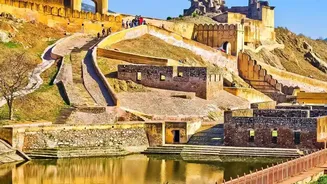
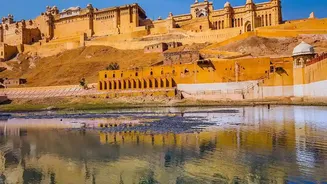
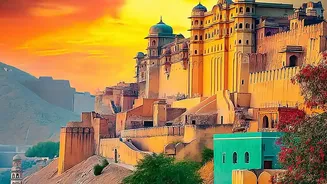
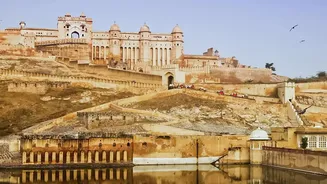
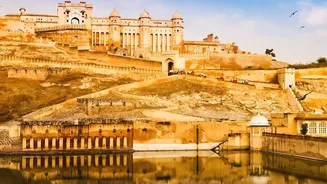
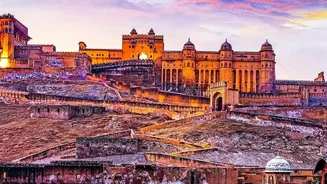
Long before Jaipur was conceived, the Kachwaha Rajputs ruled from the formidable Amer Fort. Perched on a forested hill overlooking Maota Lake, this 16th-century masterpiece was the dynasty's stronghold. A stunning blend of Rajput and Mughal architectural styles, its sprawling complex of palaces, halls, and gardens is a journey back in time. Visitors enter through the Suraj Pol (Sun Gate) into the Jaleb Chowk, where armies once paraded. The fort’s private quarters are accessed through the magnificently painted Ganesh Pol, leading to wonders like the Sheesh Mahal (Palace of Mirrors), where the flicker of a single candle can illuminate the entire room with thousands of reflections. Though the capital later shifted, Amer Fort remains a UNESCO World Heritage Site and the foundational chapter in Jaipur’s royal story, inextricably linked to the city it overlooks.
Hawa Mahal: The Palace of Winds
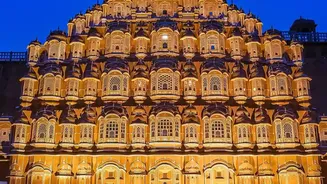
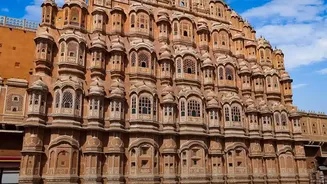
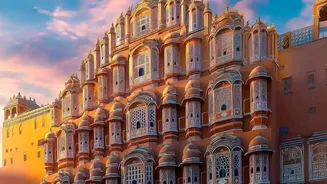
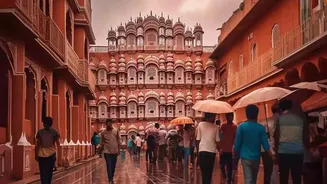
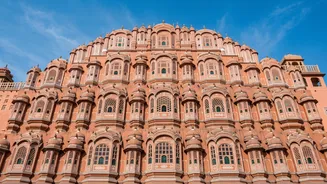
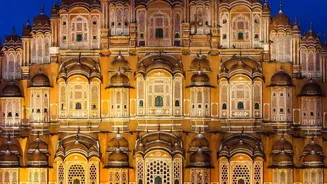
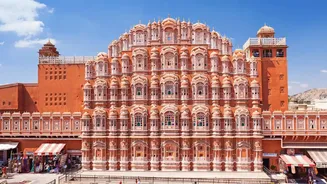
Perhaps no building is more emblematic of Jaipur than the Hawa Mahal. Constructed in 1799 by Maharaja Sawai Pratap Singh, this five-storey façade of pink and red sandstone is an architectural marvel. It wasn't built as a residence but as an elaborate viewing screen. Its iconic honeycomb exterior contains 953 intricately latticed windows, or 'jharokhas'. This design served a specific purpose: to allow the royal women, who observed the strict 'purdah' system, to watch street festivals and daily life without being seen themselves. The windows also created a natural form of air conditioning, as cool breezes (hawa) would flow through, giving the palace its name. Shaped like the crown of Lord Krishna, the Hawa Mahal is a symbol of both Rajput ingenuity and the cultural norms of its time.
City Palace: The Living Heart of Jaipur
While the forts stand as sentinels on the hills, the City Palace remains the vibrant heart of Jaipur. Established by Jai Singh II between 1729 and 1732, this sprawling complex is still the home of Jaipur’s royal family. It is a magnificent blend of Rajput and Mughal architecture, with a series of courtyards, gardens, and buildings. Part of the palace is a museum, the Maharaja Sawai Man Singh II Museum, which houses royal costumes, weaponry, and art, offering a glimpse into the opulent lifestyle of the rulers. The Chandra Mahal, the sevenstoyed private residence of the royals, remains a centre of tradition and ceremony. The City Palace is a unique monument because it is not a relic of the past; it is a living, breathing part of the city’s contemporary life and governance.
Nahargarh & Jaigarh : The Twin Guardians
Watching over Jaipur from the Aravalli Hills are the twin forts of Nahargarh and Jaigarh. Nahargarh , meaning 'abode of tigers', was built in $1734 by Jai Singh II as a place of retreat . Though it was never attacked , it served as a refuge for Europeans during the $1857 Mutiny . According to legend , its construction was obstructed by the spirit of a prince named Nahar Singh Bhomia , who was pacified only when a temple was built in his honor within the fort . Connected to Amer by fortified walls , Jaigarh Fort was the city's primary defensive bastion . It famously houses the Jaivana , once the world's largest cannon on wheels , which was test -fired only once . Together , these forts formed an imposing defensive ring , securing the prosperity of any planned city below .