






The Case for Renting: Flexibility and Lower Upfront Cost
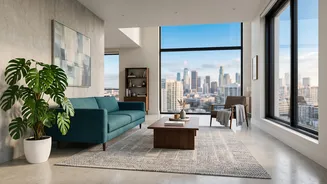
Renting offers unparalleled flexibility, a significant advantage in a dynamic city like Pune. For professionals in the thriving IT and manufacturing sectors, who may need to relocate for career opportunities, renting avoids the lengthy and expensive process
of selling a house. The financial barrier to entry is also much lower. While buying a home requires a substantial down payment, stamp duty, registration fees, and other charges, renting only requires a security deposit, which is typically two to three months' rent. In 2026, with average 2BHK rents in many areas ranging from ₹25,000 to ₹40,000, the initial cash outflow is a fraction of the lakhs needed for a down payment on a property. This frees up capital that can be invested elsewhere, potentially generating higher returns.
The Financial Reality of Buying: High Costs, Higher Stakes
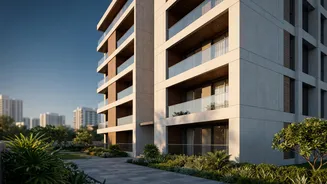
The dream of ownership in Pune comes with a hefty price tag. Property rates in sought-after localities like Baner, Wakad, and Kharadi can range from ₹8,600 to over ₹12,000 per square foot. This means a 1,000 sq. ft. 2BHK could cost anywhere from ₹86 lakhs to ₹1.2 crores. On top of the property cost, buyers in Pune must pay stamp duty, which is around 6-7% for male buyers, and a 1% registration fee. For a property worth ₹80 lakhs, these charges alone can exceed ₹5 lakhs. Then comes the home loan. With interest rates hovering around 8.4% to over 9% p.a., the Equated Monthly Instalment (EMI) on a loan for an ₹80 lakh property can easily be double the monthly rent for a similar flat. This long-term financial commitment requires significant income stability.
How Rising Prices Are Tilting the Scale
Continuously rising property prices are the central factor complicating the rent-versus-buy decision. While homeowners benefit from capital appreciation, projected to be between 7-10% annually in many Pune corridors, the high entry cost is a major deterrent. This leads to a critical calculation known as the price-to-rent ratio. In Pune, this ratio is often in a borderline range of 20-25x, meaning it could take over 20 years of rent to equal the property's purchase price. In such scenarios, financial advisors often suggest that renting and systematically investing the difference (the amount saved by not paying an EMI and a down payment) could potentially build more wealth over a 10-year period than property ownership. The rising prices increase the loan amount and the EMI, making this 'invest-the-difference' strategy more appealing for those who are disciplined investors.
Ownership as a Long-Term Goal: Stability and Forced Savings
Despite the high costs, the emotional and financial security of owning a home remains a powerful motivator. Paying an EMI is a form of forced savings that builds equity over time. Unlike rent, which is a pure expense, every EMI payment brings you closer to owning a valuable asset. The Pune real estate market is considered stable and driven by end-users rather than speculators, reducing the risk of a price bubble. For those planning to live in the city for the long term (typically more than seven years), buying a home provides stability, insulating them from annual rent hikes and the uncertainty of lease renewals. It offers the freedom to modify the space to suit personal tastes and creates a sense of belonging to a community.
Making Your Decision: A Personal Calculation
Ultimately, the choice is not just financial; it's personal. Before deciding, consider these key factors. First, assess your financial readiness. Do you have a stable income and enough savings for a 20% down payment and other associated costs without depleting your emergency fund? Second, evaluate your time horizon. If you are certain you will stay in Pune for more than seven to ten years, buying becomes a more viable option. Third, consider your lifestyle and career. Does your job require mobility, or are you rooted in the city? Finally, do the math for your specific situation. Use an online rent-versus-buy calculator to compare costs based on the property price in your desired locality, current loan rates, and expected appreciation.