

As Diwali 2026 approaches, the air fills with joy and the warm glow of diyas. Nothing says 'welcome' quite like a platter of homemade sweets, crafted with love to share with family and friends. Here is a list to get you started.
The Tradition of Diwali Sweets
Sweets, or mithai, are
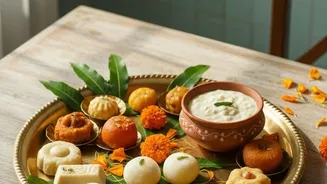
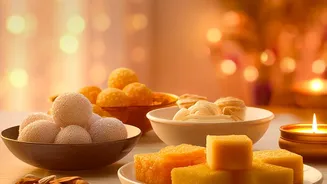
central to Diwali celebrations, symbolizing happiness, prosperity, and the triumph of good over evil. The act of preparing sweets at home is often a cherished family tradition, bringing multiple generations together in the kitchen. Exchanging these treats with neighbours and loved ones is a gesture of goodwill, strengthening community bonds and spreading the joy of the festival. Each sweet carries its own significance, contributing to the rich tapestry of flavours and emotions that define this festive period.
Besan Ladoo
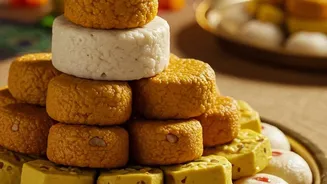
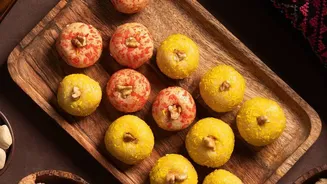
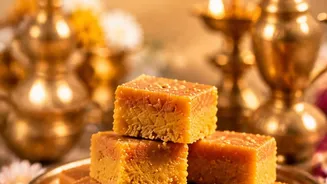
A quintessential Diwali sweet, Besan Ladoo is made from gram flour (besan), ghee, and sugar, often flavoured with cardamom and studded with nuts. The process involves slow-roasting the besan in ghee until it emits a nutty, irresistible aroma that is often considered the scent of the festival itself. The key to a perfect ladoo is achieving the right texture; the roasted flour should be grainy, not raw. Once cooled, the mixture is combined with powdered sugar and rolled into dense, delicious spheres. These ladoos are not just a treat but a nostalgic classic in many Indian households.
Kaju Katli
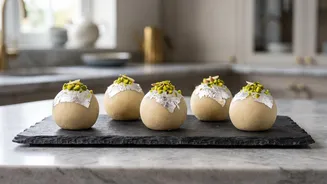
Often called the 'queen' of Indian sweets, Kaju Katli is a smooth, melt-in-your-mouth fudge made from cashew nuts. This luxurious sweet is a festive favourite, frequently exchanged in elegant boxes as gifts. The process involves grinding cashews into a fine powder, which is then cooked with sugar syrup until it forms a soft, pliable dough. The dough is kneaded lightly while still warm, rolled out thin, and traditionally decorated with an edible silver leaf (varakh) before being cut into its signature diamond shape. While it seems sophisticated, simpler recipes make it accessible for home cooks.
Coconut Barfi
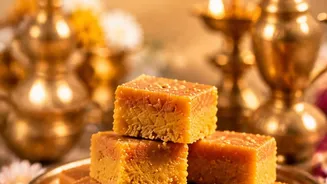
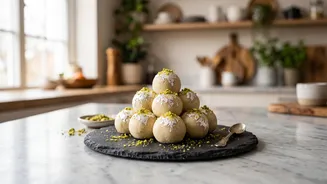
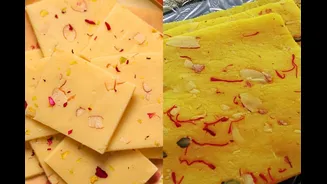
Coconut Barfi, also known as Nariyal Barfi, is a wonderfully simple and versatile fudge-like sweet. It can be made in various ways, but a popular quick method uses desiccated coconut and condensed milk, making it an ideal choice for busy households. The ingredients are cooked together until the mixture thickens and starts to pull away from the sides of the pan. Flavoured with cardamom or rose water, the mixture is then spread onto a greased tray, allowed to set, and cut into squares or diamonds. Its sweet, tropical flavour is a guaranteed crowd-pleaser.
Gulab Jamun
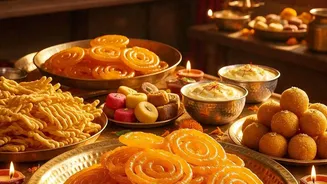
No festive spread is complete without these soft, syrup-soaked spheres. Gulab Jamun are deep-fried dumplings, traditionally made from khoya (milk solids) or, more commonly in modern recipes, milk powder. The name translates to 'rose berry', a nod to the rose-flavoured sugar syrup they are steeped in. The secret to a perfect Gulab Jamun lies in a soft, crack-free dough and frying the balls slowly at a low temperature to ensure they cook through evenly. Once fried to a deep golden-brown, they are immediately transferred to the warm syrup, where they soak up the sweetness and become irresistibly spongy.
Rava Kesari
For those seeking a quick yet elegant dessert, Rava Kesari (or Sooji Halwa) is an excellent choice. This fragrant pudding is made from semolina (rava/sooji), ghee, sugar, and water or milk. Its beautiful saffron (kesar) hue and aroma make it feel truly special. The process involves roasting the semolina in ghee, then adding hot liquid and sugar, and stirring until it thickens into a glossy, pudding-like consistency. Garnished with roasted nuts and raisins, it’s a warm, comforting sweet that can be prepared in under 30 minutes.