

Nimki: The Savoury Staple
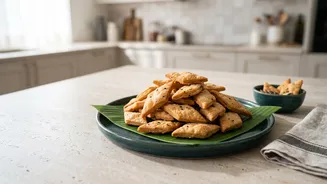
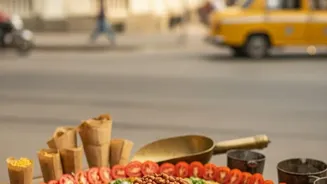
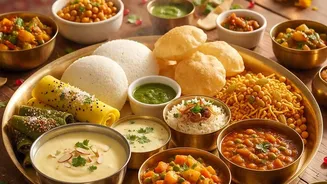
No Bijoya platter is complete without this crunchy, savoury delight. Nimki are small, diamond-shaped crackers made from flour and seasoned with nigella seeds (kalo jeera). They are deep-fried to flaky perfection, offering a salty counterpoint to the array
of sweets. Traditionally made at home in large batches, these snacks are perfect for munching on as conversations flow. Their addictive crispiness and long shelf life make them a household essential during the festive season, ready to be served to any guest who drops by.
Ghugni: The Hearty Accompaniment
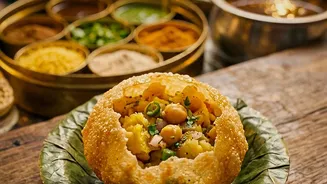
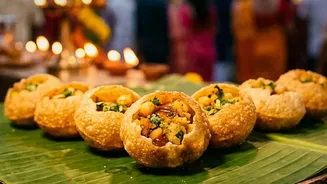
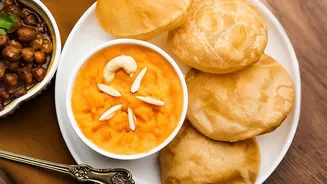
Often served alongside Nimki, Ghugni is a warm and comforting curry made from dried yellow or white peas. This savoury dish is slow-cooked with a medley of spices, sometimes garnished with chopped onions, coriander, and a squeeze of lime. Its robust flavour and soupy consistency make it an ideal partner for the dry, flaky Nimki. Ghugni represents the heartiness of Bengali hospitality, a simple but deeply satisfying dish that welcomes guests and makes them feel right at home during Bijoya visits.
Narkel Naru: The Quintessential Sweet
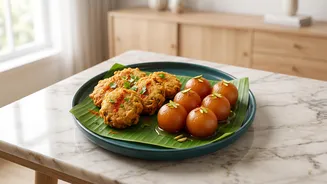
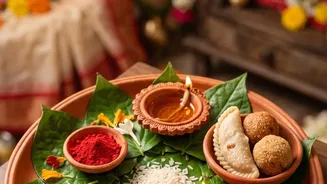
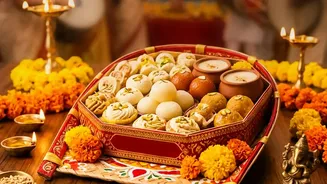
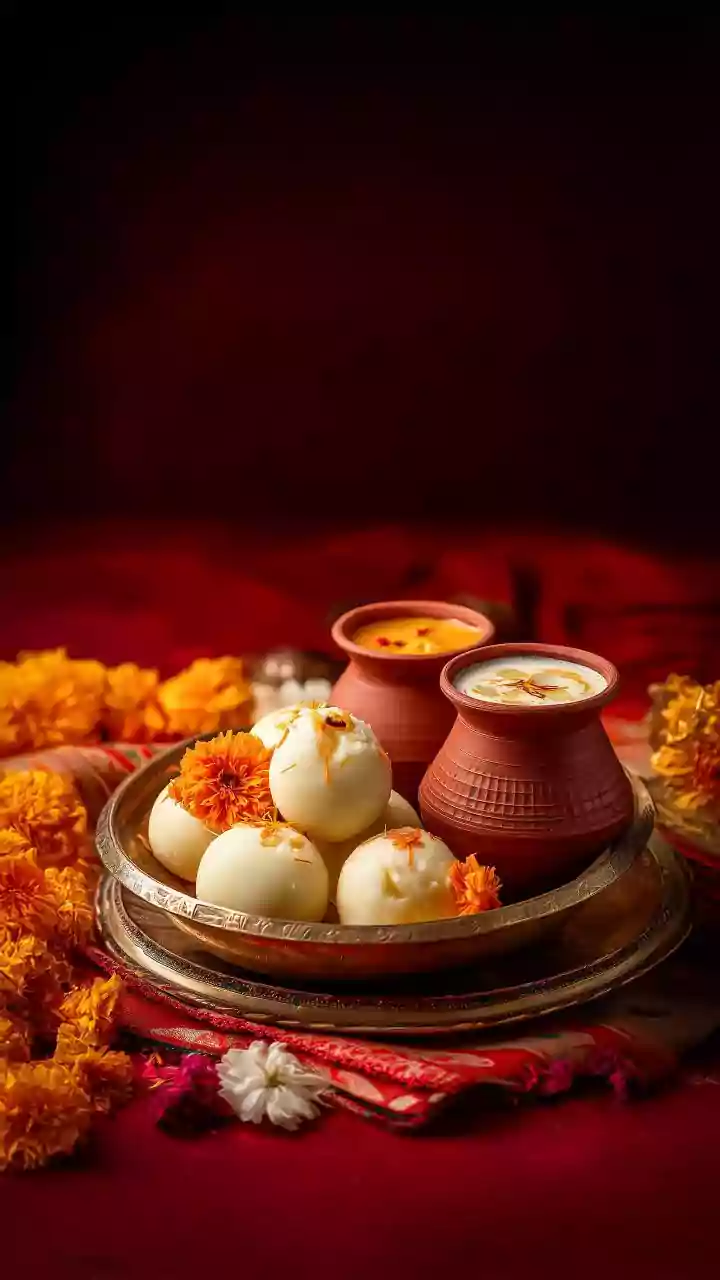
Arguably the most iconic Bijoya sweet, Narkel Naru are delightful little spheres made from grated coconut. There are two main varieties: one made with jaggery (gur), which gives it a rich, brown colour and caramel-like flavour, and another made with sugar, which results in a pristine white laddu. The process of making Naru is often a communal activity, filling the home with the sweet aroma of cooking coconut. These bite-sized treats perfectly capture the essence of tradition and the sweetness of the occasion.
Chandrapuli: The Elegant Sandesh
Chandrapuli is a type of Sandesh, a classic Bengali sweet made from chhena (fresh cottage cheese). What sets it apart is its beautiful half-moon shape, which gives it its name ('chandra' meaning moon). It is typically made by cooking chhena with coconut, mawa (milk solids), and sugar, then pressing it into special moulds. The result is a soft, aromatic sweet with a delightful texture that is less common than a simple Naru but equally cherished for its elegance and delicate flavour.
Malpua: The Syrupy Pancake
Malpua is a decadent, deep-fried pancake that is a festive favourite across India, but the Bengali version holds a special place during Bijoya. The batter, often made with flour, semolina, and sometimes flavoured with fennel seeds, is fried until the edges are crisp and the centre is soft and fluffy. The warm Malpuas are then dipped in a fragrant sugar syrup, soaking up the sweetness. Served hot, this indulgent treat is the epitome of festive celebration.
Gokul Pithe: The Stuffed Delight
Gokul Pithe is a special-occasion sweet that often makes an appearance during Bijoya. These are small patties made from a sweet stuffing of coconut and khoya (milk solids), which are then dipped in a batter and deep-fried until golden. As a final touch, they are soaked in a sweet syrup, often made from date palm jaggery, which infuses them with a unique flavour. The combination of the rich filling, the crisp outer layer, and the sweet syrup makes it an unforgettable treat.
Darbesh: The Colourful Laddu
While similar to the North Indian Boondi Laddu, the Bengali Darbesh has its own distinct character. It's considered a more refined version, often incorporating mawa or khoya into the mix, which gives it a richer, softer texture. These colourful laddus are made from tiny droplets of chickpea flour batter (boondi) that are fried and then soaked in sugar syrup before being formed into spheres with nuts and raisins. Their vibrant appearance and delicious taste make them a joyful addition to any Bijoya sweet plate.