




The Hunt for Biosignatures
When astrobiologists search for extraterrestrial life, they aren't looking for little green men. They're searching for 'biosignatures'—any substance, object, or pattern that points to a biological origin. This could be a chemical in an exoplanet's atmosphere,
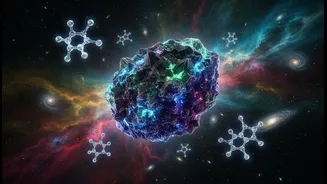
a complex organic molecule in a meteorite, or a microscopic fossil structure in a rock sample. On Earth, for example, the high concentration of oxygen in our atmosphere is a powerful biosignature produced by photosynthesis. The goal is to find something that is difficult, if not impossible, to create through non-biological, or abiotic, processes.
The Problem with 'Almosts': False Positives
Herein lies the great challenge: nature is a master mimic. Many potential biosignatures can also be created by purely geological or chemical processes. These are known as false positives or 'abiosignatures'. For instance, methane—a gas heavily produced by life on Earth—can also be generated by water-rock reactions, a process called serpentinization. Oxygen, once considered a foolproof sign of life, can build up in a planet's atmosphere through abiotic means if the conditions are right, such as intense ultraviolet radiation from its star splitting water molecules. The 1976 Viking landers on Mars detected chemical activity in the soil that could have been interpreted as metabolism, but this was ultimately attributed to unexpected chemical reactions rather than life. This history of ambiguity is why scientists are so cautious; a promising signal must be thoroughly vetted to rule out all other explanations.
The Challenge of Pristine Sampling
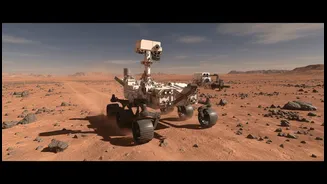
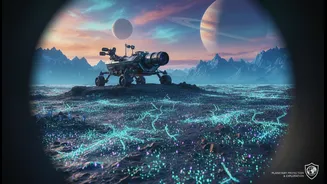
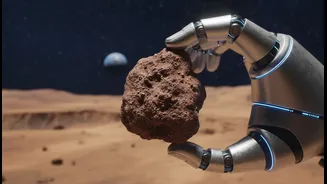
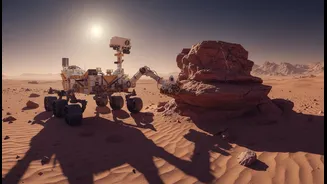
Even with the most advanced rovers and probes, collecting a sample from millions of kilometers away is fraught with peril. The first major hurdle is 'forward contamination'—the risk of bringing Earth's own microbes and organic molecules along for the ride. Spacecraft are sterilized to minimize this risk, but completely eliminating all terrestrial material is practically impossible. If scientists found amino acids in a Martian soil sample, they would need to definitively prove those molecules originated on Mars and weren't just contaminants from the probe itself. Another challenge is ensuring the sample is scientifically valuable. Temperature changes during collection or transport could alter or destroy the very evidence scientists are hoping to find. Finally, there's the issue of cross-contamination between different samples collected during a single mission, which could muddy the results.
Raising the Bar: A Scale for Discovery
To address these complexities and prevent premature or sensationalized announcements, the scientific community is working to establish clear and universal standards of evidence. NASA has proposed a seven-level framework called the 'Confidence of Life Detection' (CoLD) scale. Think of it as a ladder for scientific confidence. Level 1 is the initial detection of a tantalizing signal, like a strange gas in a planet's atmosphere. Moving up the scale requires more rigorous work: ruling out contamination, showing that the planet's environment could actually support life, and, crucially, eliminating all known non-biological explanations for the signal. Only after multiple, independent lines of evidence are confirmed by different teams using different instruments can the community reach Level 7: a confident declaration that we have, indeed, found life beyond Earth.