




A Landmark Landing
The Indian Space Research Organisation (ISRO) successfully conducted the third and final test in its Reusable Launch Vehicle Landing Experiment (RLV-LEX) series. In the experiment at the Aeronautical Test Range in Karnataka, the uncrewed 'Pushpak' vehicle
was lifted to an altitude of 4.5 kilometres by an Indian Air Force Chinook helicopter and released. From there, the vehicle autonomously navigated its way to a runway, corrected for crosswinds, and executed a precise, high-speed landing at over 320 km/h. After touching down, it used a brake parachute and its landing gear brakes to come to a controlled stop. This successful test series proves ISRO has mastered the complex challenge of getting a space vehicle to land on its own like an aircraft.
Meet 'Pushpak': India's Reusable Shuttle
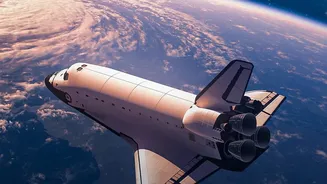
Named after the mythical flying palace from the Ramayana, Pushpak is a technology demonstrator for ISRO's reusable launch vehicle ambitions. It is a winged body, much like a miniature space shuttle, designed to test technologies crucial for a fully reusable launch system. These include hypersonic flight, autonomous navigation, and a robust thermal protection system for re-entry into Earth's atmosphere. The recent landing tests were designed to simulate the final phase of a return from space, which is one of the most difficult parts of any reusable rocket system. Critically, the winged body and flight systems from the second test were reused for the third, proving the hardware's robustness.
The Billion-Dollar Quest for Reusability
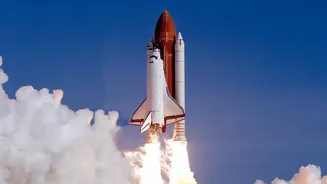
In traditional rocketry, the entire launch vehicle is discarded after a single use. This is incredibly wasteful, as the most sophisticated and expensive components—the engines and guidance systems—are lost every time. A Reusable Launch Vehicle (RLV) is designed to fly back to Earth after deploying its payload, allowing the most valuable parts to be refurbished and flown again. Think of it like the difference between throwing away an airplane after one flight versus refueling it for the next. By reusing the core stages of a rocket, the cost of accessing space can be slashed dramatically. ISRO Chairman S Somanath has called the Pushpak vehicle India's bold attempt to make space access more affordable. Estimates suggest that a fully operational RLV could reduce launch costs by as much as 80 percent.
The Road Ahead for ISRO
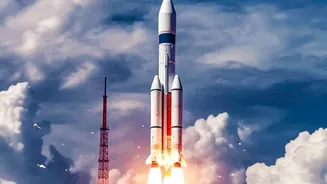
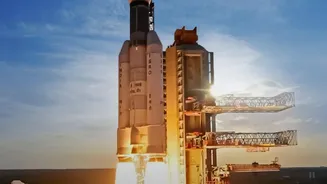
With the successful completion of the landing experiments, ISRO's next major step is the orbital re-entry vehicle (ORV) mission. This will involve launching a scaled-up version of Pushpak into orbit on a rocket. After circling the Earth, the vehicle will have to survive the intense heat of atmospheric re-entry and then perform an autonomous landing back on a runway. This is a far more challenging test that will validate the vehicle's thermal protection system and its ability to handle the transition from space to atmosphere. These steps are part of a long-term strategy that includes establishing the 'Bhartiya Antariksha Station' (Indian Space Station) by 2035 and eventually landing an Indian astronaut on the Moon by 2040.
India's Competitive Edge in the Space Market
This technological milestone is not just a scientific achievement; it's a strategic business move. The global satellite launch market is highly competitive, and cost is a major factor. By developing its own reusable launch technology, ISRO is positioning India to become a major player in the commercial launch sector. Cheaper launch costs will make India an attractive option for companies and countries around the world looking to send their satellites into orbit. As ISRO transitions more routine launch operations to the private sector, a low-cost, reliable RLV could become the backbone of India's commercial space ambitions, driving a space economy projected to grow significantly in the coming years. This home-grown capability ensures India can compete with established international players and solidify its status as a leading space-faring nation.