





The Undeniable Benefits of Walking Indoors
Walking is a highly beneficial, low-impact exercise that can improve cardiovascular health, strengthen bones, ease joint pain, and boost your immune system. When you bring that workout indoors, you add a layer of convenience and safety. You can exercise any
time, regardless of weather or daylight, in a controlled environment without risks like uneven terrain or traffic. This consistency is key for building a sustainable fitness routine. For many, especially older adults or those with balance issues, the predictable surface of an indoor space provides a safer alternative to potentially hazardous sidewalks. Plus, short bursts of indoor walking throughout the day add up, helping you meet your fitness goals.
Getting Started: Marching in Place
The foundation of any indoor walking workout is marching in place. It requires no equipment and minimal space. To begin, stand tall with your feet hip-width apart and your shoulders relaxed. Lift your knees alternately, as if marching, and allow your arms to swing naturally. Start at a slow pace for three to five minutes to warm up, then increase your speed until you can feel your heart rate rise and your breathing become slightly heavier. While walking in place uses slightly less energy than walking outdoors at the same speed—one study noted a difference of about 15% in calories burned—it remains a potent cardiovascular exercise when done with intention. Aim for about 100 steps per minute to hit a moderate intensity.
Adding Variety to Your Routine
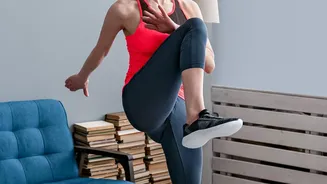
Once you're comfortable with basic marching, introduce new movements to challenge different muscles and prevent boredom. Incorporating varied movements can make an indoor walk feel more like a dynamic aerobics class. Try side-steps, where you step one foot out to the side and bring the other to meet it, then repeat in the opposite direction. Other effective additions include high-knee marches, butt kicks, front kicks, and heel-toe walks, which can improve balance and coordination. Backward walking is another surprisingly effective move that challenges different leg muscles and improves focus, as your brain has to work a little harder. Aim to perform each new move for about 40 to 60 seconds before returning to your base march.
How to Increase the Intensity
To get more from your indoor walk, you need to add intensity. Interval training is a highly effective method: alternate between one minute of highspeed walking and one minute of recovery at an easier pace. These short bursts of highintensity effort can significantly improve cardiovascular endurance. If you have stairs, use them. Walking up and down stairs engages the glutes and quads, boosts stamina, and burns more calories. You can also add light hand weights or resistance bands to incorporate upperbody strength training, turning your walk into a fullbody workout. Even just focusing on purposefully swinging your arms while you march can increase the intensity.
Creating a Sustainable Habit
The most effective workout is the one you do consistently. The biggest advantage of indoor walking is its convenience, making it easier to build a lasting habit. You don't need to commit to one long session. Accumulating movement in shorter 5to10minute bursts throughout the day provides similar health benefits. To stay motivated, try following along with one of the many free indoor walking videos available online. Using a fitness tracker to monitor your steps or time can also provide a sense of accomplishment. Remember to create a safe space by clearing away any clutter or trip hazards before you begin.