






Why Wet Hair Is So Fragile
Before we get to drying, it helps to understand what’s happening to your hair. When hair gets wet, it can absorb up to 30% of its own weight in water. This causes the hair shaft to swell, which in turn lifts the outer protective layer, known as the cuticle.
In this swollen, fragile state, your hair is significantly weaker and more elastic, making it extremely vulnerable to breakage from friction and stretching. The longer it stays wet, the more pressure is put on the delicate proteins that keep hair intact.
Step 1: Ditch the Rough Rub-Down
That vigorous, back-and-forth towel rub is the number one enemy of wet hair. The friction from a coarse towel can snag, rough up, and even chip away at those lifted cuticles, leading to immediate frizz and long-term damage like split ends. Instead of rubbing, start by gently squeezing the excess water out of your hair with your hands. Then, move on to a towel, but change your technique from rubbing to gently blotting or squeezing. This simple change significantly reduces the mechanical stress on your vulnerable strands.
Step 2: Choose a Better 'Towel'
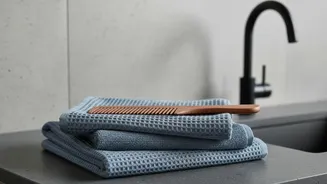
Not all towels are created equal. The looped fibres of a standard terry cloth bath towel are often too coarse and can catch on your hair, causing friction and breakage. For a much gentler approach, consider switching to a microfiber towel or even a soft, old cotton T-shirt. Microfiber towels are made of ultra-fine, smooth fibres that absorb water quickly without creating frizz-inducing friction. A cotton T-shirt has a similar gentle effect, protecting the hair cuticle while it soaks up moisture.
Step 3: The Great Debate: Air-Dry vs. Blow-Dry
For years, air-drying was seen as the undisputed healthy option. However, recent understanding shows that leaving hair wet for extended periods isn't ideal either. Prolonged dampness can put continued strain on the hair's internal structure and, in some cases, create a humid environment on the scalp that encourages bacteria. On the other hand, the high heat from blow-drying can also cause damage. The consensus among experts is a hybrid approach is often best. A gentle blow-dry, done correctly, can actually be less damaging than a long, slow air-dry. The goal is to get hair out of its fragile wet state as efficiently and safely as possible.
Step 4: How to Blow-Dry Safely
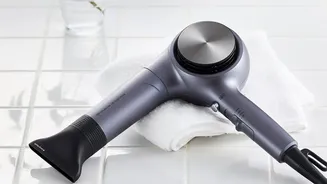
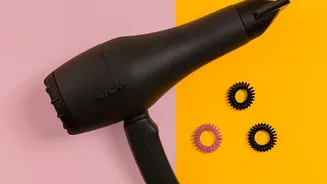
If you choose to blow-dry, a few rules make all the difference. First, let your hair air-dry or sit in a gentle towel wrap until it's about 80% dry. This minimizes the time it’s exposed to heat. Second, always apply a heat protectant spray or serum. Use your dryer on the lowest heat and speed setting that is effective, keeping it at least 8 inches away from your head. Point the nozzle downwards, following the hair shaft from root to tip, to help smooth the cuticles and increase shine. Keep the dryer constantly moving to avoid concentrating heat in one spot.
Step 5: Detangle and Finish with Care
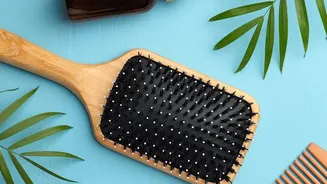
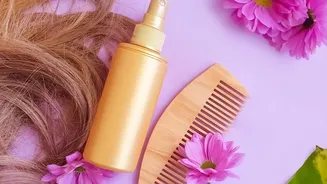
Never try to detangle soaking wet hair with a harsh brush. If you need to comb through, wait until it's damp and use a wide-tooth comb, starting from the ends and gently working your way up to the roots to minimize pulling and breakage. Once your hair is mostly dry, you can apply a leave-in conditioner or an anti-frizz serum to lock in moisture and add a final layer of smoothness, especially if rain and humidity are a concern.