




A Record Buried in Mud
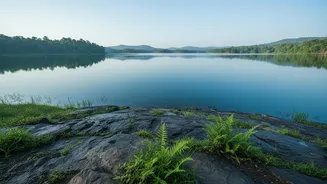
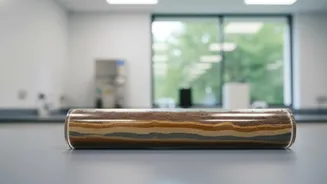
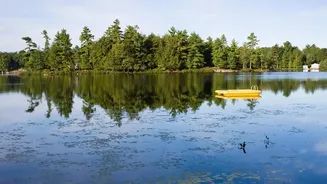
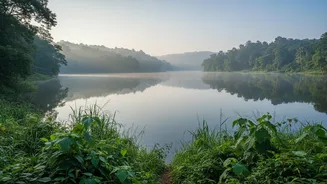
In the heart of India's Core Monsoon Zone, scientists have turned to an unlikely source for climate data: the Raja Rani Lake in Korba district, Chhattisgarh. By drilling down and extracting a sediment core, they have unearthed a natural archive stretching
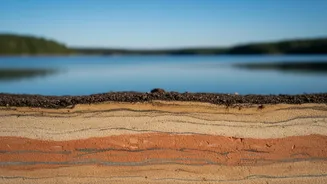
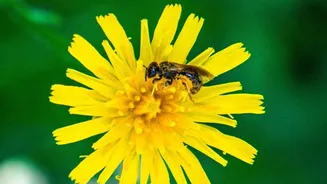
back approximately 2,500 years. Layer by layer, the mud at the bottom of the lake has trapped remnants of the surrounding environment for millennia. Among the most valuable of these remnants are ancient pollen grains, shed by the plants that lived and died in the region through centuries of climatic shifts. These tiny particles serve as direct witnesses to the environmental conditions of the past, offering a long-term perspective that modern technology simply cannot replicate.
Pollen as a Time Capsule
The science of analysing ancient pollen, known as palynology, allows researchers to reconstruct past landscapes with remarkable precision. Different plants produce distinct pollen grains and thrive under specific climatic conditions. For instance, the prevalence of pollen from forest-loving trees that require ample moisture indicates periods of high rainfall and a warm, humid climate. Conversely, an abundance of pollen from grasses and herbs points to drier, more arid phases. Scientists from the Birbal Sahni Institute of Palaeosciences (BSIP) in Lucknow meticulously identified and counted these microscopic grains through the sediment layers. This allowed them to paint a vivid picture of how the vegetation—and therefore the climate—in central India has transformed over the past two and a half millennia.
Rewriting Monsoon History
The findings from the Raja Rani Lake study were startling. The pollen record showed clear evidence that the Indian Summer Monsoon was unusually strong for a period of several centuries, roughly between 1060 and 1725 CE. This era coincides with a global warm phase known as the Medieval Climate Anomaly. During this time, the landscape around the lake was dominated by dense mixed tropical deciduous forests, a sign of intense and persistent rainfall. This discovery challenges previous assumptions, providing concrete proof that the monsoon system can operate at a much higher intensity than what has been recorded in the modern era. This period of powerful monsoons was far more significant than historical records had previously suggested.
The Blind Spot of Modern Data
This is where the ancient pollen highlights a critical weakness in our contemporary understanding of climate. Our most reliable instrumental weather records, from stations and satellites, only go back about 150 years. While invaluable, this represents a mere sliver of climatic history. It's like trying to understand a person's entire life by watching only the last two minutes of it. Such a short record cannot capture the full range of natural climate variability, including long-term cycles and the true intensity of rare, extreme events. The Chhattisgarh pollen data demonstrates that periods of much stronger monsoons have occurred naturally. Relying solely on modern data could lead to climate models that are not prepared for the full spectrum of possibilities, potentially underestimating the risk of future extreme rainfall and flooding.
Why the Past Matters for the Future
Understanding this deep past is not just an academic exercise; it is crucial for India's future. The Indian Summer Monsoon is the lifeblood of the subcontinent's economy and agriculture. By integrating long-term paleoclimate data from sources like the Raja Rani Lake pollen, scientists can build more robust and accurate climate models. These improved models can help forecast future climate trends with greater confidence, allowing for better-informed decisions in water resource management, agricultural planning, and infrastructure development. The ancient pollen teaches us that the climate system has a wider range of behaviour than our short instrumental records show. Preparing for the future requires us to listen to the stories the past has been saving for us, one grain at a time.