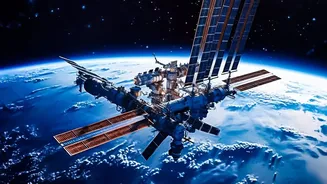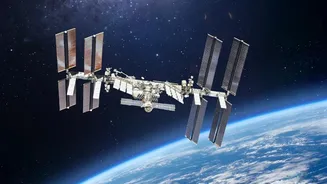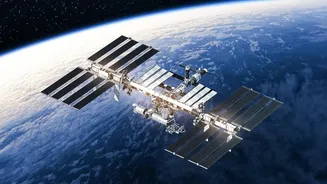


What You Are Looking For
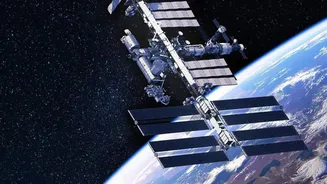
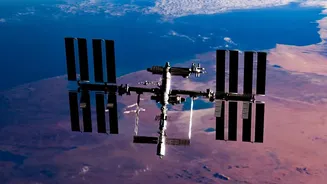
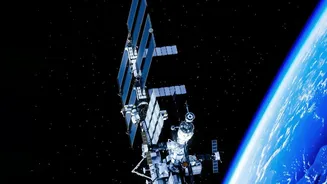
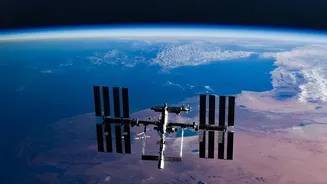
Forget what you think a satellite looks like. The ISS doesn’t blink like an airplane; instead, it appears as a very bright, steady point of light moving silently and quickly across the night sky. It can be as bright as the planet Venus and is visible
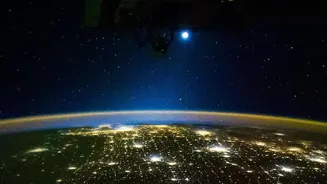
even from light-polluted cities. The station orbits at an altitude of about 400 kilometres and travels at a staggering 28,000 kilometres per hour, completing a full circle of the Earth every 93 minutes. This incredible speed means it will cross your entire field of view in just a few minutes, so being prepared is key. The best viewing times are typically a few hours before sunrise or after sunset. During these periods, the sky is dark enough for the station to be seen, but the ISS is still high enough to catch the sun's rays and reflect them down to you.
Use NASA's Official Tool
The most reliable way to get sighting information is directly from the source. NASA runs a free service called 'Spot The Station' that provides precise viewing times for over 4,600 locations worldwide, including numerous cities across India. You can visit the website and select your location to see a list of upcoming opportunities. For even more convenience, you can sign up for email or text alerts. The service will notify you a few hours before the ISS is scheduled to pass over your area, providing details on when it will appear, how long it will be visible, its maximum height in the sky, and the direction it will be travelling. NASA only sends alerts for high passes, ensuring the station will be high enough to be seen clearly over trees and buildings.
Download a Tracking App
For real-time tracking and on-the-go alerts, a dedicated smartphone app is an excellent choice. Many popular apps are available for both Android and iOS that make spotting the ISS incredibly simple. 'ISS Detector' is a favourite among users for its easy-to-understand interface and alerts. Other highly-rated options include 'Heavens-Above' and 'ISS Tracker'. These apps use your phone's GPS to give you precise data for your exact location. Many also feature compasses and augmented reality views that show you exactly where to point your phone in the sky to find the station, taking all the guesswork out of the experience. Some apps even provide information on other visible satellites, including the Starlink 'satellite trains'.
Tips for the Best Sighting
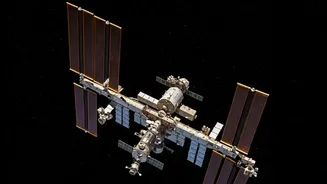
You don't need any special equipment to see the ISS; it is easily visible to the naked eye. In fact, a telescope is often impractical because the station moves too quickly to track easily. However, a pair of binoculars can enhance the view, making the golden hue of the solar panels more apparent. To ensure a successful sighting, head outside about five minutes before the scheduled time to let your eyes adjust to the darkness. If possible, choose a location with a clear view of the horizon and minimal city lights. The tracking data will tell you where the station will appear (often in a westerly direction) and where it will disappear. Be patient and keep your eyes on that part of the sky. Soon enough, you'll see a brilliant 'star' gliding into view.