
The Universe’s Hidden Nurseries
Across our galaxy and beyond, there are vast, cold clouds made of gas (mostly hydrogen) and tiny dust particles. These are not like the dust bunnies under your bed; this interstellar dust is more like fine smoke. These molecular clouds, sometimes spanning
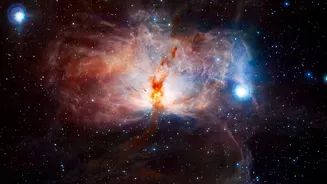
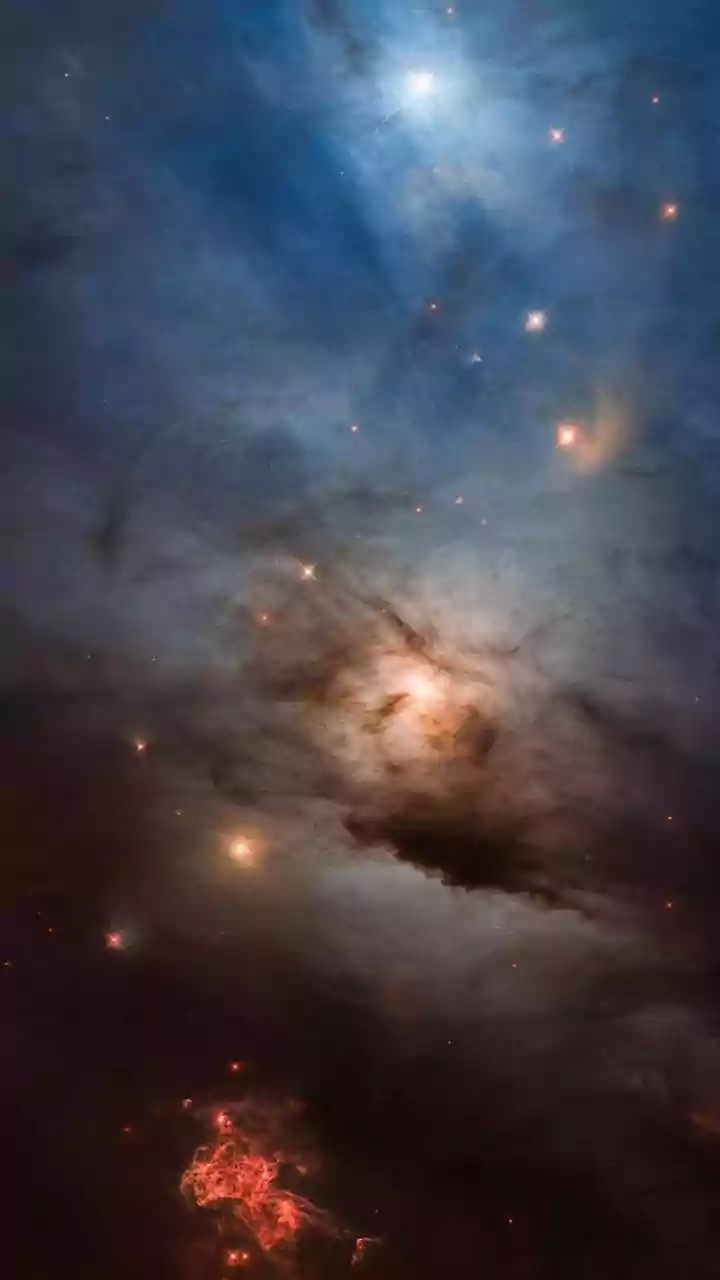
hundreds of light-years, are the universe's stellar nurseries. Within these dense regions, gravity pulls clumps of gas and dust together. As these clumps grow, their core heats up, forming a protostar, or a baby star. The problem for astronomers is that these dust clouds are opaque. The thick dust scatters and absorbs visible light—the kind our eyes can see—making it impossible for traditional optical telescopes to peer inside and see the star formation happening within. It's like trying to see through a thick fog; the light from what's inside simply can't get out.
A Special Kind of Light
This is where infrared astronomy changes everything. Infrared is a type of light with longer wavelengths than visible light. While we can't see it with our eyes, we feel it as heat. Every object with a temperature, even cool cosmic dust, emits infrared radiation. The magic of infrared light is its ability to bypass the cosmic dust that blocks visible light. Its longer wavelengths can slip past the tiny dust particles without being scattered. Think of it like this: if visible light is like a tiny ball trying to get through a dense forest (it will hit a tree), infrared light is like a much larger wave that can travel over and around the trees. This property allows infrared telescopes to see through the dusty veil and directly observe the hidden universe.
Telescopes That See the Invisible
To capture this special light, scientists use powerful infrared telescopes. Because much of the infrared radiation is absorbed by water vapour in Earth's atmosphere, these telescopes are often placed in high, dry locations or, even better, in space. The premier instrument for this work is the James Webb Space Telescope (JWST). Engineered specifically to detect near- and mid-infrared light, JWST can peer into the densest cosmic clouds with unprecedented clarity. This brings us to the "Deep Field" images. These are long-exposure observations of a tiny patch of sky, designed to reveal extremely faint and distant objects. While the Hubble Space Telescope produced groundbreaking deep fields, JWST's infrared capabilities have taken it a step further, revealing the star-forming processes within galaxies that existed billions of years ago.
What the Infrared Glow Reveals
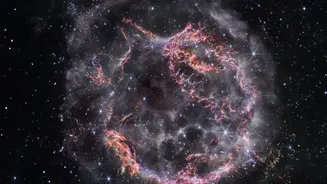
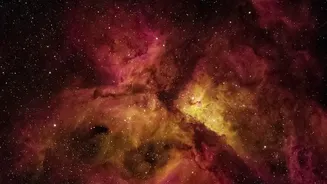
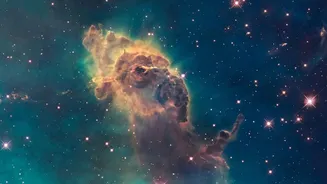
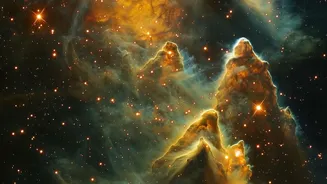
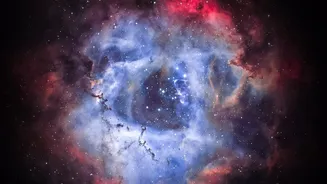
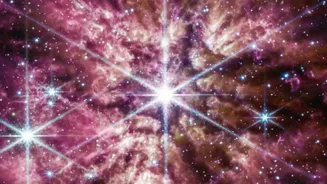
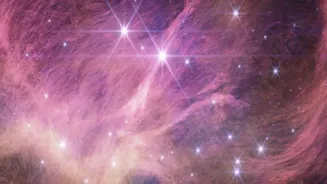
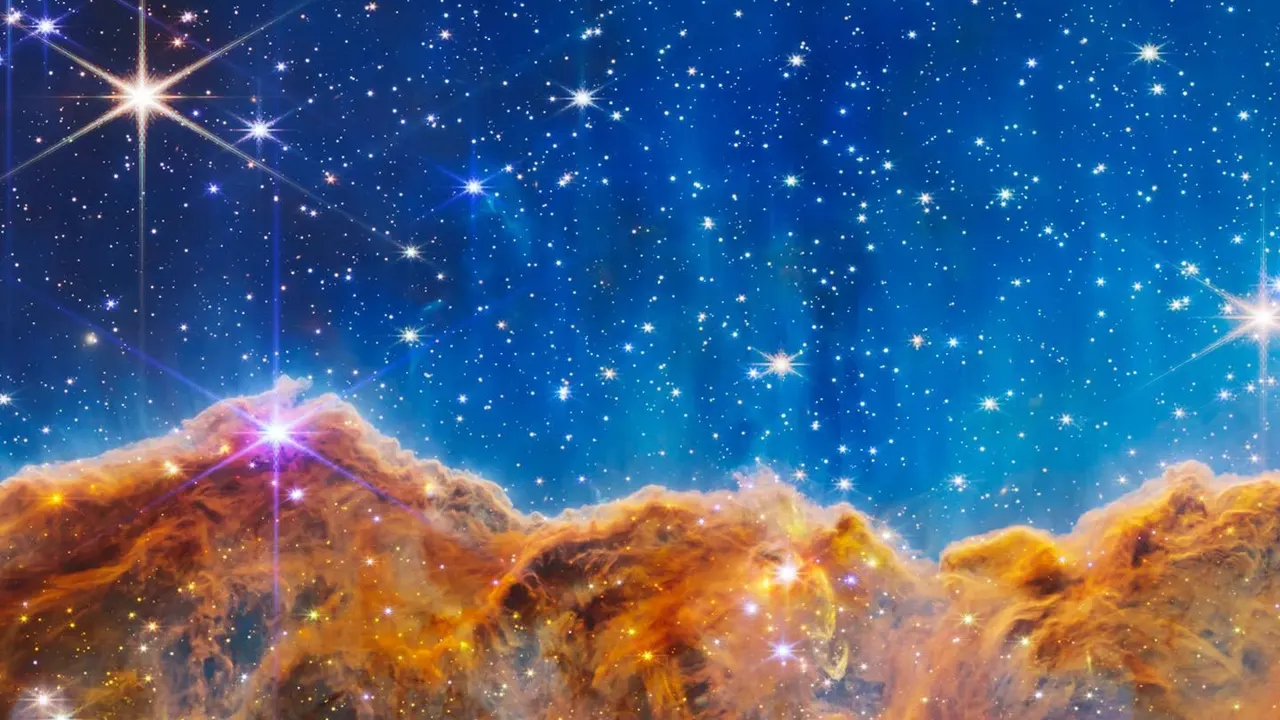
When JWST points its infrared eye at a stellar nursery, what was once a dark patch of sky transforms into a sparkling landscape. The telescope can detect the warm glow of protostars as they heat up, still cocooned within their dusty envelopes. We can see delicate filaments of gas and dust winding through galaxies, showing where the raw materials for stars are gathering. In some of the most stunning images, like those of the Pillars of Creation, infrared vision allows us to pierce through the iconic towers of gas and dust to see the crimson glow of newly formed stars that were previously hidden. These observations provide a detailed timeline of star birth, from the initial collapse of a gas cloud to the emergence of a young, shining star. By studying these regions, astronomers can answer fundamental questions about how many stars are forming, how massive they are, and how their birth influences the surrounding galaxy.