





Anatomy of a Disaster
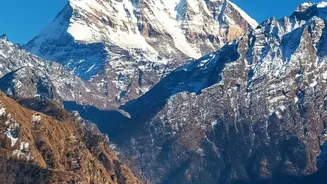
The disaster began high in the Himalayas when a massive section of a glacier broke away. This was not a slow melt, but a sudden, violent collapse of ice and the rock it was attached to. Experts reviewing satellite imagery confirmed that a substantial
portion of the glacier's snout, or end-point, fell away, triggering what is known as an ice-rock avalanche. The sheer force of this collapse was so immense that it registered on seismometers as a 5.2 magnitude event, initially leading to confusion that an earthquake had struck. However, analysis later confirmed that the seismic waves were generated by the landslide itself, not by tectonic activity.
From Avalanche to Debris Flow
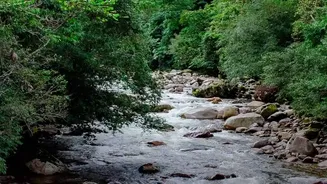
Once the mass of ice and rock began its descent, it didn't just slide. It crashed into the Lhende River valley, temporarily blocking the river's flow. As water built up behind this makeshift dam, the pressure became immense. When the dam finally gave way, it unleashed not just water, but a terrifying slurry of mud, rock, and ice. This is called a debris flow, and it is far more destructive than a typical flood. The mixture is incredibly dense and heavy, allowing it to carry massive boulders and debris, scouring the riverbed and banks as it grows in volume and power. This wall of water and sediment moved with incredible speed, giving anyone in its path almost no time to escape.
The Human Cost Downstream
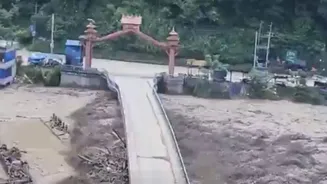
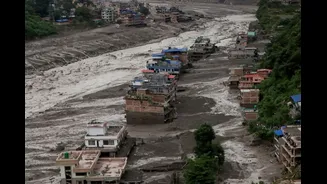
The torrent thundered down the narrow mountain valleys, erasing everything in its path. Houses, bridges, roads, and crucial hydropower projects were swept away in moments. Videos from the scene showed a wall of cement-coloured water and debris obliterating entire villages and key commercial crossings between Nepal and China. The impact was catastrophic for communities in Nepal's Rasuwa district and across the border in Tibet. The devastation crippled transportation and communication, making rescue efforts incredibly difficult. For the people living in these valleys, which serve as vital economic and travel corridors, the disaster was a swift and brutal blow.
A Warning Sign from a Warming Himalayas
While the immediate trigger was the glacier's physical collapse, the event highlights a much larger and more alarming trend. The Himalayas are warming faster than the global average, causing glaciers to melt at an accelerated rate. According to the UN, glaciers in Nepal melted 65% faster in the last decade than in the previous one. This rapid melt doesn't just shrink glaciers; it makes them more unstable. Meltwater can form large, unstable lakes behind natural dams of rock and ice, known as moraines. These events, called Glacial Lake Outburst Floods (GLOFs), are becoming more frequent and pose a grave threat to the 15 million people living in the shadow of these changing mountains.
A Shared Risk for India
The disasters unfolding in Nepal are a stark reminder of a shared vulnerability across the entire Himalayan region. The rivers that sustain nearly two billion people across South Asia, including India's great Gangetic plains, have their origins in these same glaciers. An unstable glacier in Nepal can have consequences for downstream states in India like Bihar and Uttar Pradesh, which have already been put on alert following such events. The increasing frequency of GLOFs and similar disasters underscores the urgent need for cross-border cooperation on early warning systems and disaster management. The health of the Himalayas is not just a national issue for Nepal, but a matter of regional water security, food security, and safety for millions.