



The Soul of the Feast: Sacred Bhog
At the heart of Puja's culinary traditions is the 'bhog'—a consecrated meal offered to the goddess before being shared with the community. This is more than just food; it's a form of blessing and a powerful symbol of togetherness. Served in pandals to thousands,
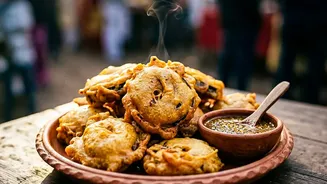
the quintessential bhog plate is a masterclass in vegetarian simplicity and flavour. The star is always the 'bhoger khichuri', a soft, aromatic blend of roasted moong dal and gobindobhog rice cooked with ghee and gentle spices. It's accompanied by 'labra', a comforting mishmash of seasonal vegetables like pumpkin and potato, and fried items like 'beguni' (batter-fried brinjal slices). A sweet and tangy tomato chutney and a dollop of 'payesh' (rice pudding) complete this soulful meal that nourishes both body and spirit.
Home Cooking: The Enduring Classics
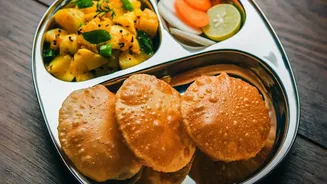
While bhog defines community feasting, private homes keep other traditions alive. For many Bengali families, Puja is a time for elaborate meals that bring everyone to the table. A classic festive breakfast or lunch often features 'luchi' (light, fluffy deep-fried bread) served with 'alur dom' (a slow-cooked spicy potato curry) or 'cholar dal', a slightly sweet lentil dish studded with coconut. The main events, especially on days like Navami, often revolve around cherished non-vegetarian delicacies. 'Kosha mangsho', a rich, slow-cooked mutton curry with a deep, dark gravy, is a celebratory staple. So are prized fish preparations, from the pungent 'shorshe ilish' (hilsa fish in a sharp mustard gravy) to the creamy and decadent 'chingri malai curry' (prawns in a coconut milk sauce). These dishes represent the comforting, unchanging core of Bengali festive cuisine.
The Pandal-Hopping Feast: Fuel for the Streets
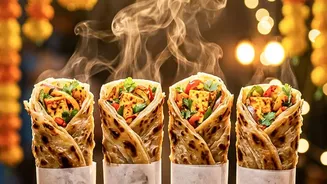
As evening descends, the culinary action spills out onto the streets. Pandal-hopping—the beloved ritual of visiting various decorative marquees housing the idols—is an all-night affair, and it requires fuel. The entire city morphs into a massive, open-air food court where convenience is key. This is where the quick bites take over, providing delicious, easy-to-eat options for people on the move. The undisputed king of Puja street food is the Kathi Roll. Flaky parathas wrapped around fillings of chicken, mutton, or egg, with sliced onions and sauces, are the perfect on-the-go meal.
A World on a Plate: From Phuchka to Chowmein
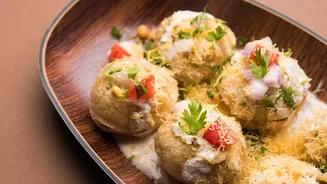
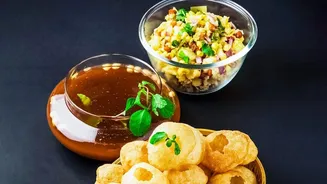
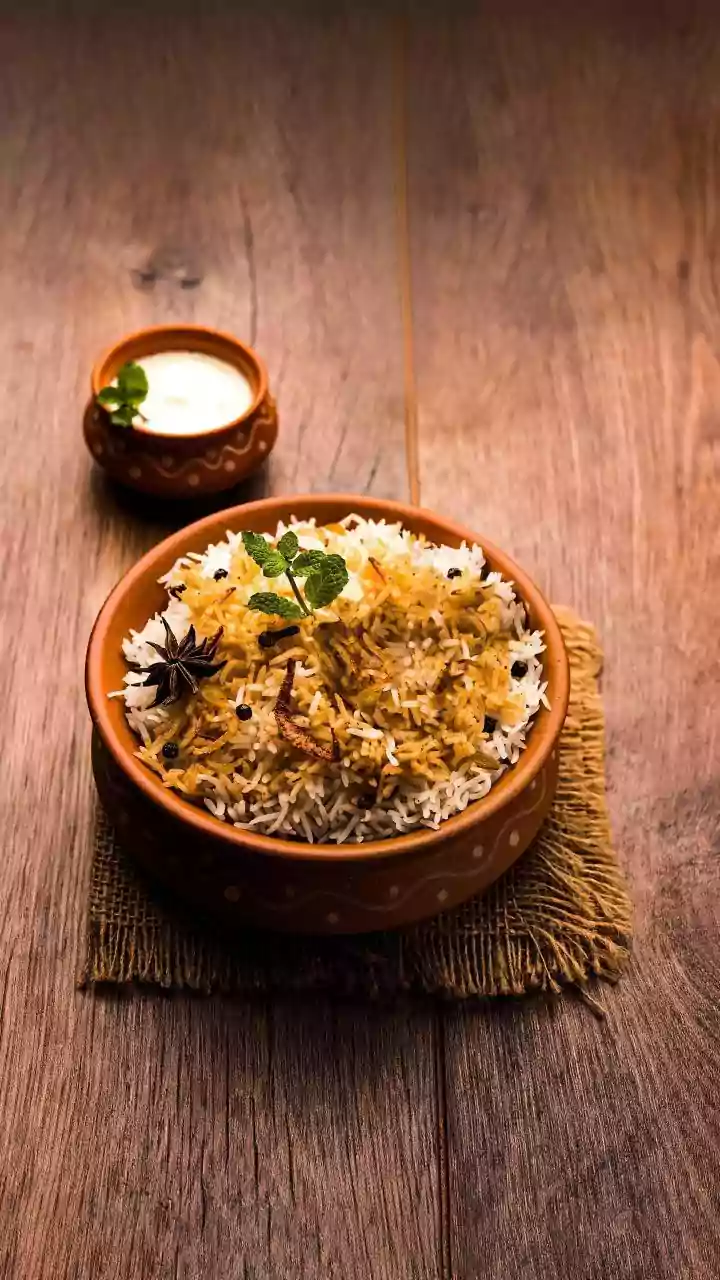
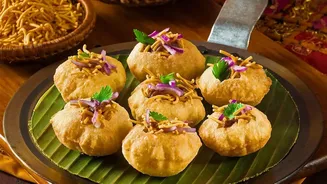
The street food menu during Puja is a testament to Kolkata's diverse palate. 'Phuchka', the city's beloved version of pani puri, is an essential experience, with crowds gathering around vendors for the tangy, spicy burst of flavour. Then there are the fried delights: 'fish chop', 'vegetable chop', and 'kabiraji cutlets', which feature minced fish or meat in a crispy, lacy egg coating. Surprisingly, Indo-Chinese food has become a non-negotiable part of the Puja street food scene. Roadside stalls do a roaring trade in hot, stir-fried chowmein, a local adaptation of the noodle dish that has become a festive favourite. Even biryani, with Kolkata's signature addition of a whole potato, becomes a go-to meal for revellers looking for a substantial plate between pandal visits.
A Sweet Conclusion for Every Palate
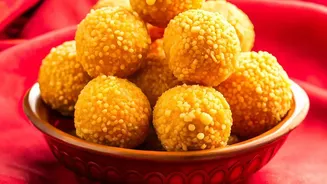
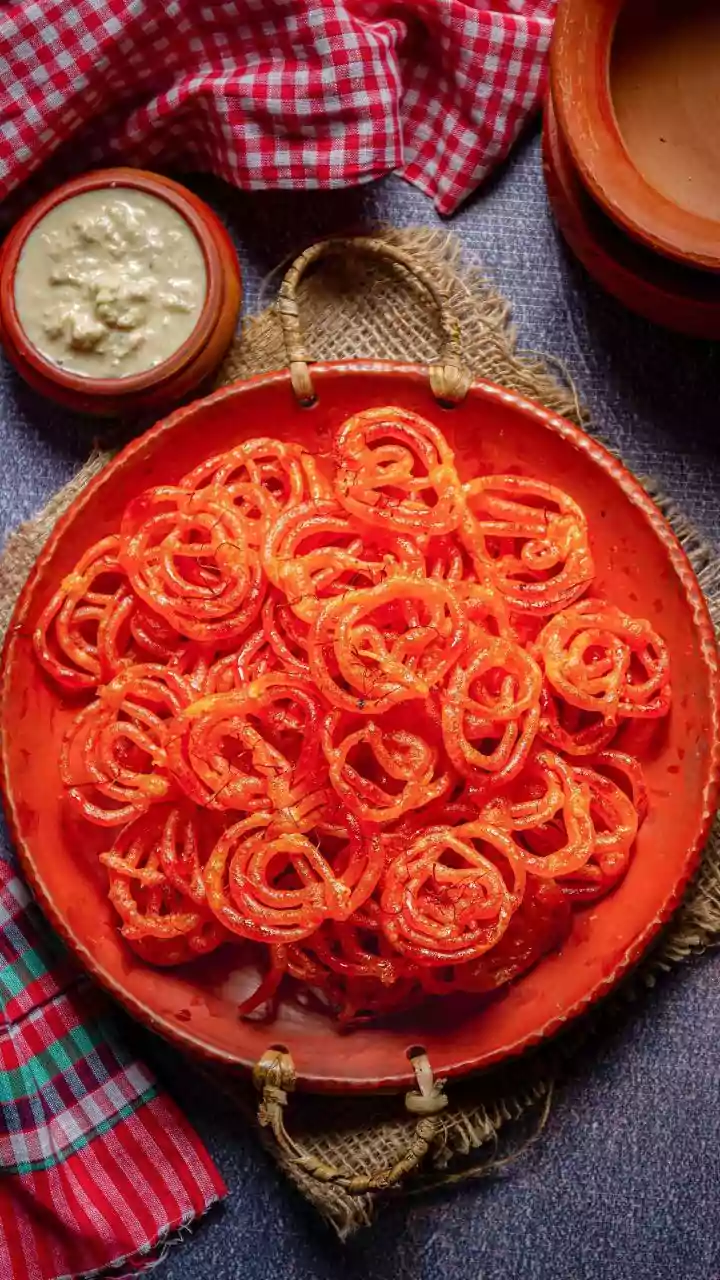
No Bengali celebration is ever complete without 'mishti' (sweets). Sweet shops work overtime, their glass cases piled high with classics that connect the traditional and modern sides of the festival. Iconic sweets like the syrupy 'rosogolla', the delicate 'sandesh', and the rich, creamy 'mishti doi' (sweetened yogurt) are consumed with gusto. These are enjoyed after a bhog meal, as a gift when visiting relatives, or simply as a sweet finish to a long night of pandal-hopping and street food indulgence. From coconut laddoos ('narkel naru') made at home to a quick stop at a famous sweet shop, dessert is an integral thread in the rich tapestry of Puja feasting.