








The Workout: Creating the Stimulus
Think of your time in the gym as flipping a switch. When you lift weights or perform resistance exercises, you’re putting your muscles under mechanical tension. [1, 7] This stress causes microscopic tears, or microtrauma, in the muscle fibres. [7, 15]
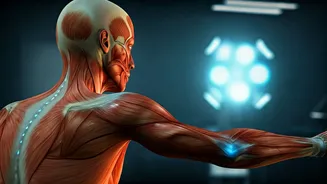
This isn’t a bad thing; in fact, this damage is the essential trigger that tells your body it needs to adapt and become stronger to handle that stress in the future. [10, 17] The intensity of your workout directly influences the strength of this signal, essentially telling your body how much repair and rebuilding is needed. [2, 14] This process sets the stage for a complex series of biological events that lead to muscle hypertrophy, which is the scientific term for the increase in muscle size. [1, 15]
The Repair Crew: Inflammation and Satellite Cells
Immediately after your workout, your body initiates a response to the muscle damage. [2] This includes an inflammatory response, which is the body's natural way of cleaning up damaged cells. [6] A key part of this process involves specialised stem cells called satellite cells. [6, 11] These cells, which are normally dormant or 'quiescent' on the outside of your muscle fibres, become activated by the mechanical strain of your workout. [6, 21] Once activated, they multiply and fuse to the damaged muscle fibres. [2, 6] This fusion serves two purposes: it helps repair the micro-tears and it can donate new nuclei to the muscle cells, which enhances the muscle's ability to grow larger and stronger. [10, 16] This cellular repair process is the very foundation of muscle growth. [2, 11]
The Building Blocks: Muscle Protein Synthesis
With the repair process initiated, your body begins the crucial task of building new muscle tissue. This happens through a process called muscle protein synthesis (MPS). [3, 4] Essentially, MPS is the mechanism by which your body uses amino acids—the building blocks derived from the protein you eat—to create new muscle proteins and repair the damaged fibres. [3, 7, 9] For muscle growth to occur, the rate of muscle protein synthesis must be greater than the rate of muscle protein breakdown. [2, 4] Exercise is a powerful stimulator of MPS, and this sensitised state can last for up to 48 hours after a workout. [3, 18] This is why post-workout nutrition is so important; it provides the raw materials needed for MPS to occur efficiently. [7, 14]
The Growth Phase: Fuel, Hormones, and Rest
Your muscles don’t actually grow while you're lifting weights; they grow during recovery. [7, 29] This is why rest is non-negotiable for anyone serious about building muscle. [5, 20] During periods of rest, especially deep sleep, your body is hard at work. [23, 25] It releases key anabolic (muscle-building) hormones like Human Growth Hormone (HGH) and testosterone, which play a significant role in muscle repair and growth. [2, 23, 26] Sleep is also when your body replenishes its energy stores and clears out metabolic waste. [23] Without adequate rest, your body remains in a state of breakdown, which can lead to overtraining, diminished performance, and an increased risk of injury. [5, 20] At least 48 hours of rest for a worked muscle group is a common recommendation to allow for full recovery. [29]
Proper nutrition is the final piece of the puzzle. A diet rich in high-quality protein provides the necessary amino acids, particularly leucine, to fuel muscle protein synthesis. [17, 24, 28] Carbohydrates are also crucial, as they replenish the glycogen stores used during your workout and support the energy needs of the recovery process. [8, 12] Healthy fats support hormone production. [8] Put simply, without the right fuel, your body cannot effectively rebuild the muscles you’ve worked so hard to stimulate.