


Why Your Workspace Needs a Touch of Green
Before diving into specific plants, it's worth noting why adding greenery to your personal space is so beneficial. Beyond simple aesthetics, studies have shown that the presence of indoor plants can reduce stress, boost mood, and even enhance productivity.
They bring a sense of life and nature indoors, breaking up the monotony of screens and paperwork. While their ability to single-handedly purify the air in a large room is often debated, their positive psychological impact is well-documented. Combining this with their air-cleaning properties makes them a powerful tool for wellness in your home office.
The Science of Cleaner Air, Simplified
A landmark 1989 NASA study found that certain houseplants could remove common volatile organic compounds (VOCs) like formaldehyde and benzene from sealed environments. These pollutants are often released by everyday items like furniture, carpets, and cleaning products. While modern research notes you would need a large number of plants to replicate the dramatic results of a sealed lab in a typical home, the fundamental process remains true. Plants absorb these compounds through their leaves and roots. For a bedroom workspace, combining plants with good ventilation is the most effective strategy. Pothos and Snake Plants were both highlighted for their capabilities in these studies.
Meet the Pothos: The Forgiving Vine
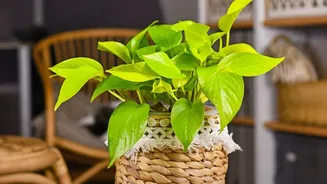
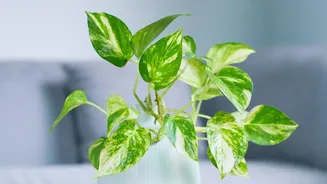
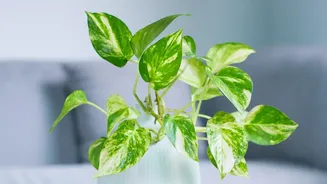
The Golden Pothos (Epipremnum aureum), also known as Devil's Ivy, is a champion for beginner plant owners. Its trailing, heart-shaped leaves with flecks of yellow add a lush, dynamic feel as they drape over shelves or hang from baskets. It is celebrated not just for its beauty, but for its resilience; it can tolerate a wide range of conditions, including low light and occasional neglect. According to NASA's research, Pothos is effective at filtering out several common indoor pollutants. A word of caution: Pothos is toxic to pets if ingested, so be sure to place it out of reach of curious cats and dogs.
Effortless Pothos Care
Caring for a Pothos is wonderfully straightforward, making it perfect for a busy work-from-home schedule. Light: It thrives in bright, indirect light but adapts well to lower light levels. Too much direct sun can scorch its leaves. Water: Water your Pothos when the top one to two inches of soil feel dry, typically every 1-2 weeks. It's more tolerant of being too dry than too wet, which can lead to root rot. The leaves will start to droop slightly when it's thirsty. Soil & Food: A standard, well-draining potting mix is all it needs. You can provide it with a balanced liquid fertilizer once a month during the spring and summer growing seasons to encourage more vibrant growth.
Meet the Snake Plant: The Indestructible Icon
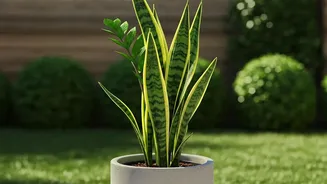
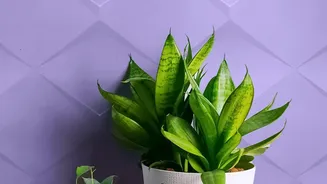
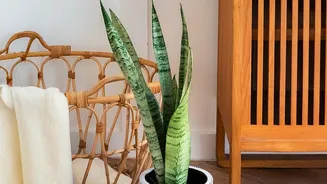
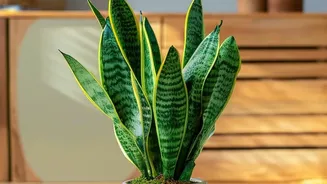
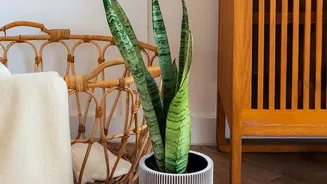
The Snake Plant (Dracaena trifasciata), also called Mother-in-Law's Tongue, is renowned for being nearly indestructible. Its stiff, sword-like leaves grow vertically, offering a strong architectural element to any room. It’s a succulent, meaning it stores water in its leaves and is extremely drought-tolerant. A unique benefit of the Snake Plant is its ability to perform a type of photosynthesis that allows it to release oxygen at night, which most plants do during the day. This makes it an ideal companion for the bedroom. It is also noted for its ability to filter pollutants from the air.
Simple Snake Plant Care
The Snake Plant truly thrives on neglect, making it one of the easiest houseplants you can own. Light: It prefers bright, indirect light but is famously tolerant of low-light conditions, making it versatile for different spots in your room. Avoid harsh, direct sunlight, which can burn the leaves. Water: Overwatering is the biggest threat to a Snake Plant. Allow the soil to dry out completely between waterings. In winter, you may only need to water it once every month or two. Soil: Use a loose, well-draining soil mix, such as one designed for cacti and succulents, to prevent root rot.
Strategic Placement for a Healthier Room
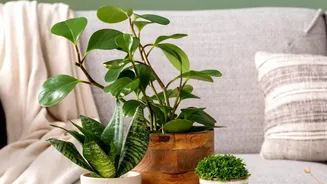
To maximize the benefits of your new green desk-mates, think about placement. Position a Snake Plant on your bedside table or in a corner of the bedroom to take advantage of its nighttime oxygen release. Let a Pothos trail from a bookshelf above your desk or hang it near a window. This not only adds visual interest and a sense of calm but also ensures the plants get adequate light. Grouping a few plants together can also create a small pocket of increased humidity, which is beneficial for both you and the plants. Remember, even a plant or two can begin to transform your space into a more pleasant and inviting place to work and rest.