






From Sugarcane to Sweetener
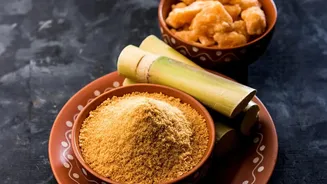
Both jaggery and white sugar begin their journey as sugarcane juice. However, their paths quickly diverge. White sugar undergoes an intensive industrial refining process. The juice is treated with chemicals like sulfur dioxide to bleach it, then boiled,
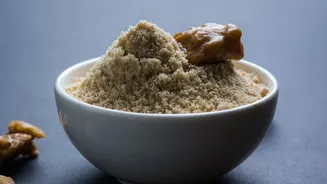
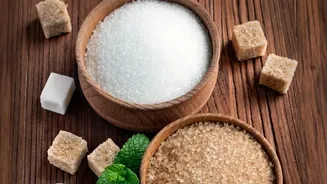
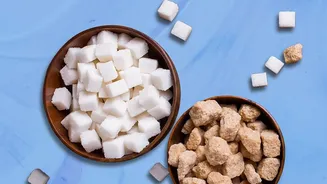
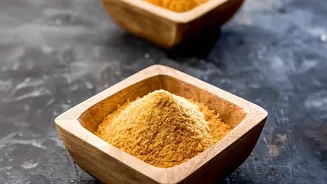
crystallised, and spun in centrifuges to strip away all impurities and the natural molasses. The end result is almost 99.9% pure sucrose—a uniform white crystal with no other nutrients. Jaggery production, on the other hand, is far simpler. The sugarcane juice is boiled in large, open iron pans until it thickens and solidifies. This minimal processing means it retains the molasses, which is the source of its characteristic golden-brown colour and its nutritional content.
The Nutritional Divide
The difference in processing creates a significant nutritional gap. White sugar provides what are often called 'empty calories'—energy from sucrose without any vitamins or minerals. Jaggery, because it retains molasses, contains trace amounts of several important minerals. These include iron, potassium, magnesium, and calcium. While you would need to eat a large amount of jaggery to meet your daily mineral needs, it is undeniably more nutrient-dense than its refined counterpart. For instance, 100 grams of jaggery can contain around 11 mg of iron, making it a better choice, gram for gram.
The Winter Wellness Connection
In India, jaggery has long been a staple of winter diets for reasons that go beyond its flavour. Traditional wisdom, supported by some modern understanding, links it to winter wellness. It is believed to have a warming effect and provides a quick source of energy to combat the cold. Jaggery is also traditionally used as a remedy for common winter ailments like coughs, colds, and sore throats due to its soothing properties. Furthermore, its mineral content, including zinc and selenium, is believed to help boost the immune system, which is particularly important during the flu season.
Impact on Blood Sugar
This is where a common myth needs to be addressed. Many believe jaggery is 'diabetic-friendly', but this is dangerously inaccurate. Surprisingly, studies show that sugarcane jaggery has a higher Glycemic Index (GI) of around 84, compared to white sugar's GI of about 65. This means jaggery can raise blood sugar levels faster than white sugar. Both are high-calorie sweeteners composed mainly of sucrose and should be consumed with caution, especially by individuals with diabetes or insulin resistance. Neither should be considered a 'safe' sugar.
Flavour, Function, and Final Verdict
Beyond nutrition, there is a distinct difference in taste. White sugar offers a neutral, one-dimensional sweetness. Jaggery, however, has a rich, complex flavour with notes of caramel and molasses that enhances traditional Indian sweets like chikki and laddoos, or a simple cup of masala chai. In terms of calorie count, both are nearly identical, with about 380-390 calories per 100 grams. So, switching to jaggery will not aid in weight loss if the quantity remains the same. The verdict? Jaggery is the nutritionally superior choice, offering minerals and a richer flavour profile that white sugar lacks. It is less processed and a more wholesome option. However, it is crucial to remember that it is still a form of sugar.