






Meet the 'Warm Neptunes'
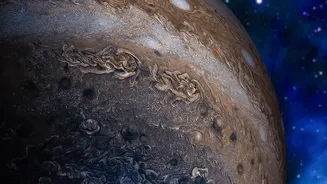
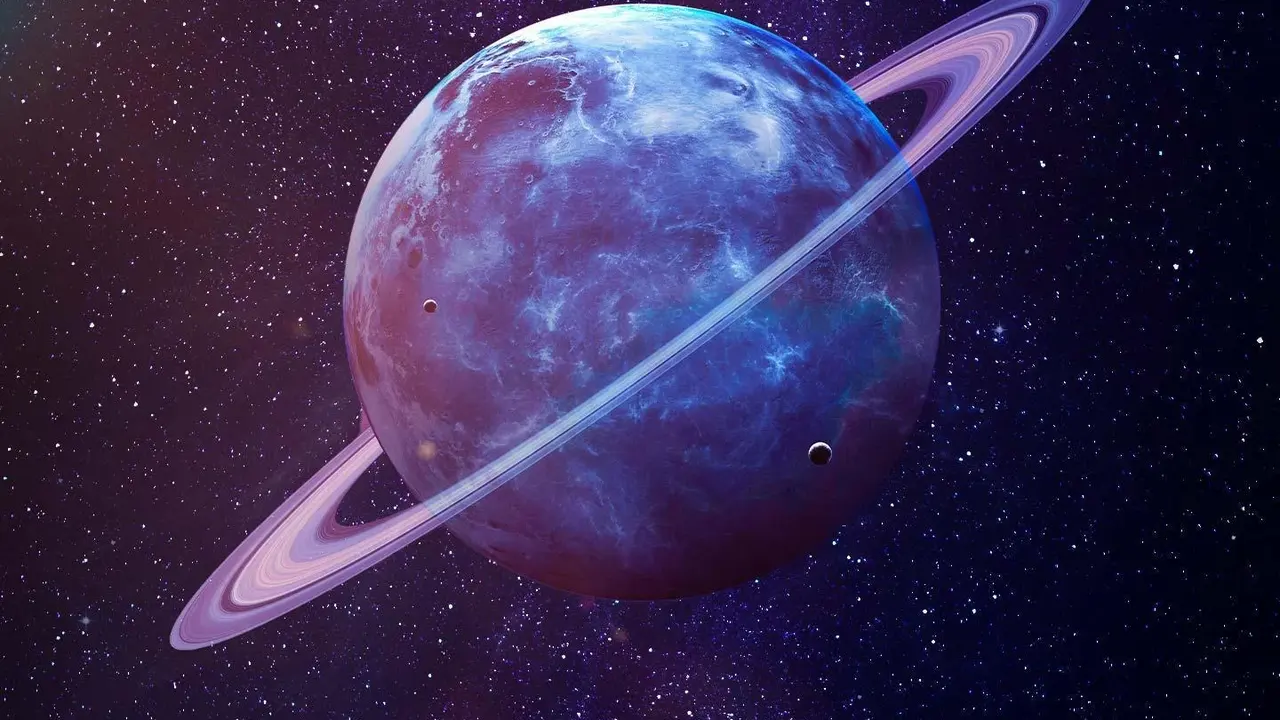
Forget rocky, Earth-like worlds for a moment and consider a class of planets that don't exist in our own solar system: 'warm Neptunes' or 'sub-Neptunes.' These are planets larger than Earth but smaller than our own Neptune. They orbit their stars much
more closely, giving them warmer temperatures than the ice giants we know. For years, these worlds were mysterious, but thanks to the power of the James Webb Space Telescope, we are finally able to peer into their atmospheres. Planets like K2-18b, located over 120 light-years away, have become prime targets, representing a completely new kind of environment where the conditions for life could, in theory, exist.
Why Methane Is Such a Big Deal
Finding any gas in an exoplanet's atmosphere is a feat, but finding methane is particularly exciting. On Earth, the overwhelming majority of methane in the atmosphere is produced by living organisms, from microbes in wetlands to the digestive systems of animals. Because of this strong link to biology, methane is considered a top-tier 'biosignature'—a chemical fingerprint that could indicate the presence of life. What makes it even more compelling is that methane is not a stable gas. It's broken down by sunlight relatively quickly, meaning that for it to be present in detectable amounts, something must be constantly replenishing it. The big question, of course, is what that 'something' is.
The Argument for a Biological Source
The case for life rests on this principle of constant replenishment. Biological processes are incredibly efficient at producing methane. On early Earth, before oxygen filled the atmosphere, methanogenic (methane-producing) microbes likely thrived. Finding a planet with a methane-rich atmosphere could suggest a similar, thriving ecosystem of alien microbes. Scientists get even more excited when they find methane alongside other gases. For instance, if an atmosphere has a lot of methane but very little carbon monoxide, it strengthens the case for life. This is because non-biological sources, like volcanoes, tend to spew out both gases, whereas biological activity on Earth actually consumes carbon monoxide. The specific mix of gases is therefore crucial to solving the puzzle.
The Other Side: The Geological Debate
Before we jump to conclusions about alien life, it's crucial to understand the other side of the debate. Science demands we rule out all non-biological explanations first. Methane can also be produced by purely geological processes, known as abiotic sources. These can include volcanic outgassing or chemical reactions that occur when water interacts with certain types of rock under high heat and pressure, like in deep-sea hydrothermal vents. A planet could, in theory, have vigorous geological activity that maintains a methane-rich atmosphere without any life at all. The challenge for astronomers is that a 'warm Neptune' is a completely alien world; its geology and chemistry could be wildly different from Earth's, potentially creating methane in ways we haven't even considered yet.
The Power of the Webb Telescope
This entire debate is only possible because of the unprecedented power of the James Webb Space Telescope. Its massive mirror and sensitive infrared instruments allow it to perform what's called transmission spectroscopy. When a planet passes in front of its star, the starlight filters through the planet's thin atmospheric halo. Different gas molecules absorb specific wavelengths of light, leaving tiny, tell-tale gaps in the spectrum. By analyzing this light, JWST can identify the chemical composition of an atmosphere hundreds of light-years away. Detections that were impossible with older telescopes are now becoming routine, providing the raw data that fuels these critical scientific discussions and moves us closer to an answer.