




A Moon With a Grand Secret
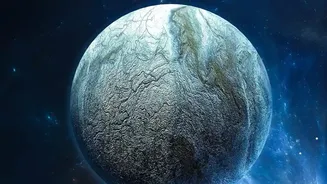
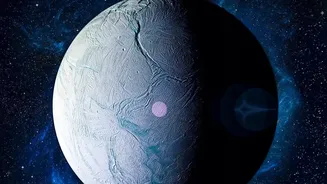
At first glance, Enceladus seems like just another frozen world in the outer solar system. It is a relatively small moon, only about 500 kilometers in diameter, and its surface is a brilliant, reflective white. But beneath its thick shell of ice, which
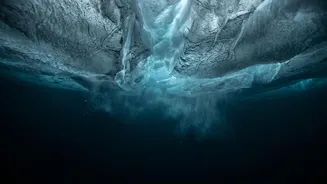
is estimated to be miles deep, lies a treasure that has captivated scientists: a global ocean of liquid saltwater. The gravitational pull from mighty Saturn constantly tugs and flexes the moon's interior, creating enough heat to keep this hidden ocean from freezing solid. This discovery alone, made by NASA's Cassini spacecraft, elevated Enceladus to one of the most intriguing bodies in our solar system. But it’s what’s inside that ocean that has truly set the scientific world abuzz.
Clues from a Cryovolcano
So how do we know what’s in an ocean hidden beneath kilometers of ice? Enceladus provides a convenient, if dramatic, delivery service. The moon’s south pole is marked by a series of fissures, dubbed “tiger stripes,” that blast enormous plumes of water vapor and ice grains into space at high speeds. These cryovolcanic jets, which constantly spew material from the subsurface ocean, gave the Cassini spacecraft a direct sample to analyze as it flew through them. By studying the composition of these icy particles, scientists have been able to piece together a chemical portrait of the ocean below without ever having to land or drill through the ice. The data collected during these flybys, though the mission ended in 2017, continues to yield groundbreaking discoveries.
A Recipe for Habitability
Life as we know it requires a few key ingredients: liquid water, essential chemical elements (like carbon, hydrogen, nitrogen, oxygen, phosphorus, and sulfur), and an energy source. Cassini’s analysis of the plumes confirmed Enceladus has nearly all of them. The plumes are rich with organic compounds, the carbon-based molecules that form the basis of life. For years, however, one critical element was missing from the list: phosphorus. That changed when subsequent analysis revealed the clear chemical signature of phosphates in the ice grains. Phosphorus is crucial; it forms the backbone of DNA and is vital for cell membranes and energy-carrying molecules in all known life. Its discovery, in concentrations potentially hundreds of times higher than in Earth's oceans, was a major milestone, satisfying one of the strictest requirements for habitability.
A Powerful Energy Source
An environment can have all the right building blocks, but without a source of energy, life cannot emerge or sustain itself. Here, too, Enceladus delivers. Scientists have found evidence of hydrothermal vents on the moon's seafloor, similar to those on Earth that support rich ecosystems without sunlight. These vents are likely responsible for producing hydrogen gas detected in the plumes. Furthermore, analysis has revealed high concentrations of methane, so high that known non-biological processes struggle to explain them. This suggests the possibility of methanogenesis, a metabolic process used by some of Earth's earliest life forms. More recent studies have identified even more potent chemical energy sources, including hydrogen cyanide. While poisonous to humans, hydrogen cyanide is a key precursor for amino acids, the building blocks of proteins, and is central to most theories on the origin of life. The presence of these compounds suggests the ocean of Enceladus might offer an energy supply more akin to a car battery than a small watch battery, capable of powering diverse chemical reactions.
What Comes Next?
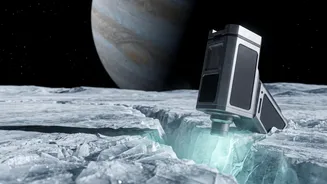
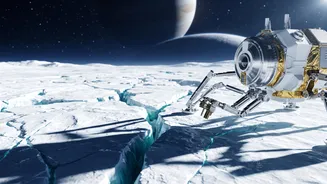
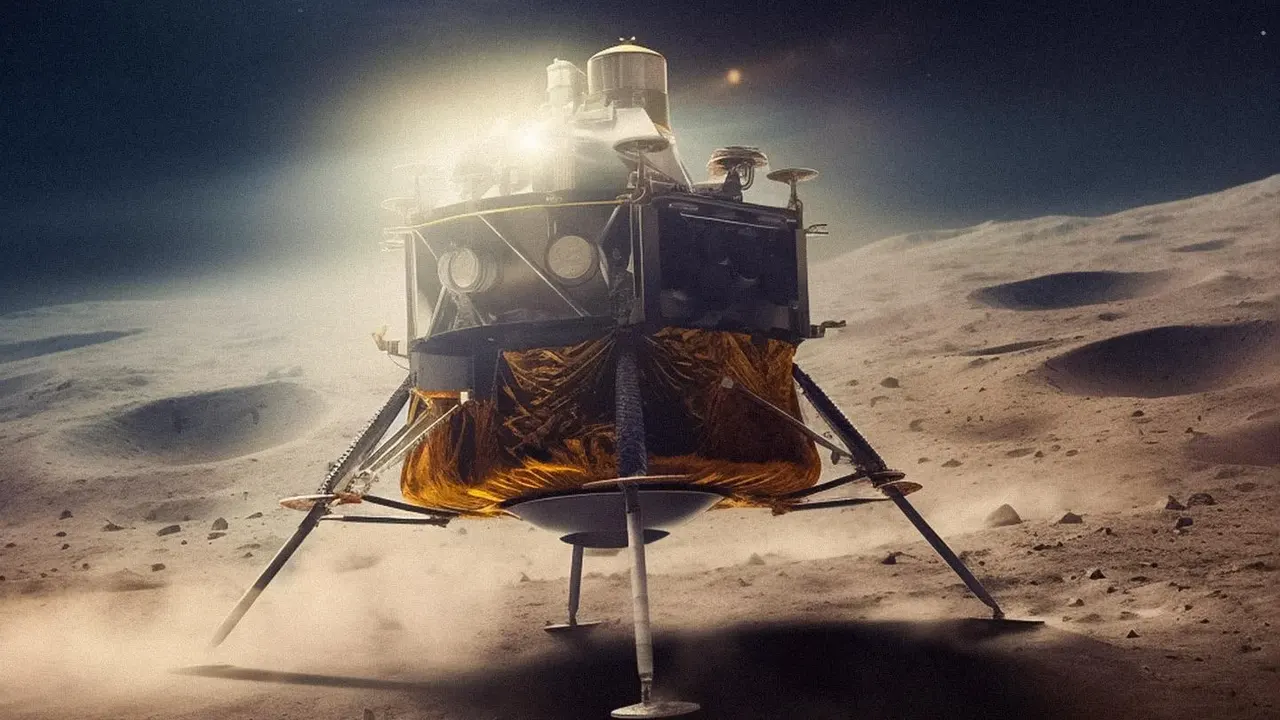
While the evidence is compelling, it is crucial to remember that scientists have not found life on Enceladus. They have found a potentially habitable environment. The data strongly suggests that the moon's ocean possesses all the necessary components for life to exist, but the question of whether it actually does remains unanswered. Answering that will require a return trip. Several mission concepts are being developed, including the Enceladus Orbilander, which would orbit the moon, sample the plumes in greater detail, and eventually land on the surface to analyze fresh material for biosignatures. The European Space Agency is also planning a dedicated mission for the 2040s or 2050s. These future missions will move beyond simply assessing habitability and actively search for definitive proof of life.