





Where History Meets the Horizon
Sweden’s relationship with the sea is etched into its very soul, a connection stretching back to the Viking Age and beyond. This maritime heritage is not confined to museums; it is alive and well along the country's scenic harbourfronts. In several remarkable
towns, a walk along the water is a journey through time. Here, the salty air mingles with the echoes of history, and modern promenades offer front-row seats to a past that has been beautifully preserved. These places offer a compelling blend of ancient architecture and contemporary leisure, where locals and visitors alike can enjoy a coffee while gazing upon fortifications that have stood for centuries. It’s a testament to Sweden's ability to honour its roots while embracing the present, creating a seamless experience of culture and nature.
Visby: The Hanseatic Jewel of the Baltic
On the island of Gotland, the city of Visby stands as one of Scandinavia's best-preserved medieval towns and a UNESCO World Heritage site. Its story is inseparable from the sea. During the 12th to 14th centuries, Visby was a dominant trading hub of the Hanseatic League, a powerful mercantile alliance. Its wealth is still visible in the stone merchant houses and numerous church ruins. Encircling the old town is the impressive 3.4-kilometre-long city wall, a limestone fortification built in the 13th century to protect its riches from seaborne threats. Today, the area along the harbour, once bustling with Hanseatic trading ships, is a vibrant promenade. Visitors can stroll with views of the historic wall on one side and the expansive Baltic Sea on the other, watching as modern ferries arrive and depart from the very same harbour that gave the city its power.
Stockholm: Gamla Stan's Waterfront Charm
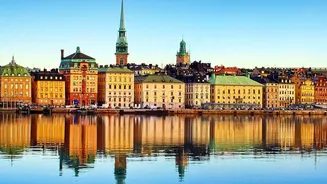
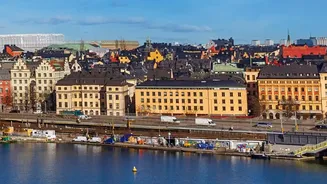
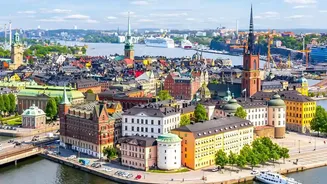
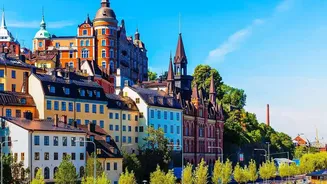
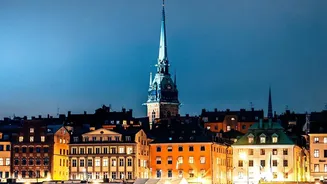
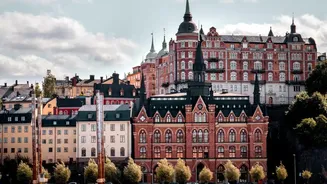
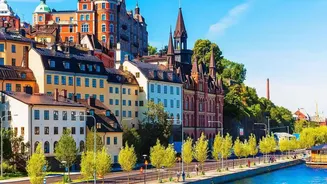
Stockholm was founded in 1252 on a small island that is now the heart of Gamla Stan, the city's enchanting old town. Its location was strategic, controlling the passage between Lake Mälaren and the Baltic Sea. For centuries, this island was the city itself, a dense network of cobbled streets, colourful merchant houses, and grand structures like the Royal Palace. While Gamla Stan is famous for its narrow alleys, its waterfront promenades offer a different perspective. Strolling along the quays, such as Skeppsbron, you can admire the grand 17th-century facades facing the water. These were the homes of wealthy merchants who wanted to display their success to arriving ships. Today, the promenades are lined with boats, cafes, and benches, offering stunning views and a tangible connection to the city's origins as a crucial Baltic port. It's a place where the medieval street plan gives way to open water, blending urban history with maritime scenery.
Kalmar: Guardian of the Union
On Sweden’s southeastern coast lies Kalmar, a city that played a pivotal role in Scandinavian history. Its harbour was a vital gateway as early as the Middle Ages. The city's most famous landmark is Kalmar Castle, a magnificent fortress with origins in the 12th century that once guarded the Swedish/Danish border. Kalmar is where the Kalmar Union was signed in 1397, uniting Scandinavia under a single monarch. The medieval city was originally located next to the castle, and while it was moved to the island of Kvarnholmen in the mid-1600s, its historical soul remains. Today, the harbour area provides a picturesque setting where the grandeur of the castle overlooks a modern marina. The promenades offer a walk through history, from the medieval fortress to the well-preserved 17th-century city centre on Kvarnholmen, making Kalmar a perfect example of a city shaped and defined by its strategic coastal position.