





From Pixels to Physicality
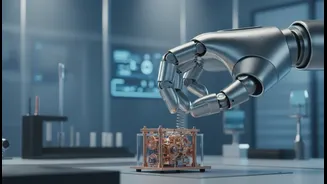
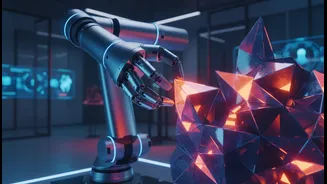
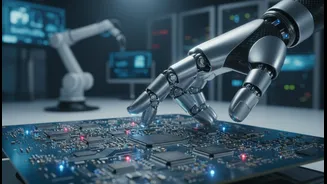
This new frontier is called physical AI, or embodied AI. Unlike the digital AI we use daily, which processes text and data in a virtual space, physical AI interacts directly with the real world. It combines advanced AI models with a physical form—like
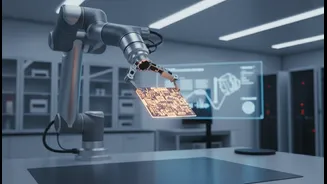
a robot or a self-driving car—allowing machines to perceive their surroundings, make decisions, and take action. Instead of just following pre-programmed scripts, like an early robot vacuum, these systems can adapt to changing and unpredictable environments, from a factory floor to a disaster site. This leap from bits to atoms represents a fundamental evolution in what AI can do.
The Culture Clash of Code and Cogs
This transition isn’t seamless. It’s creating a culture clash between the worlds of software and hardware. AI developers are accustomed to working in clean, simulated environments where data is predictable. Robotics engineers, on the other hand, wrestle with the messy realities of the physical world: gravity, friction, latency, sensor noise, and hardware failures. An AI model that works perfectly in a simulation can fail spectacularly in reality due to these unpredictable variables. This is known as the "sim-to-real" gap, and bridging it is one of the biggest challenges facing the industry.
Robot Dogs: The New Face of AI
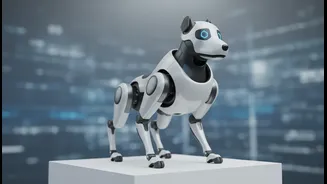
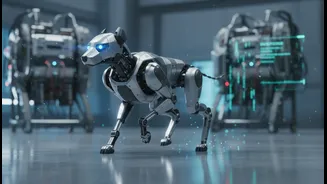
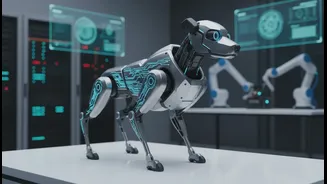
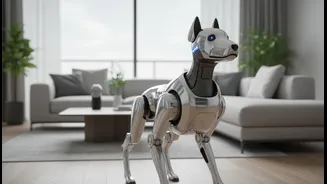
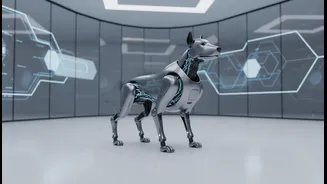
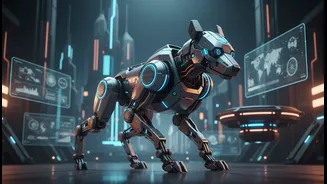
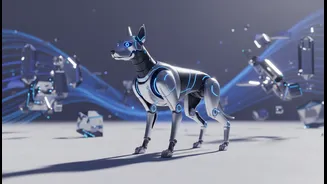
Perhaps no platform makes this shift more visible than the robotic dog. Companies like Boston Dynamics and Unitree have created quadrupeds that are no longer just mechanical puppets; they are autonomous agents. Thanks to physical AI, these machines can use cameras and sensors to map their environment, navigate complex terrain, climb stairs, and avoid obstacles in real time. They can be used for everything from industrial inspection and security patrols to search and rescue operations in hazardous environments. These agile robots are the walking, trotting proof of how AI is enabling machines to perform complex physical tasks.
Why Robotics Teams Are Flying Blind
For the teams building these robots, the biggest bottleneck is data. While digital AI was trained on the vast expanse of the internet, there is no equivalent dataset for physical interaction. This physical data—how an object behaves when gripped, how different surfaces affect balance, how to recover from a stumble—is difficult and time-consuming to collect. Without sufficient, high-quality data, AI models struggle to generalize and adapt. This leaves robotics teams in a constant struggle to build better simulators and find ways to help robots learn from real-world experience, a process that is often slow and expensive. New frameworks are being developed to make it easier to share code and data between different robot platforms, but the fundamental data gap remains a huge hurdle.
What Users Need to Know
This information gap extends to users as well. Seeing a robot dog perform a flawless backflip in a promotional video can set unrealistic expectations. In the real world, these machines have limitations. Their batteries run down, their sensors can be fooled by glare or shadows, and their ability to handle every possible scenario is still developing. For physical AI to be adopted successfully and safely, users need clear, honest information about what these systems can and cannot do. Understanding their operational limits, maintenance needs, and the nuances of their AI-driven behavior is crucial for anyone looking to deploy them in a home, business, or industrial setting. This knowledge prevents misuse and ensures the technology is a helpful tool rather than a source of frustration.