





A Policy Shift Opens The Skies
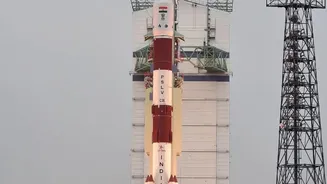
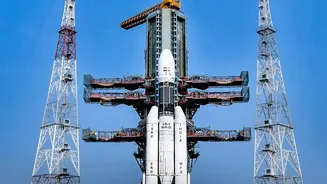
The catalyst for this entrepreneurial explosion was a series of landmark government reforms, culminating in the Indian Space Policy 2023. This policy effectively opened the entire space value chain to private companies, a domain once exclusively managed
by the state-run Indian Space Research Organisation (ISRO). The goal was to transition ISRO's focus from routine operations to advanced research and development, deep space exploration, and national security missions, while allowing private players to handle tasks like satellite manufacturing and commercial launches. To facilitate this, the government established the Indian National Space Promotion and Authorisation Centre (IN-SPACe) in 2020 as a single-window agency to promote, authorise, and supervise private space activities. This move has dramatically reduced bureaucratic friction, enabling startups to access ISRO's world-class facilities and technical expertise. The results are clear: from just a handful of startups a few years ago, India now boasts over 400 private space companies.
Meet the New Space Pioneers
This new policy landscape has given rise to a dynamic ecosystem of startups tackling every facet of the space industry. Hyderabad-based Skyroot Aerospace made history in July 2026 by launching Vikram-1, India's first privately developed orbital rocket, making India only the third country with a private orbital launch capability. Founded by former ISRO scientists, the company became India's first space-tech unicorn. Another key player is Agnikul Cosmos, which developed India's first private launchpad and is notable for its 3D-printed rocket engines. The Chennai-based startup recently announced an ambitious mission to demonstrate reusable rocket technology, a key step in lowering launch costs. These launch providers are crucial, but they are just one part of the story. The ecosystem is flush with innovators working on satellites and their components.
More Than Just Rockets: The Downstream Revolution
The real economic expansion may lie in the data and services powered by satellites. Pixxel is a prime example, building a constellation of advanced hyperspectral imaging satellites. These satellites can see the Earth in hundreds of wavelengths of light, providing invaluable data for agriculture, mining, and environmental monitoring. The company is leading a consortium of startups to build India's first indigenous commercial earth observation constellation. Other companies like Dhruva Space, founded in 2012, offer full-stack solutions, designing and manufacturing small satellites and ground station services. Meanwhile, startups like SatSure use satellite data to provide 'decision intelligence' for sectors like finance and infrastructure. This shows the sector's depth; it's not just about reaching orbit, but about creating value from it.
Fueling the Dream: Investment and Outlook
The growth has been backed by a surge in investment. Indian space startups have raised significant capital, with the government further boosting the ecosystem by announcing a venture capital fund dedicated to the sector. This financial backing is critical for a capital-intensive industry. India's space economy, valued at around $8.4 billion, is projected to grow to over $40 billion by 2030. However, challenges remain. Startups face intense global competition, and achieving consistent, cost-effective launch schedules is a major hurdle. But the momentum is undeniable. With a combination of government support, a deep talent pool, and a new generation of ambitious founders, India's private space industry is no longer a distant dream. It's a rapidly accelerating reality.