

Embrace the Spirit of the Feast
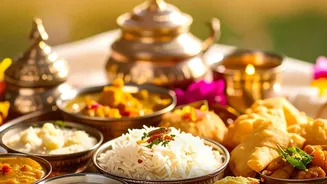
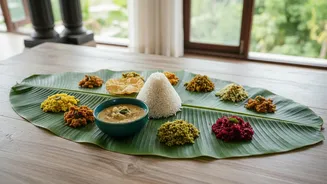
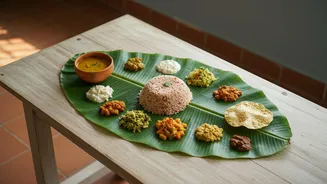
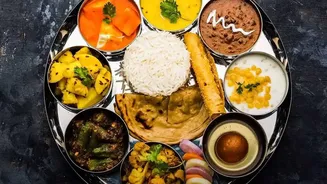
The Onam Sadya is more than just a collection of dishes; it's a cultural tradition that honours the mythical King Mahabali's annual visit. This communal meal, traditionally featuring over two dozen items served on a banana leaf, represents abundance,
gratitude, and the joy of sharing. While professional feasts can be elaborate, a home-style Sadya focuses on the spirit of the occasion. You don’t need to make all 28 dishes. A smaller, well-made selection featuring family favourites is just as meaningful.
Planning: Your Key to a Calm Kitchen
Success with a Sadya lies in smart planning. Trying to cook everything on Onam morning is a recipe for chaos. Instead, break down the process over two to three days. Two Days Before: Plan your menu and create a detailed shopping list. Buy all your non-perishable groceries, spices, jaggery, and the essential Kerala Matta rice. If you're using store-bought items like banana chips (upperi) or papadams, now is the time to get them. One Day Before: This is your primary prep day. Tackle the chopping for dishes like avial and sambar and store the vegetables in containers. You can also grate the coconut, which is a base for most dishes. Some items, like the tangy Puli Inji (ginger-tamarind chutney) and pickles, actually taste better when made a day ahead.
The Core Components of the Sadya
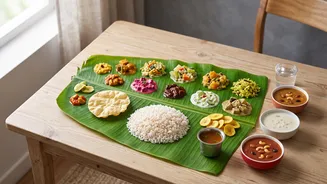
A Sadya is a symphony of flavours, balancing sweet, sour, salty, and spicy notes. The dishes can be grouped into categories. Accompaniments: The meal starts with small servings on the upper half of the leaf: salt, banana chips (upperi), jaggery-coated chips (sharkara varatti), a small banana, and pickles like mango and lime. Yogurt-Based Dishes: Pachadi and Kichadi are refreshing yogurt-based dishes. Pachadi is often sweeter (like pineapple pachadi), while Kichadi tends to be more savoury, perhaps with cucumber or bitter gourd. Side Dishes: These form the heart of the vegetable preparations. Thoran is a stir-fry with grated coconut, Aviyal is a thick mixture of various vegetables in a coconut-yogurt gravy, and Olan is a gentler curry made with ash gourd and cowpeas in coconut milk.
The Main Curries and Rice
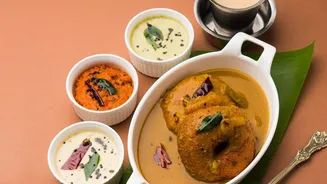
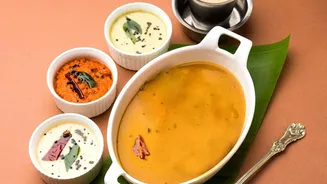
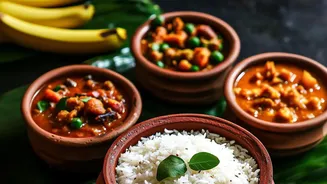
The lower half of the banana leaf is reserved for the rice and the main liquid curries, which are served in courses. The foundation is Kerala Matta rice, a distinctive red rice. The first course is Parippu, a simple moong dal curry served with a spoonful of ghee. Next comes Sambar, the famous lentil-based vegetable stew that is a staple across South India. This is often followed by Rasam, a tangy and peppery soup, to aid digestion before the final courses.
The Art of Serving on the Banana Leaf
Serving the Sadya is a ritual in itself. A fresh banana leaf is laid with its narrow end pointing to the left of the guest. All the dry dishes and accompaniments are placed on the top half of the leaf, starting from the left. This includes pickles, pachadi, kichadi, avial, and thoran. Once the guest is seated, a mound of rice is served on the bottom half. The curries like Parippu and Sambar are then poured over the rice in succession. Eating with your hands is traditional, allowing you to mix the rice and curries to create your own perfect bites.
The Sweet Conclusion: Payasam
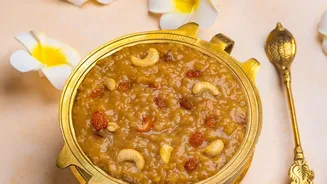
No Sadya is complete without Payasam, a sweet pudding that serves as dessert. There are many varieties. Palada Pradhaman, made with rice flakes and milk, is a creamy classic. Paruppu Payasam uses lentils and jaggery for an earthy sweetness, while other versions might feature vermicelli (Semiya Payasam) or jackfruit (Chakka Payasam). It's often served directly on the banana leaf, and many enjoy mashing a small banana into it for extra flavour.