





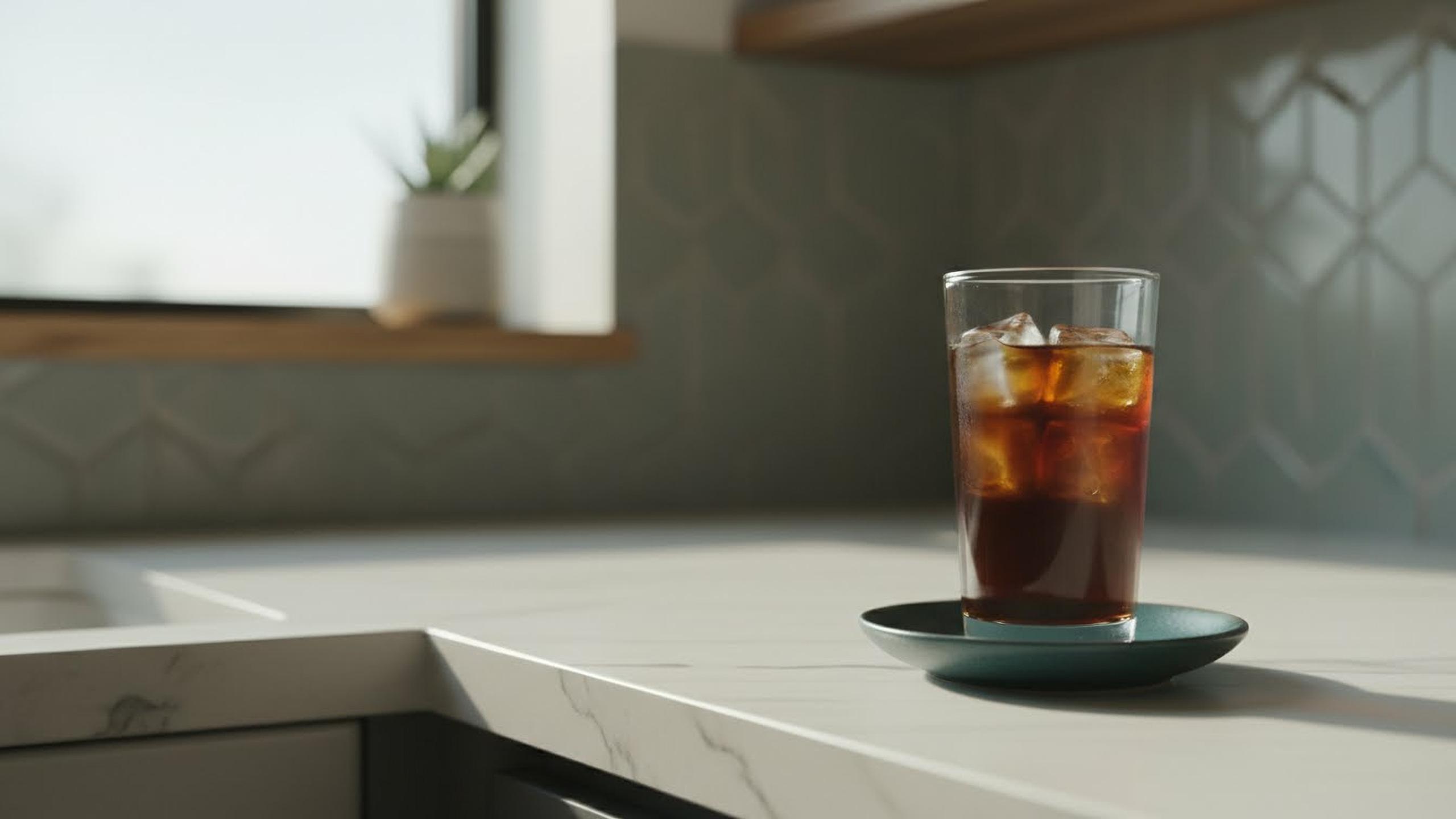


The Science of Extraction
Brewing coffee is essentially an act of extraction. When water meets coffee grounds, it dissolves soluble compounds like caffeine, acids, sugars, and oils, which create the flavour and aroma of your final cup. The key variable is temperature. Hot water,
typically between 90-96°C, is highly energetic and speeds up this extraction process, pulling out a wide range of compounds very quickly. Cold water, on the other hand, works slowly and more selectively. It lacks the thermal energy to dissolve certain compounds as effectively, requiring a much longer steep time—usually 12 to 24 hours—to achieve a balanced extraction. This fundamental difference is the secret to cold brew's unique character.
The Acidity Question
One of the most celebrated benefits of cold brew is its lower acidity, which many people find gentler on the stomach. Coffee beans naturally contain various acids, including chlorogenic, citric, and malic acids. Hot water is extremely efficient at dissolving these compounds, which contribute to the bright, tangy, and sometimes sharp notes in a hot-brewed cup. Cold water is far less effective at extracting these same acids. Studies have shown that cold brew coffee can be significantly less acidic than its hot-brewed counterpart, resulting in a coffee with a higher pH. This reduced acidity is primarily why cold brew tastes so smooth and lacks the “bite” that can sometimes be present in hot coffee.
A Smoother, Sweeter Flavor Profile
The difference in extraction doesn't just stop at acidity. The slow, gentle nature of cold brewing also alters the overall flavour profile. Because fewer bitter-tasting compounds and acids are extracted, the inherent sweetness of the coffee beans can shine through more prominently. Cold brew tends to emphasize rich, mellow notes like chocolate, caramel, and nuts. In contrast, hot brewing releases more volatile aromatic compounds, which are responsible for the complex floral and fruity notes you might find in a pour-over. These compounds aren't as soluble in cold water, which is why cold brew often has a less pronounced aroma but a rounder, smoother body.
Your At-Home Cold Brew Blueprint
Recreating that cafe-quality cold brew at home is surprisingly simple and doesn't require expensive equipment. The process relies on three key factors: the right grind, the right ratio, and plenty of time. Start with a coarse grind, similar in texture to rough breadcrumbs. A fine grind will over-extract and result in a cloudy, silty brew. The most common starting ratio is 1 part coffee to 8 parts water by weight, but you can adjust this to your preference. Combine the coffee grounds and cold, filtered water in a jar or pitcher, stir gently to ensure all grounds are saturated, and then cover it. Let the mixture steep at room temperature or in the refrigerator for 12 to 24 hours. Longer steep times will produce a stronger, more concentrated coffee. After steeping, simply filter out the grounds using a fine-mesh sieve, cheesecloth, or a French press. The resulting concentrate can be stored in the fridge for up to two weeks and diluted with water, milk, or ice to your desired strength.