




A New Frontier for Indian Innovation
Thiruvananthapuram-based startup HEX20 has officially joined the Emirates Mission to the Asteroid Belt (EMA), a multi-year project led by the UAE Space Agency. The announcement confirms that an Indian private company will play a key role in a deep-space
exploration mission, a domain historically reserved for national government agencies like ISRO. The collaboration will see HEX20 contribute critical technology to the 'MBR Explorer' spacecraft, which is slated to embark on a five-billion-kilometre journey to the main asteroid belt located between Mars and Jupiter. This partnership is a testament to the growing capabilities and global recognition of India's private space ecosystem, which has rapidly evolved thanks to supportive government policies and the establishment of regulatory bodies like IN-SPACe.
The Mission's Ambitious Goals
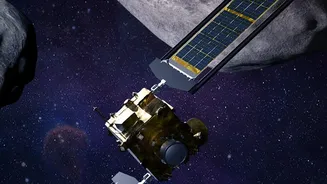
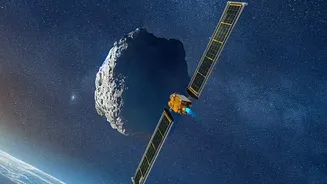
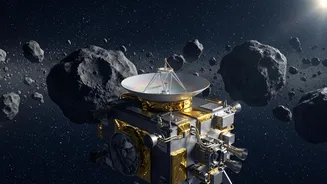
The Emirates Mission is one of the most ambitious asteroid-centric projects ever conceived. Scheduled for launch in 2028, the MBR Explorer will spend years navigating space, performing gravity-assist manoeuvres around Venus, Earth, and Mars to reach its destination. Along the way, it will observe six different asteroids before its ultimate rendezvous with a final, fascinating target: the asteroid 269 Justitia. Scientists are particularly interested in Justitia due to its unusual reddish hue, which suggests it may have originated in the far reaches of the solar system before migrating inward. By studying its composition, the mission hopes to uncover new insights into the distribution of water and organic materials during the formation of our solar system. The mission is a marathon, not a sprint, with the probe expected to reach and land on Justitia by 2036.
HEX20's Crucial Role
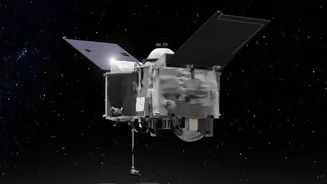
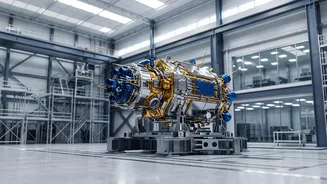
So, where does the Indian startup fit into this grand cosmic adventure? HEX20 is responsible for developing the spacecraft bus—the core structure that houses the mission's critical systems—as well as the sophisticated software that will guide the probe. Specifically, the team has developed the onboard computer and power systems for the lander probe that will separate from the main MBR Explorer spacecraft and make an autonomous descent to the asteroid's surface. This is a significant engineering challenge, as the probe must execute its landing sequence independently without real-time instructions from Earth. This high-stakes contribution places Indian engineering and software development at the very heart of a pioneering deep-space mission, showcasing the country's high-tech prowess.
From Local Supplier to Global Partner
This collaboration signals a major shift in the trajectory of India's private space sector. For decades, private Indian firms primarily acted as suppliers of components and services to ISRO. While this built a robust domestic industrial base, the goal of recent government reforms has been to empower these companies to become independent, globally competitive players. The success of startups like Skyroot Aerospace, Agnikul Cosmos, and Pixxel in developing launch vehicles and satellite constellations has already attracted significant global investment and client interest. HEX20's selection for the EMA mission is the next logical step in this evolution. It demonstrates that Indian startups are no longer just building for India; they are building for the world and for the solar system, moving from a supportive role to that of an essential partner.
The Dawn of the Asteroid Economy
Beyond the immediate scientific goals, this mission is a stepping stone toward the much-discussed future of an 'asteroid economy'. Asteroids are believed to be rich in valuable resources, including platinum-group metals and water, which could one day be used for in-space manufacturing and as rocket propellant. While large-scale asteroid mining is still a long-term prospect, missions like the EMA are crucial for reconnaissance and technology demonstration. By participating in this foundational stage, Indian companies gain invaluable experience and intellectual property. This positions them advantageously for a future where accessing off-planet resources becomes a commercial reality. For India, which has ambitions to significantly grow its 2% share of the global space economy, getting involved in these pioneering international efforts is not just a matter of prestige—it is a strategic economic imperative.