





An Unpredictable Rhythm
The monsoon isn't just weakening or strengthening; its very character is becoming unstable. Scientists have observed a clear shift away from steady, predictable rains towards a pattern of chaos. This includes delayed onsets, long dry spells punctuated
by sudden, intense bursts of extreme rainfall, and an overall collapse of the timing that ecosystems have relied on for centuries. Instead of a gentle, season-long soaking, many regions now experience drought-like conditions for weeks, followed by deluges that cause flooding and soil erosion rather than gradual moisture replenishment. This unpredictability is becoming a defining feature of India's new climate reality, posing a significant threat to natural systems synchronised with the old, stable monsoon cycles.
A Tale of Two Forests
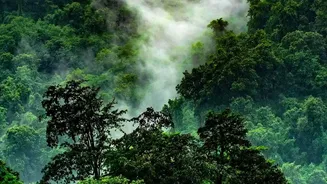
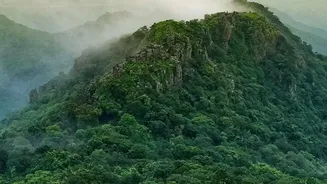
India's forests are not a monolith; their relationship with the monsoon is complex. Broadly, they can be divided into two types: moisture-loving evergreen forests, like those in the Western Ghats, and drought-tolerant deciduous forests, found across central India. Evergreen forests thrive on consistent humidity and rainfall, acting as massive sponges that regulate water flow. In contrast, deciduous forests are adapted to seasonal dryness, shedding their leaves during dry spells to conserve water. This fundamental difference means they respond in opposite ways to the monsoon's growing unpredictability. While one struggles, the other may find an opportunity to expand.
Evergreens Under Stress
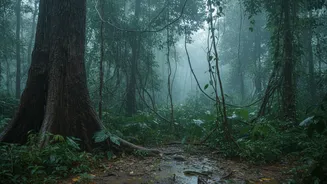
The evergreen forests of the Western Ghats are particularly vulnerable. These ecosystems depend on the short dry season and consistent moisture provided by monsoon patterns. The new reality of longer dry periods between heavy downpours puts immense stress on tree species that are not adapted to drought. Even if the total annual rainfall remains the same, the altered delivery pattern can be damaging. Recent studies project a significant decline in habitat suitability for evergreen species. One study focusing on the Tamil Nadu portion of the Western Ghats projected a potential loss of nearly 250 square kilometres of evergreen forest habitat by 2050. As mature trees struggle and saplings fail to take root in the harsher, drier conditions, the very composition of these vital, biodiverse forests begins to change.
The Rise of Drier Forests
As evergreen and moist deciduous forests retreat, more resilient, drought-tolerant species are poised to take their place. Scientific models predict a significant expansion of thorn forests and other dry vegetation types. The same study that projected a decline in evergreen forests in the Western Ghats also forecast an expansion of thorn forests by nearly 1,000 square kilometres. While these forests are a natural part of India's ecology, their expansion into areas once dominated by moist forests signals a fundamental shift towards a hotter, drier landscape. This is not simply a one-for-one replacement; it represents a change in the ecosystem's ability to store water, support biodiversity, and regulate local climate.
The Ripple Effect on Ecosystems
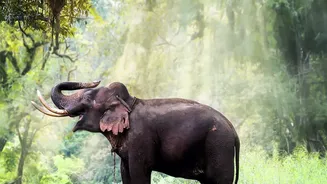
A change in tree types is not just a botanical curiosity; it has widespread consequences. Forest composition determines the types of animals, birds, and insects that can survive there. It affects the soil's ability to hold water, influencing groundwater recharge and the flow of rivers. A shift from dense, moist forests to sparser, drier ones increases the risk of forest fires, especially during prolonged dry spells. Furthermore, deforestation and forest degradation themselves can impact rainfall, creating a feedback loop where forest loss weakens the monsoon, which in turn further stresses the remaining forests. For the millions of people in India whose livelihoods depend on forest resources, these changes threaten a way of life that has been stable for generations.