



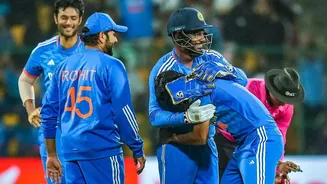
A Subdued Caribbean Outing
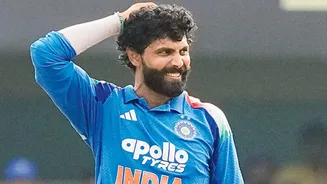
The conversation around Ravindra Jadeja’s future didn't ignite overnight. Throughout the just-concluded ODI series against the West Indies, the veteran all-rounder looked a shadow of his former self. With the bat, he failed to provide the late-innings
flourish he is known for, often struggling for timing. With the ball, his customary control was present, but the wicket-taking threat that once defined his middle overs seemed to have diminished. The sight of a fielding lapse from arguably India's greatest-ever fielder during the final match only amplified the concerns. While one quiet series doesn't define a career, for a player who will be turning 38 this December, it inevitably raises questions about longevity.
The Unshakeable Legacy of a 'Rockstar'
Before dissecting the present, it is crucial to honour the past. Ravindra Jadeja has been a phenomenal servant of Indian cricket. From the moment Shane Warne nicknamed him 'Rockstar', he has been a three-dimensional force of nature. With over 200 ODIs, nearly 3,000 runs, and more than 200 wickets, his numbers speak for themselves. But his true value often lay beyond the scorecard. It was in the breathtaking run-outs that turned matches on their head, the impossible catches plucked from thin air, and the gritty lower-order runs that salvaged countless innings. He became the third Indian to score 2,000 runs and take 150 wickets in ODIs, a testament to his rare all-round ability. This legacy isn't just secure; it’s cemented in the annals of Indian cricket history.
The Rise of the Next Generation
The most significant challenge to Jadeja's position comes from a new generation of players. The primary contender is Axar Patel, a player with a very similar skillset. Recent analysis has shown that in white-ball cricket, Axar's batting strike rate has been more explosive, and some pundits argue he is currently a better six-hitting option. Beyond Axar, players like Washington Sundar offer a different dimension with his height and off-spin, and the domestic circuit is buzzing with names like Nitish Kumar Reddy, who possess all-round capabilities. Selectors are no longer just looking for a replacement; they are assessing options that might be better suited to the hyper-aggressive nature of modern white-ball cricket.
An Evolving Game and Shifting Roles
The nature of the 50-over game is in constant flux. The debate around finger-spinners versus wrist-spinners is a perennial one in modern limited-overs cricket. While Jadeja’s accuracy has always been his strength, teams are increasingly looking for spinners who can turn the ball both ways and take wickets in the middle overs, even at the risk of conceding more runs. Furthermore, batting expectations from numbers six and seven have skyrocketed. It’s no longer just about rebuilding; it’s about clearing the ropes from ball one. While Jadeja has played many crucial knocks, the consistency of his power-hitting has been questioned, especially when compared to younger, more explosive options.
The Final Innings?
So, is this the end? It's unlikely to be a sudden, sharp conclusion. Jadeja's experience and unparalleled fielding still offer immense value. Having retired from T20Is after the 2024 World Cup win, his focus has been on the longer formats. However, the performance in the West Indies feels like a tipping point. It’s a signal that his automatic inclusion is no longer a guarantee. The more probable path is a gradual phase-out, perhaps with him being used in specific, subcontinent conditions where his skills are most effective, while the team grooms his successor for overseas tours and the next World Cup. The selectors are giving both him and Axar Patel opportunities to make their case, indicating a transition is already underway.