





The Planet's Undersea Seams
Imagine the Earth's surface as a cracked eggshell, broken into massive pieces called tectonic plates. These plates are not static; they drift across the planet's molten mantle. Where they pull apart, we find mid-ocean ridges. These aren't just mountains;
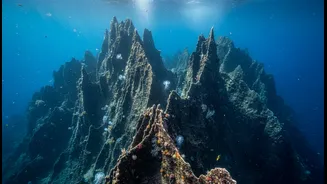
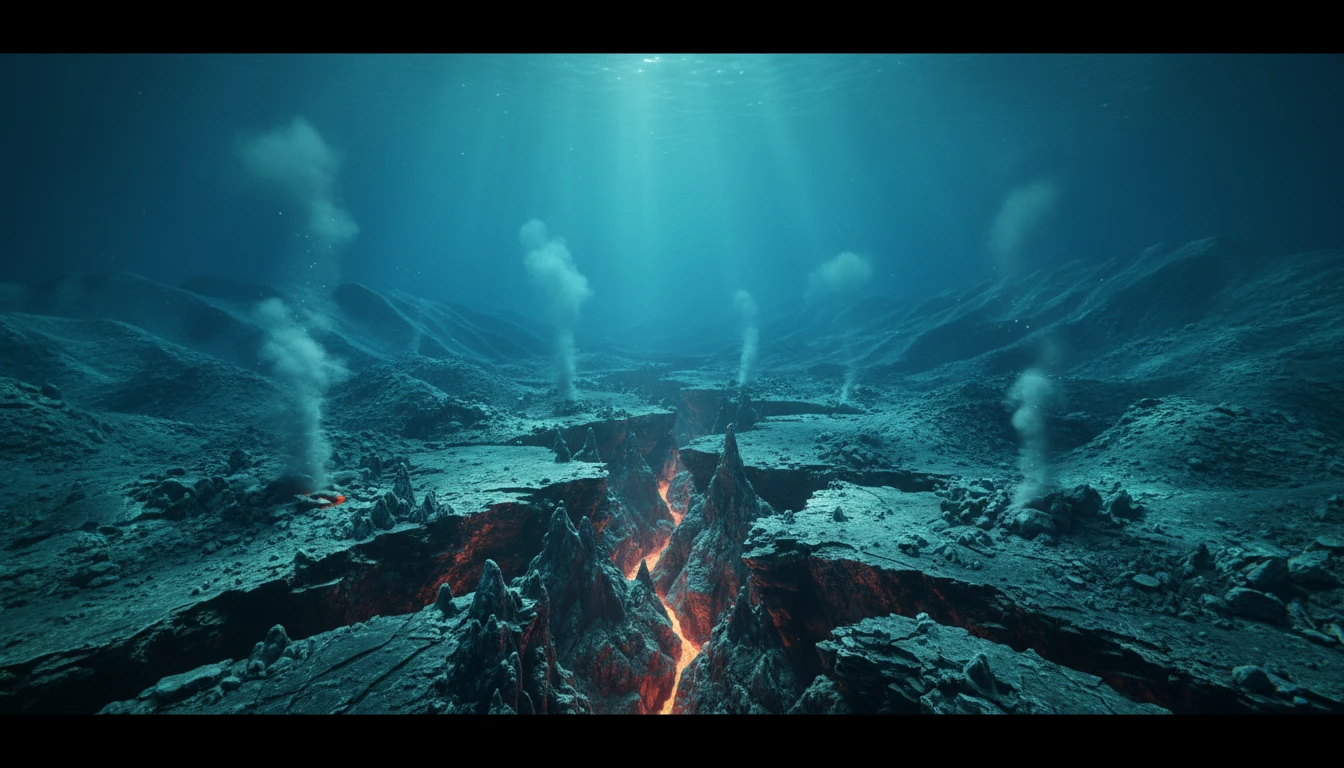
they are the longest and most volcanically active mountain range on Earth, stretching for about 65,000 kilometres around the globe like the seam on a baseball. This ridge system is essentially a series of divergent plate boundaries, zones where new ocean floor is born. Most of this incredible geological feature lies hidden thousands of meters beneath the ocean surface, constantly reshaping the planet.
How New Crust is Forged
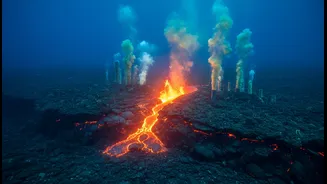
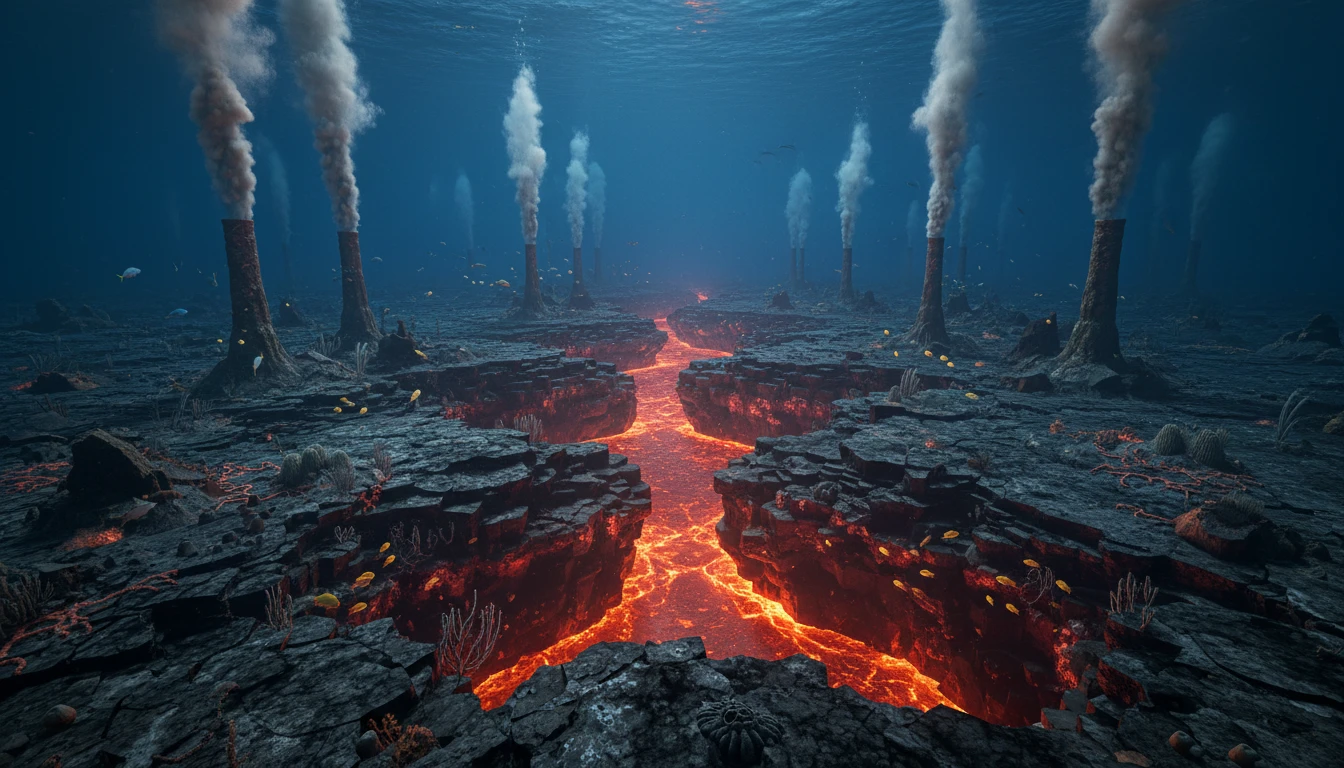
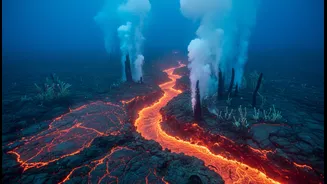
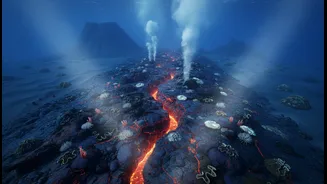
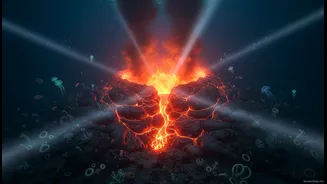
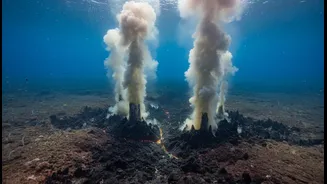
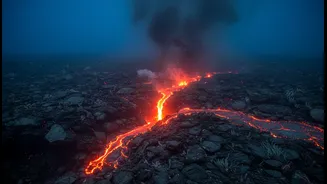
The process of creating new crust is called seafloor spreading. As two tectonic plates separate, the pressure on the underlying mantle decreases. This drop in pressure allows the superheated rock of the mantle to partially melt, forming magma. Being more buoyant than the solid rock around it, this magma rises to fill the gap created by the separating plates. Upon reaching the seafloor, the molten rock—now called lava—hits the near-freezing ocean water and cools rapidly, solidifying into a type of volcanic rock called basalt. This continuous cycle of magma rising, erupting, and hardening builds new oceanic crust directly at the ridge's axis, pushing the older crust further away on either side like a giant conveyor belt.
The Indian Ocean's Spreading Centres
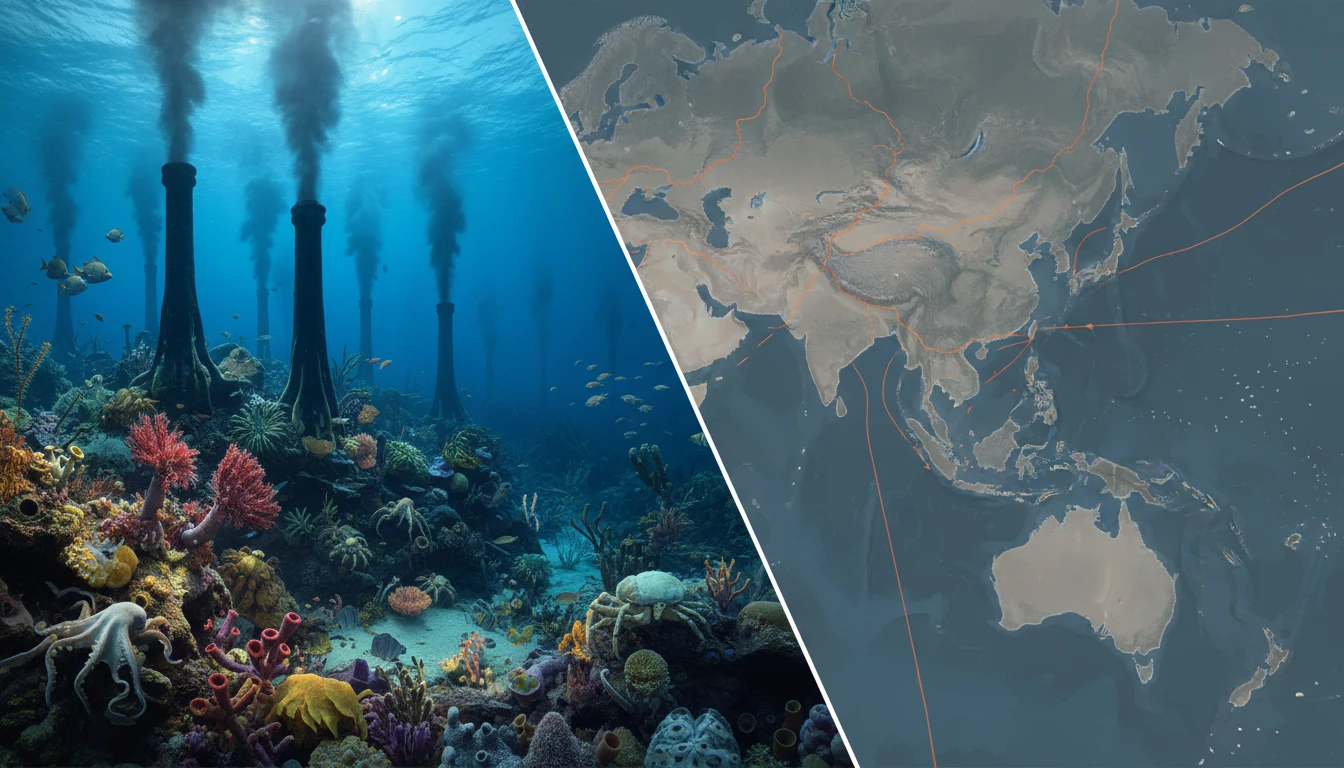
The Indian Ocean provides a perfect real-world laboratory for this process. It hosts a massive, inverted 'Y' shaped ridge system where three major plates—the African, Indo-Australian, and Antarctic—meet. This system is composed of several connected ridges: the Carlsberg Ridge, the Central Indian Ridge (CIR), the Southwest Indian Ridge (SWIR), and the Southeast Indian Ridge (SEIR). These ridges don't all spread at the same speed. The SWIR is an ultra-slow spreading ridge, moving apart at about 14 mm per year, while the CIR has a slow-to-intermediate rate of 26 to 49 mm per year. The SEIR, by contrast, spreads much faster. This variation in speed affects the landscape; slower spreading ridges tend to have rugged, steep terrain, while faster ones are smoother and wider. Recently, in a groundbreaking event, scientists captured a seafloor spreading episode in real-time on the Southeast Indian Ridge, observing the seabed sink by over 4 metres and erupting millions of cubic metres of lava over just a few days.
Reading the Geological Tape Recorder
How do we know this is happening? One of the most compelling pieces of evidence comes from the Earth's magnetic field, which flips its polarity at irregular intervals over geological time. As basalt lava cools at the mid-ocean ridge, iron-rich minerals within it align with the planet's magnetic field at that moment, preserving a magnetic record. As new crust forms and pushes the old crust aside, it creates a symmetrical pattern of alternating magnetic 'stripes' on either side of the ridge. By towing magnetometers across the ocean, scientists detected these zebra-like patterns and matched them to the known timeline of Earth's magnetic reversals. This provided undeniable proof: the seafloor is youngest at the ridge crest and gets progressively older the further you move away, confirming the theory of seafloor spreading.