






The Search for True Darkness
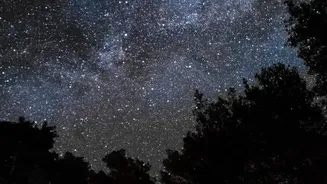
A truly 'dark sky' is one that is free from artificial light pollution. In urban and suburban areas, poorly designed and excessive outdoor lighting creates 'skyglow', an orange haze that blankets the sky and drastically reduces the visibility of celestial
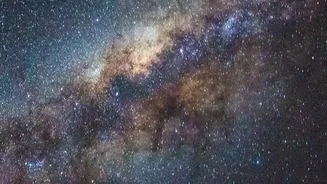
objects. It brightens the background of the sky, effectively drowning out the light from fainter stars, distant galaxies, and nebulae. More than 80% of the world's population now lives under light-polluted skies, making a genuinely dark sky a rare and precious resource. To classify the darkness of a location, astronomers often use the Bortle scale, a nine-level system where Class 1 represents the darkest skies possible and Class 9 describes an inner-city sky where only the moon and a few bright planets are visible. Seeking out a dark sky location is about finding a place with a low Bortle rating, far from the reach of city lights.
Why Dark Skies Are Important
The importance of dark skies extends far beyond just astronomy. For millennia, the stars have been a source of navigation, culture, and scientific curiosity for humanity. Preserving them safeguards this shared heritage. Dark skies are also crucial for scientific research, allowing telescopes to capture faint light from distant objects and unlock secrets about the universe's evolution. Furthermore, artificial light at night disrupts the natural world. It can interfere with the biological rhythms of humans, affecting sleep and well-being. It also has a severe impact on nocturnal wildlife, affecting their migration, reproduction, and feeding patterns. Protecting dark skies is an act of preserving our environment, our health, and our connection to the cosmos.
Hanle, Ladakh: India’s First Dark Sky Reserve
In December 2022, a remote corner of Ladakh officially became India's first Dark Sky Reserve. Located in the Changthang Wildlife Sanctuary at an altitude of about 4,500 metres, Hanle offers some of the clearest and darkest skies in Asia. Its high altitude, dry air, and minimal light pollution provide ideal conditions, with around 300 cloud-free nights a year. The reserve, which covers a 22-kilometre radius around the Indian Astronomical Observatory, was established through a collaboration between scientists and the local community to promote astro-tourism. This initiative not only protects the pristine skies for crucial scientific research conducted at the observatory but also empowers the local community, which has been trained to guide tourists through the wonders of the night sky.
Spiti Valley, Himachal Pradesh: A High-Altitude Haven
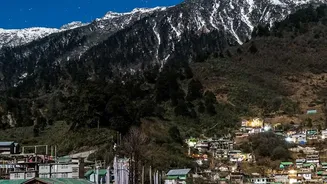
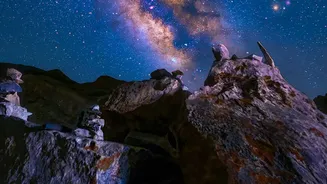
Nestled high in the Himalayas, Spiti Valley is a cold desert renowned for its stark beauty and exceptionally clear night skies. With an average elevation of over 4,000 metres, its remote villages like Kibber, Langza, and Komic are far from major sources of light pollution, boasting skies that are among the darkest in India. The dry mountain air and high altitude mean there is very little atmospheric haze to obscure the view. On a clear, moonless night here, the Milky Way is not just visible but can appear as a bright, textured band stretching across the sky. The best time for stargazing is from May to October when the weather is milder and the roads are accessible.
Rann of Kutch, Gujarat: A surreal Salt Desert
The vast, flat expanse of the Rann of Kutch offers a stargazing experience like no other. This white salt desert, far from major urban centres, provides an unobstructed 360-degree view of the horizon. During the cool, dry winter months, especially around the Rann Utsav festival, the skies are incredibly clear. On a moonless night, the sheer darkness allows for a breathtaking view of the cosmos, with the Milky Way sometimes faintly reflecting off the surreal white salt crust. Its minimal light pollution and unique landscape make it one of India's premier destinations for both amateur astronomers and casual sky-watchers.
Coorg, Karnataka: Stars Over Southern Hills
While the Himalayas are famous for their dark skies, the Western Ghats in southern India also offer excellent opportunities. Coorg (Kodagu) in Karnataka, with its coffee plantations and misty hills, has several spots with minimal light pollution. Areas around Madikeri, and peaks like Tadiandamol, provide clear views of the night sky, especially from October to May, outside the monsoon season. Several homestays and resorts in the region cater to stargazers, and an observatory in the area even offers guided sessions with professional telescopes. It's an accessible option for those in South India looking to escape the city lights and reconnect with the stars.