

From Satellite Internet to Your Pocket
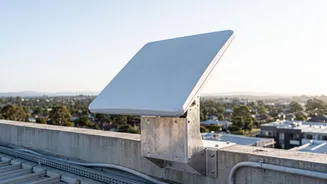
For years, Starlink has been known for its satellite internet service, which uses a small dish to bring broadband to areas with unreliable ground-based infrastructure. Now, SpaceX is leveraging its vast satellite constellation for a new service called
'Direct to Cell'. This technology aims to provide mobile connectivity directly to standard, unmodified LTE smartphones, eliminating the need for a dish or any special hardware. The goal is to eradicate mobile dead zones, providing a seamless connection for text, voice, and data anywhere you can see the sky, from remote wilderness to coastal waters.
The 'Spectrum Deal' Explained
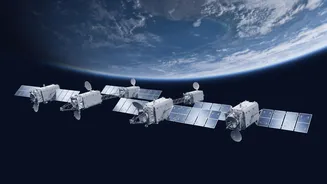
The secret to connecting satellites to regular phones lies in mobile spectrum. Instead of buying expensive spectrum licenses in every country, Starlink's strategy is to partner with existing mobile network operators. Through these partnerships, like the one with T-Mobile in the US, Starlink is granted permission to use a slice of the carrier's licensed spectrum. Its satellites, equipped with advanced antennas, then act like 'cell towers in space', broadcasting on those same frequencies. To your phone, the satellite signal appears just like a standard roaming partner, allowing it to connect automatically when it can't find a terrestrial tower.
How The Technology Actually Works
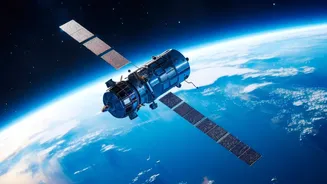
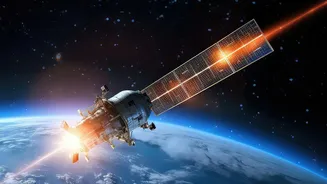
The physics behind direct-to-cell service is a significant engineering feat. A normal smartphone transmits a very weak signal, not designed to reach a satellite hundreds of kilometres up in low-Earth orbit. To overcome this, Starlink's Direct to Cell satellites are equipped with highly sensitive, large phased-array antennas. These antennas create narrow, powerful beams that focus on specific areas on the ground, amplifying the faint signal from your phone enough to establish a stable link. Data is then relayed between the satellites using a network of laser links before being sent down to a ground station connected to the global internet, all in a fraction of a second.
A Partner Today, A Competitor Tomorrow?
Initially, the service is a win-win. Mobile carriers get to offer their customers coverage in dead zones without building expensive new towers, and Starlink gets access to their spectrum and customer base. However, the headline's suggestion of Starlink becoming a 'larger carrier' points to a more ambitious future. Recent moves by SpaceX in the US to acquire its own nationwide low-band and mid-band spectrum licenses suggest a long-term plan to build a hybrid network. This network would combine its satellite coverage with its own ground-based infrastructure, positioning it to compete directly with established giants like AT&T, Verizon, and T-Mobile.
The Indian Context and Hurdles
For a market like India, with its vast geography and push for digital inclusion, the potential is enormous. Starlink could provide last-mile connectivity to remote and rural areas where terrestrial networks are unfeasible. However, the path to launching in India has been complex. Entry requires multiple approvals, including a Global Mobile Personal Communication by Satellite (GMPCS) license and clearances from security agencies. Issues around data security, the domestic location of gateways, and lawful interception capabilities are significant regulatory hurdles. While Starlink has secured some initial licenses, final security clearances are pending as the government scrutinises the implications of a foreign-controlled network operating over its territory.