

The Hidden Cost of 'Fast Furniture'
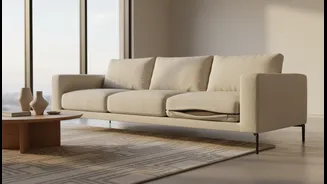
For decades, the prevailing model for furnishing a home has mirrored that of fast fashion: buy cheap, use for a few years, and discard when it breaks or goes out of style. This trend, often called 'fast furniture,' has led to a significant environmental
crisis. Millions of tonnes of furniture end up in landfills every year, with one report noting that waste from furnishings has grown by 450% since 1960. Many of these items are made from particleboard, MDF, and other composite materials held together by chemical resins, making them difficult or impossible to recycle. This cycle of overconsumption not only contributes to overflowing landfills but also drives deforestation and resource depletion, as forests are cleared to produce low-cost, short-lifespan goods.
A New Philosophy: Design for Life
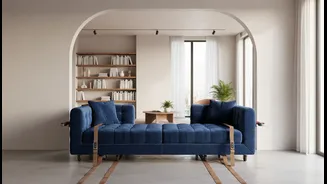
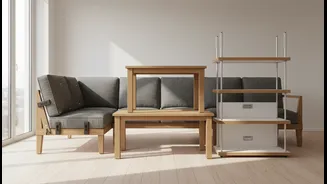
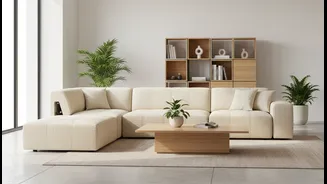
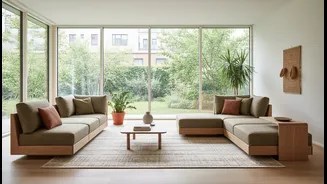
In response to this wastefulness, a new philosophy is gaining ground, built around the idea of a 'circular economy.' Instead of a linear 'take, make, dispose' model, circular design focuses on creating products that are durable, repairable, and adaptable. This is where reconfigurable and modular furniture comes in. These are systems of individual, standardized units that can be combined, rearranged, and expanded to create customised solutions. Think of it like building blocks for your home: a sofa that can be separated into armchairs, a shelving unit that can grow taller or wider, or a bed that can transform into a desk. This approach isn't just about clever engineering; it’s a fundamental shift in how we view ownership—moving from temporary possession to long-term investment.
Furniture That Adapts to You
The practical benefits of modular furniture are immediate and personal. Life is not static. We move homes, our families grow, we transition to working from home, or we simply want to refresh our space. Adaptable furniture is designed for these changes. A modular sofa can be reconfigured to fit a new apartment layout, a child’s single bed can be expanded into a larger frame, and a compact workstation can be enlarged with additional modules as professional needs change. For those living in smaller urban homes, this flexibility is a game-changer. A single room can serve multiple purposes when its furniture can be easily moved, stacked, or transformed, allowing for maximum utility without clutter. It empowers users to shape their environment to their needs, rather than being constrained by fixed, single-purpose items.
Sustainability as a Standard
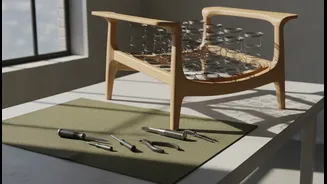
Beyond its flexibility, the core appeal of reconfigurable furniture is its inherent sustainability. By designing for longevity, modular systems dramatically reduce waste. Instead of throwing out an entire piece of furniture because one part is damaged or it no longer fits a space, you can simply replace or rearrange a single module. This extends the product's life cycle significantly, keeping valuable materials in use and out of landfills. Many companies in this space also prioritise eco-friendly materials, such as reclaimed wood, recycled metals, and non-toxic finishes, further reducing the environmental footprint. This approach aligns with a growing consumer demand for products that are not just beautiful and functional, but also responsible. It represents a move toward conscious consumption, where quality and adaptability are valued over disposability.